My Complete DC Roadmap: Key Runs, Events, and Milestones
Navigating nearly nine decades of DC Comics can feel less like diving into a universe and more like trying to map an infinite multiverse without a compass. Since Action Comics #1 debuted in 1938, so many creators have contributed to stacked timelines on top of resets, birthed golden-age legends, spun off dark-fantasy imprints, and launched cosmic-level crises. For seasoned fans seeking forgotten gems or new readers overwhelmed by where to begin, the sheer volume of material often makes knowing what to read the hardest part of the journey.
That’s exactly the problem I faced recently (at the time of writing) while exploring possibilities for my next reading project for DC Casebook. As a result, I started looking into essential creator runs, historical milestones, monumental events, and obscure gems that shaped DC Comics history, from the sci-fi boom of the Silver Age to the mature dread of Vertigo and the modern ever-expanding universe. It soon spun out of control. What I came up with is what I call my DC Roadmap. It’s not exhaustive. It’s not definitive either. It’s full of runs, a lot I have not read, too. I just dig into the DC Comics catalog to look for books with a good reputation. I also tried to cover many of the big characters, because I have the ambition to read about some I barely know about.
Simply put, it’s my way of getting a grasp on the evolution of the DC Universe, a tentative blueprint for the very best, or at least the most intriguing, DC has to offer. I’m open to more suggestions. The roadmap will never end.
🚩Note on the organisation of the list: It’s not strictly chronological in terms of reading order, as I based it on start and end dates without giving it much further thought. When I explore a run, I’ll write a guide, but in the meantime, consider this a starting point, nothing more.
- The Golden Age (1938-1956)
- The Silver Age (1956-1970)
- The Bronze Age (1970-1985)
- Modern Age / Post-Crisis (1985-2011)
- The Post-Crisis Launch & Late-80s Revolution (1985-1989)
- The Blockbuster 90s & Imprint Explosion (1990-1999)
- The Modern Renaissance & Crisis Era (2000-2011)
- The New 52 Era (2011-2016)
- DC Rebirth Era (2016-2021)
- Infinite Frontier / Dawn of DC Era (2021-2024)
- Infinite Frontier & Dark Crisis (2021-2022)
- Dawn of DC Relaunch & Absolute Power (2022-2024)
- DC All In & The Absolute Universe Era (Late 2024-Present)

The Golden Age (1938-1956)
The birth of superhero mythology, foundational superhero debuts, and pulp adventure. Go check out my article The Origin Story of DC Comics and the Golden Age of Comics for a quick historical background.
- (1938-1947) Superman by Jerry Siegel & Joe Shuster
- Created the archetype for the modern superhero and launched DC Comics as an industry titan.
- (1939-1943) Batman by Bob Kane & Bill Finger
- Established the darker, noir-inspired street-vigilante template and Gotham’s iconic rogue gallery.
- (1939-1946) The Sandman (Wesley Dodds) by Gardner Fox & Bert Christman
- Blended pulp-detective tropes with mystery fiction, introducing gas-mask vigilantism to DC.
- (1940-1948) Doctor Fate by Gardner Fox & Howard Sherman
- Introduced high-concept cosmic magic and mystical fantasy into the early DC Universe.
- (1940-1949) Hawkman & Hawkgirl by Gardner Fox & Dennis Neville
- Merge ancient Egyptian reincarnation lore with heroic crimefighting in this action-packed adventure.
- (1940-1949) Captain Marvel / Shazam by Bill Parker & C.C. Beck (Fawcett Comics)
- The best-selling comic run of the 1940s, introducing Billy Batson and whimsical magic.
- (1940-1951) Justice Society of America by Gardner Fox & Sheldon Mayer
- The historical debut of comic books’ very first superhero team.
- (1940-1951) The Flash (Jay Garrick) by Gardner Fox & Harry Lampert
- Established super-speed mechanics and the winged-helmet speedster legacy.
- (1941-1947) Green Arrow & Speedy by Mort Weisinger & George Papp
- Created the enduring urban-archer archetype and one of comics’ earliest sidekick duos.
- (1941-1947) Wonder Woman by William Moulton Marston & H.G. Peter
- Introduced comic books’ definitive superheroine and Amazonian mythology.
- (1941-1949) Green Lantern (Alan Scott) by Bill Finger & Martin Nodell
- Created the original magic-based power ring mythos.
- (1941-1956) Plastic Man by Jack Cole (Quality Comics)
- Celebrated for surreal visual cartooning, slapstick humor, and creative page geometry.
- (1942-1946) Newsboy Legion & The Guardian by Jack Kirby & Joe Simon
- Pioneered the Golden Age “kid gang” genre, laying early seeds for Kirby’s future DC work.
- (1943-1953) Batman by Don Cameron & Dick Sprang
- Defined the classic mid-40s and 50s visual look of Gotham City with giant props and kinetic action.
- (1945-1955) Superboy by Otto Binder & Curt Swan
- Expanded the Kryptonian backstory and Smallville lore before the dawn of the Silver Age.
- (1951-1954) Captain Comet by John Broome & Carmine Infantino
- Widely recognized as the pivotal sci-fi bridge between the Golden and Silver Ages.
The Silver Age (1956-1970)
The birth of the Multiverse, high-concept sci-fi adventure, cosmic debuts, and team-up milestones. It’s a lot, so check out my article DC Comics History: The Silver Age Rebirth of Superheroes for more background info.
- (1955-1968) Martian Manhunter by Joseph Samachson & Joe Certa
- Introduced J’onn J’onzz, who provides a link between pre-Silver Age sci-fi and the founding era of the Justice League.
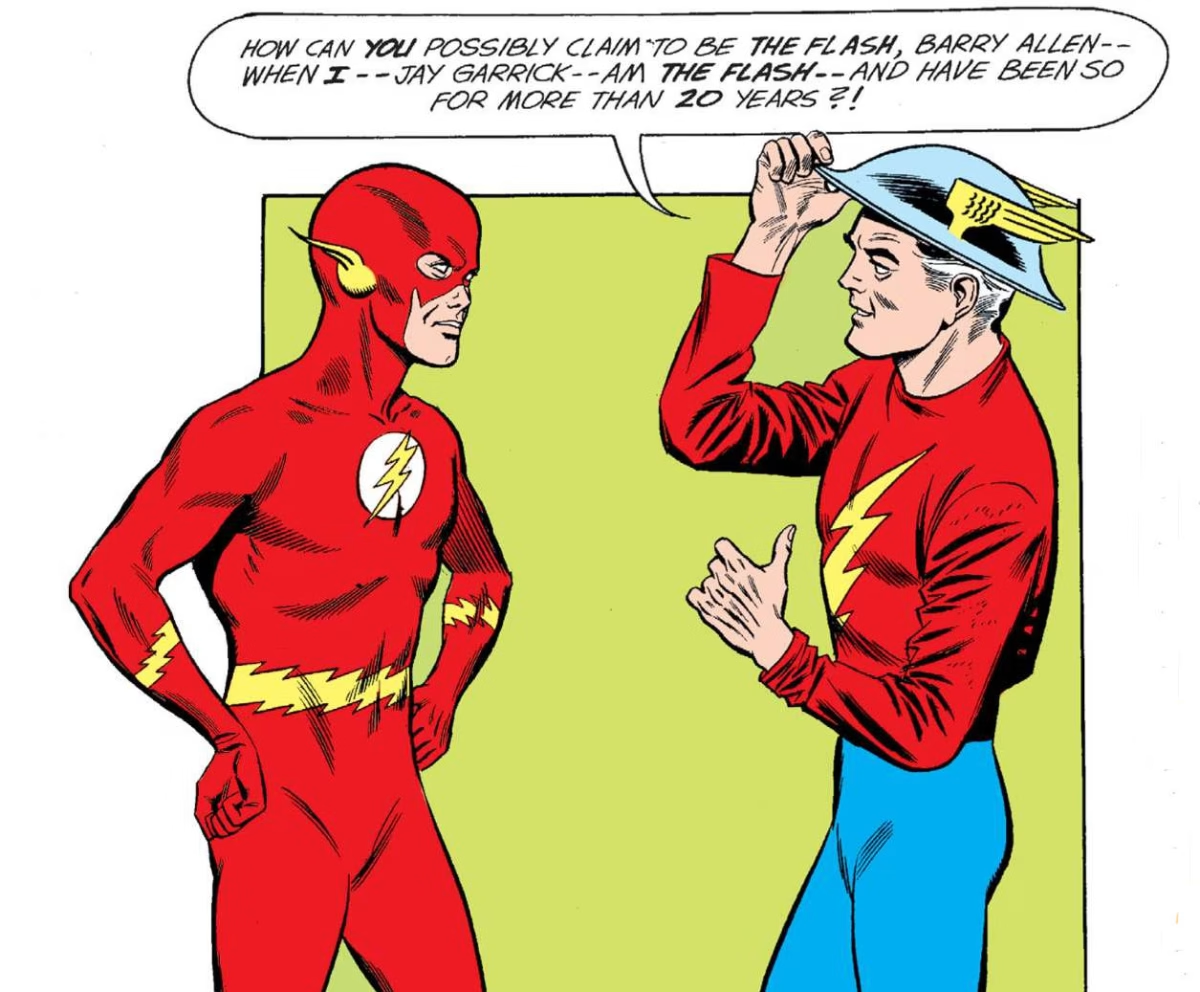
- (1956-1968) The Flash (Barry Allen) by Robert Kanigher & Carmine Infantino
- The official catalyst of the Silver Age, establishing modern sci-fi superheroics.
- (1957-1959) Challengers of the Unknown by Jack Kirby & Dave Wood (or Joe Simon?)
- Jack Kirby’s sci-fi adventuring group that may have served as a direct prototype for his Marvel work (FF!).
- (1958-1962) Space Ranger by Edmond Hamilton & Bob Brown
- A key entry in DC’s late-50s space-race sci-fi boom.
- (1958-1966) Adam Strange by Gardner Fox & Carmine Infantino
- A tale of planetary science fiction, Zeta Beams and pulp heroics set on the alien world of Rann.
- (1958-1966) Superman & Supergirl by Otto Binder & Curt Swan
- Defined the visual and thematic peak of Kryptonian lore, introducing Brainiac, Kandor, and Kara Zor-El.
- (1958-1970) Legion of Super-Heroes by Otto Binder, Jerry Siegel, Edmond Hamilton & Jim Shooter
- Expanded 31st-century cosmic world-building, teenage hero dynamics, and long-form serial storytelling.
- (1959-1968) Green Lantern (Hal Jordan) by John Broome & Gil Kane
- Reimagined the magic-ring concept into an intergalactic police force and cosmic corps.
- (1959-1988) Sgt. Rock by Robert Kanigher & Joe Kubert
- It set the gold standard for war fiction comics.
- (1960-1964) Atomic Knights by John Broome & Murphy Anderson
- Early post-apocalyptic radiation-fiction about armored heroes surviving in a nuclear future.
- (1960-1964) Cave Carson by France Herron & Bruno Premiani
- Subterranean sci-fi exploration following the crew of the Mighty Mole.
- (1960-1968) Justice League of America by Gardner Fox & Mike Sekowsky
- United DC’s premier flagship heroes into the definitive Silver Age team.
- (1961) [EVENT] Flash of Two Worlds! by Gardner Fox & Carmine Infantino
- Introduced Earth-Two and established the DC Multiverse framework.
- (1961-1965) Rip Hunter… Time Master by Jack Miller & Nick Cardy
- Laid the temporal mechanics and Time Sphere lore essential for future DC crossover events.
- (1961-1968) The Atom (Ray Palmer) by Gardner Fox & Gil Kane
- Sub-atomic shrinking mechanics and science-based crimefighting!
- (1962-1968) Metal Men by Robert Kanigher & Ross Andru
- High-energy, quirky robot adventures built on chemical elements and artificial intelligence.
- (1963) [EVENT] Crisis on Earth-One! / Crisis on Earth-Two! by Gardner Fox & Mike Sekowsky
- The very first annual JLA/JSA Earth-crossing event, establishing the “Crisis” tradition.
- (1963-1968) Doom Patrol by Arnold Drake & Bruno Premiani
- Introduced “the World’s Strangest Heroes,” exploring tragic outcast dynamics and surreal villains.
- (1964-1968) Batman (“New Look” Era) by Julius Schwartz & Carmine Infantino
- Moved Batman from campy 50s sci-fi plots back to detective work. Introduced the yellow oval emblem.
- (1964-1968) Teen Titans by Bob Haney & Bruno Premiani
- United sidekicks Robin, Kid Flash, Aqualad, and Wonder Girl into a youth-driven super-team.
- (1965-1968) Metamorpho by Bob Haney & Ramona Fradon
- Elemental body-horror superheroics driven by Ramona Fradon’s inventive pop-art style.
- (1965-1968) Enemy Ace by Robert Kanigher & Joe Kubert
- A tragic war tale starring a German WWI flying ace, exploring honor and isolation.
- (1967-1969) Deadman by Arnold Drake & Neal Adams
- For Neal Adams’ cinematic layouts and dark spectral mystery.
- (1967-1969) The Hawk and the Dove by Steve Ditko & Steve Skeates
- Channeling late-60s political polarization through superhero brothers.
- (1968) Beware the Creeper by Steve Ditko & Denny O’Neil
- Wild, manic anti-hero noir showcasing Steve Ditko’s unique art style.
- (1968-1969) Secret Six by E. Nelson Bridwell & Joe Orlando
- Covert-ops cult title that laid the blueprint for teams like the Suicide Squad.
- (1968-1972) Aquaman by Steve Skeates & Jim Aparo
- Serialization, political intrigue, and mature themes in Atlantis.

The Bronze Age (1970-1985)
Social realism, dark fantasy revival, Jack Kirby’s Fourth World, prestige limited series, and the ultimate Multiverse reset. Once again, I have more context to provide in a dedicated article: DC Comics History: The Bronze Age, From Explosion to Implosion.
- (1968-1977) House of Mystery by Joe Orlando, Bernie Wrightson & Various
- Psychological dread, gothic atmospheres, supernatural horror, and moral twists hosted by Cain.
- (1969-1974) The Phantom Stranger by Len Wein & Jim Aparo
- A movie into legitimate occult horror with eerie séances and explosive supernatural battles.
- (1970-1972) Green Lantern / Green Arrow (“Hard Travelin’ Heroes”) by Denny O’Neil & Neal Adams
- A landmark run that introduced social realism, drug addiction, racism and political polarisation to the mainstream comic book industry.
- (1970-1973) Fourth World Saga by Jack Kirby
- Jack Kirby’s cosmic epic that created Darkseid, New Genesis, Apokolips, the anti-life equation, and more.
- (1970-1974) Batman by Denny O’Neil & Neal Adams
- Stripped away the 1960s TV camp inherited from the Adam West show to restore the dark creature of the night, introducing Ra’s al Ghul and Man-Bat.
- (1971-1975) Swamp Thing by Len Wein & Bernie Wrightson
- Introduced Dr. Alec Holland and defined DC’s gothic creature-feature aesthetic.
- (1972-1974) The Demon by Jack Kirby
- Introduced Jason Blood and Etrigan the Demon, expanding Arthurian dark magic in the DCU.
- (1972-1976) Kamandi: The Last Boy on Earth by Jack Kirby
- Kirby’s post-apocalyptic sci-fi epic set in a World After Disaster populated by intelligent animal tribes.
- (1973-1978) Superman by Elliott S. Maggin & Curt Swan
- The definitive philosophical heart of the Bronze Age Man of Steel
- (1974-1975) OMAC: The One-Man Army Corps by Jack Kirby
- Dystopian corporate sci-fi introducing Buddy Blank, Brother Eye, and global pacification.
- (1974-1975) The Spectre by Michael Fleisher & Jim Aparo
- Infamous for brutally violent, vengeful divine retribution tales pushing Code boundaries.
- (1974-1978) Aquaman (“Death of a Prince”) by Steve Skeates, Paul Levitz, David Michelinie & Jim Aparo
- A tragic storyline that permanently changed Arthur Curry.
- (1976-1988) The Warlord by Mike Grell
- Long-running sword-and-sorcery epic following Travis Morgan in the subterranean world of Skartaris.
- (1977-1978) Batman (“Strange Apparitions”) by Steve Englehart & Marshall Rogers
- Defined modern Gotham crime stories, featuring Silver St. Cloud, Rupert Thorne, and the Joker.
- (1977-1978) Black Lightning by Tony Isabella & Trevor Von Eeden
- Introduced Jefferson Pierce, DC’s first major Black superhero to star in his own ongoing title.
- (1977-1985) Jonah Hex by Michael Fleisher & Various
- A foundational grim and unforgiving Western run.
- (1978) [EVENT] The DC Implosion by Historical Industry Milestone
- Massive cancellation of dozens of titles mid-story due to economic recession, one of the most catastrophic and industry-shaping events in the history of American comic book publishing.
- (1978) Superman vs. Muhammad Ali by Denny O’Neil & Neal Adams
- Iconic pop-culture crossover pairing the Man of Steel with “The Greatest” to save Earth from alien invasion.
- (1980-1996) The New Teen Titans by Marv Wolfman & George Pérez
- DC’s biggest blockbuster of the 1980s, introducing Cyborg, Raven, Starfire, Deathstroke, and The Judas Contract.
- (1982-1985) All-Star Squadron by Roy Thomas & Ordway/Bucsema
- Love letter to Earth-Two history, unifying Golden Age heroes into a single WWII wartime task force.
- (1982-1985) Camelot 3000 by Mike W. Barr & Brian Bolland
- DC’s first maxi-series printed on direct-market deluxe paper, starring King Arthur in a futuristic alien-invasion future.
- (1982-1986) Batman by Gerry Conway & Doug Moench
- A dual-title (Batman and Detective Comics) soap opera introducing Jason Todd and Killer Croc, expanding the world of Batman and Bruce Wayne.
- (1982-1989) Legion of Super-Heroes (“The Great Darkness Saga”) by Paul Levitz & Keith Giffen
- The high point for the 31st-century team, which was marked by Darkseid’s return.
- (1982-1990) The Fury of Firestorm by Gerry Conway & Pat Broderick
- Defined Ronnie Raymond and Martin Stein’s dual-composite nuclear hero throughout the 1980s.
- (1982-1989) V for Vendetta (Proto-Vertigo) by Alan Moore & David Lloyd
- Dystopian political thriller following the masked anarchist V fighting totalitarian rule in a future Britain.
- (1983-1985) Swamp Thing (Proto-Vertigo) by Alan Moore, Stephen Bissette & John Totleben
- Redefined comic storytelling with literary sophistication, psychological horror, and eco-mysticism, and introduced John Constantine.
- (1983-1985) Sword of the Atom by Jan Strnad & Gil Kane
- A cult-classic epic that put Ray Palmer in a gritty, pulp-inspired sword-and-sorcery odyssey.
- (1983-1986) Amethyst, Princess of Gemworld by Dan Mishkin, Gary Cohn & Ernie Colón
- A high-fantasy series following Amy Winston’s magical portal adventures in Gemworld.
- (1984-1986) Blue Devil by Dan Mishkin, Gary Cohn & Paris Cullins
- A cult classic series blending Hollywood stunt-suit special effects with genuine demonic curses.
- (1985) Ambush Bug by Keith Giffen & Robert Loren Fleming
- DC’s premier fourth-wall-breaking satire, mocking comic tropes, crossovers, and corporate mandates.
- (1985-1986) [EVENT] Crisis on Infinite Earths by Marv Wolfman & George Pérez
- The ultimate industry event, destroying the original Multiverse and rebooting 47 years of DC history into one unified timeline.
Modern Age / Post-Crisis (1985-2011)
The rebirth of canon post-Crisis, dark prestige graphic novels, the rise of Vertigo & WildStorm, mega-crossovers, and the road to Flashpoint… and more, so check out my article DC Comics History: Following the Dark Road of the Modern Age.
1. The Post-Crisis Launch & Late-80s Revolution (1985-1989)
- (1986) The Dark Knight Returns by Frank Miller, Klaus Janson & Lynn Varley
- Redefined Batman into a grim, dystopian anti-hero and pushed comic books towards their dark and mature era.
- (1986-1987) [EVENT] Legends by John Ostrander, Len Wein & John Byrne
- The first Post-Crisis crossover event establishes the new DC Universe status quo and launches the Suicide Squad.
- (1986-1987) Watchmen by Alan Moore, Dave Gibbons & John Higgins
- Widely considered one of the greatest graphic novels of all time, deconstructing superhero mythology and realism.
- (1986-1987) The Demon by Matt Wagner
- Revitalized Jack Kirby’s Etrigan with gothic horror flair, firmly codified Etrigan’s signature speech pattern.
- (1986-1988) Superman (“The Man of Steel”) by John Byrne
- The Post-Crisis origin reboot that modernized Clark Kent, his power limits, and Lex Luthor as a corporate tycoon.
- (1986-1988) Captain Atom by Cary Bates & Pat Broderick
- Integrated Charlton Comics’ nuclear hero into the DC Universe as a government operative.
- (1987) Batman: Year One by Frank Miller & David Mazzucchelli
- The definitive origin story for Bruce Wayne and Jim Gordon’s fight against Gotham corruption.
- (1987-1990) The Question by Dennis O’Neil & Denys Cowan
- Gritty, Zen-philosophical crime noir following Vic Sage in the corrupt city of Hub City.
- (1987-1990) The Flash (Wally West) by Mike Baron & William Messner-Loebs
- Elevated Wally West from sidekick (Kid Flash) of Barry Allen to the main Flash of the DCU.
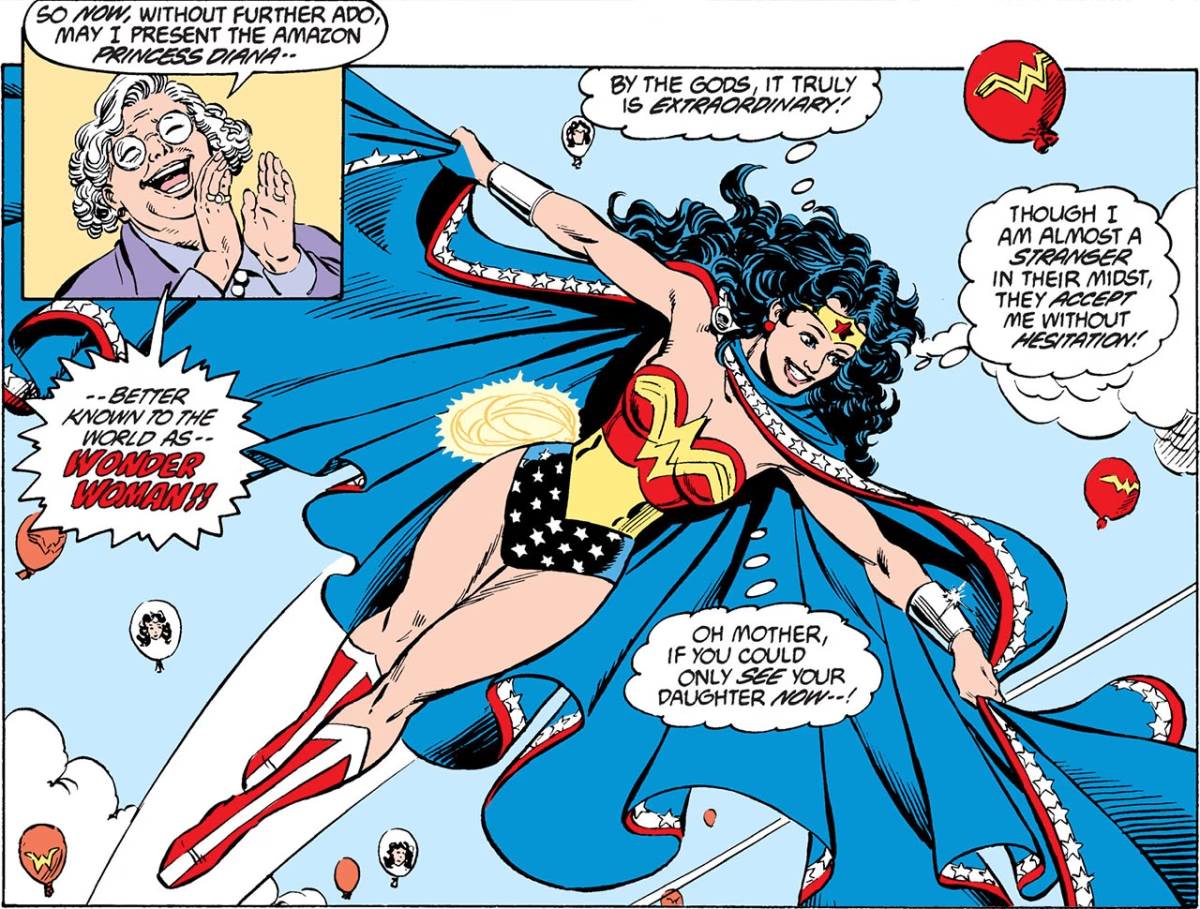
- (1987-1992) Wonder Woman by George Pérez
- Rebuilt Diana’s world around authentic Greek mythology and modern feminist philosophy.
- (1987-1992) Justice League International by Keith Giffen, J.M. DeMatteis & Kevin Maguire
- Successfully subverted standard superhero tropes for a workplace sitcom dynamic.
- (1987-1992) Green Arrow (“The Longbow Hunters”) by Mike Grell
- Relocated Oliver Queen to Seattle for mature, urban street-level crime thrillers without trick arrows.
- (1987-1992) Doctor Fate by J.M. DeMatteis & Shawn McManus
- Mystical fantasy run exploring the dual-avatar mechanics of Eric and Linda Strauss under the helmet of Nabu.
- (1987-1992) Suicide Squad by John Ostrander & Luke McDonnell
- Turned disposable B-list villains into complex, morally gray covert ops.
- (1988) [EVENT] Millennium by Steve Englehart & Joe Staton
- Weekly event introducing the New Guardians and secret Manhunter sleeper agents embedded in hero lives.
- (1988) Batman: The Killing Joke by Alan Moore & Brian Bolland
- The tragic Joker “origin story” that permanently paralyzed Barbara Gordon and reshaped Batman lore.
- (1988) Batman: The Cult by Jim Starlin & Bernie Wrightson
- Psychological horror featuring Deacon Blackfire breaking Batman’s mind in subterranean Gotham.
- (1988) Batman: A Death in the Family by Jim Starlin & Jim Aparo
- Infamous fan-voted storyline where readers called a hotline to decide the death of Robin (Jason Todd).
- (1988-1989) [EVENT] Invasion! by Keith Giffen, Bill Mantlo & Todd McFarlane
- Alien alliance event that introduced the concept of the Metagene into the DC Universe.
- (1988-1989) Cosmic Odyssey by Jim Starlin & Mike Mignola
- High-stakes space-opera featuring Green Lantern John Stewart’s greatest tragedy.
- (1988-1990) Animal Man (Proto-Vertigo) by Grant Morrison & Chas Truog
- A metafictional run that breaks down the fourth wall and superhero mechanics.
- (1988-1989) Black Orchid (Proto-Vertigo) by Neil Gaiman & Dave McKean
- Painted and atmospheric reinvention of a forgotten character in a poetic and eco-feminist fable.
- (1988-1991) Hellblazer (John Constantine) by Jamie Delano
- Working-class magician John Constantine spin-off on his own in this bleak, terrifying vision of British urban horror.
- (1988-1992) Deadman by Mike Baron & Kelley Jones
- Moved Boston Brand into surrealist psychological horror thanks to Jones’s gothic, macabre art.
- (1989) Batman: Gotham by Gaslight by Brian Augustyn & Mike Mignola
- Launched DC’s official Elseworlds imprint by pitting a Victorian-era Batman against Jack the Ripper.
- (1989) Arkham Asylum: A Serious House on Serious Earth by Grant Morrison & Dave McKean
- A surreal psychological nightmare diving into the madness of Gotham’s asylum past and its inmates.
- (1989-1990) Green Lantern: Emerald Dawn by Keith Giffen, Gerard Jones & Jim Owsley
- Post-Crisis origin story of Hal Jordan, changing him from the fearless 1960s archetype into a flawed human overcoming his own demon.
- (1989-1992) Legion of Super-Heroes (“Five Years Later”) by Keith Giffen & Tom Bierbaum
- A mature leap forward into a darker future for the 31st-century Legion.
- (1989-1993) Doom Patrol (Proto-Vertigo) by Grant Morrison & Richard Case
- High-art experimentation that moves into the realms of bizarre, Dadaist, surrealist superheroics.
- (1989-1992) Batman by Marv Wolfman & Alan Grant
- Introduced Tim Drake as the new Robin and created street-level rogues like Anarky, Victor Zsasz, and Ventriloquist.
- (1989-1996) The Sandman by Neil Gaiman & Various
- Literary dark fantasy epic following Morpheus (Dream of the Endless) that became Vertigo’s flagship book.
- (1989-1997) Lobo by Keith Giffen, Alan Grant & Simon Bisley
- Ultraviolent, hilarious parody of 90s gritty anti-heroes starring the “Main Man.”

2. The Blockbuster 90s & Imprint Explosion (1990-1999)
- (1990) Batman: Dark Knight, Dark City by Peter Milligan & Kieron Dwyer
- Psychological occult thriller that changed the Riddler into a terrifying mastermind.
- (1990-1996) Shade, the Changing Man (Vertigo) by Peter Milligan & Chris Bachalo
- Psychedelic, mind-bending exploration of identity, mental illness, and Americana.
- (1991) [EVENT] Armageddon 2001 by Archie Goodwin, Dennis O’Neil & Dan Jurgens
- High-stakes time-travel mystery introducing supervillain Monarch that ended in controversy.
- (1991) Challengers of the Unknown Must Die! by Jeph Loeb & Tim Sale
- The first Loeb/Sale collaboration, a modernisation of Kirby’s Silver Age sci-fi adventurers.
- (1991) [EVENT] War of the Gods by George Pérez
- Culmination of Pérez’s Wonder Woman run brought Ancient gods from separate global pantheons for a war on Earth.
- (1991-1994) Hellblazer (Vertigo) by Garth Ennis & Steve Dillon
- Iconic run defined by John Constantine’s battle with lung cancer and the Devil.
- (1992) [EVENT] Eclipso: The Darkness Within by Robert Loren Fleming & Eric Shanower
- Supernatural epic that redefined Eclipso as a terrifying, world-threatening cosmic force.
- (1992-1993) [EVENT] The Death and Return of Superman by Dan Jurgens, Louise Simonson, Jerry Ordway et al.
- A defining 1990s pop culture story starting with Doomsday killing Superman, leading to four replacement Supermen and the Man of Steel’s rebirth.
- (1992-1995) Wonder Woman by William Messner-Loebs & Mike Deodato Jr.
- The destitute Wonder Woman fights for her title, encountering Artemis on her path.
- (1992-1998) The Spectre by John Ostrander & Tom Mandrake
- Philosophical theological noir exploring divine vengeance, justice, and the soul of Jim Corrigan.
- (1992-2000) The Flash (Wally West) by Mark Waid
- The definitive Wally West run that introduced the Speed Force, Impulse, and the Flash family legacy.
- (1993) Enigma (Vertigo) by Peter Milligan & Duncan Fegredo
- A deconstruction of identity, sexual repression, and the superhero mythos through a surreal mystery.
- (1993) JSA: The Golden Age (Elseworlds) by James Robinson & Paul Smith
- Post-WWII political thriller examining the dark secrets and Red Scare paranoia of the Justice Society.
- (1993-1997) Static (Milestone) by Dwayne McDuffie & Denys Cowan
- Introduction of Virgil Hawkins, Milestone’s iconic teen hero dealing with gang wars and social issues.
- (1993-1997) Icon (Milestone) by Dwayne McDuffie & M.D. Bright
- A superhero series debating conservative vs. progressive ideals.
- (1993-1998) Aquaman by Peter David
- Re-invented Arthur Curry as a brooding, long-haired warrior with a prosthetic harpoon hand.
- (1993-1998) Sandman Mystery Theatre (Vertigo) by Matt Wagner & Guy Davis
- 1930s noir crime thriller following Golden Age vigilante Wesley Dodds in gritty pulp cases.
- (1993-1994) [EVENT] Batman: Knightfall by Chuck Dixon, Doug Moench & Alan Grant
- Bane breaks Bruce Wayne’s back, handing the cowl over to the unstable Azrael in an epic trilogy.
- (1993-2002) Robin by Chuck Dixon
- Definitive ongoing solo run for Tim Drake, establishing his relatable high school life and detective growth.
- (1994) [EVENT] Zero Hour: Crisis in Time! by Dan Jurgens & Jerry Ordway
- Hal Jordan as Parallax attempts to rewrite the timeline to fix past tragedies.
- (1994-1999) The Power of Shazam! by Jerry Ordway
- Brought Billy Batson and the Marvel Family origin into the Post-Crisis continuity.
- (1994-2000) The Books of Magic (Vertigo) by John Ney Rieber & Peter Gross
- Young Timothy Hunter’s evolution as he faces his magical destiny.
- (1994-2000) The Invisibles (Vertigo) by Grant Morrison & Various
- A hyper-ambitious, esoteric, sci-fi, conspiracy thriller that will rewire your brain, allegedly.
- (1994-2000) Green Lantern (Kyle Rayner) by Ron Marz
- Kyle Rayner becomes the torchbearer as the “Emerald Knight” and sole Green Lantern.
- (1994-2001) Starman by James Robinson & Tony Harris / Peter Snejbjerg
- Epic run following Jack Knight in retro-deco Opal City, refining superhero legacy mechanics at DC.
- (1995) [EVENT] Underworld Unleashed by Mark Waid & Howard Porter
- Lord of Hell Neron offers powers to DC villains in exchange for their souls, and they took the deal.
- (1995-2000) Preacher (Vertigo) by Garth Ennis & Steve Dillon
- Hyper-violent Southern Gothic horror comedy western cross-country road trip in search of God.
- (1995-2002) Impulse by Mark Waid & Humberto Ramos
- The energetic and comedic adventures of young speedster Bart Allen adjusting to life in Alabama.
- (1996) [EVENT] The Final Night by Karl Kesel & Stuart Immonen
- A Sun-Eater threatens Earth, leading to the ultimate heroic sacrifice to reignite the sun.
- (1996) Flex Mentallo: Man of Muscle Mystery (Vertigo) by Grant Morrison & Frank Quitely
- A deconstruction of the history of comic books through magic realism and meta-fiction.
- (1996) Kingdom Come (Elseworlds) by Mark Waid & Alex Ross
- A fully painted classic critique of the hyper-violent and cynical anti-heroes that defined 1990s comics.
- (1996-1997) Batman: The Long Halloween by Jeph Loeb & Tim Sale
- A tragic noir detective thriller following the Holiday killer and Harvey Dent’s fall into Two-Face.
- (1996-2000) JLA by Grant Morrison & Howard Porter
- High-octane team sci-fi adventure book that brought the JLA back to the top.
- (1996-2001) Hitman by Garth Ennis & John McCrea
- Cult-classic, human, and humorous series following a contract killer operating in the shadow of Gotham City’s superheroes.
- (1996-2002) Nightwing by Chuck Dixon & Scott McDaniel
- Dick Grayson getting out of Batman’s shadow as the hero of Blüdhaven.
- (1996-2003) Supergirl by Peter David & Gary Frank
- The protoplasmic Matrix merged with human Linda Danvers to create an angelic supernatural hero.
- (1997-2002) Transmetropolitan (Vertigo) by Warren Ellis & Darick Robertson
- A sadly prophetic cyberpunk tale about gonzo journalist Spider Jerusalem fighting corrupt institutions.
- (1998) [EVENT] DC One Million by Grant Morrison & Val Semeiks
- Epic crossover event where the 20th-century JLA meets the Justice Legion Alpha from the 853rd Century.
- (1998) Superman for All Seasons by Jeph Loeb & Tim Sale
- Emotional, countryside masterpiece focusing on Clark Kent’s humanity across four seasons in Smallville.
- (1998) JLA: The Nail (Elseworlds) by Alan Davis
- Explored a world where a flat tire prevented the Kents from discovering Baby Kal-El.
- (1998-2001) Martian Manhunter by John Ostrander & Tom Mandrake
- A character-defining run expanding Mars culture, telepathic mechanics, and J’onn J’onzz’s personal history.
- (1998-2003) Young Justice by Peter David & Todd Nauck
- Fun and youth-focused team unifying the teenage sidekicks of the late-1990s.
- (1999) [EVENT] Batman: No Man’s Land by Bob Gale, Greg Rucka, Chuck Dixon, Devin Grayson et al.
- After a contagion and a cataclysm, Gotham City is declared abandoned by the US, and gangs fight for control.
- (1999) [EVENT] Day of Judgment by Geoff Johns & Matthew Dow Smith
- Supernatural epic that reshaped the magical hierarchy of the DC Universe.
- (1999-2000) Batman: Dark Victory by Jeph Loeb & Tim Sale
- Direct sequel to The Long Halloween, introducing a young Dick Grayson (Robin).
- (1999-2002) The Authority (WildStorm) by Warren Ellis & Bryan Hitch
- The edgy and bloody series that popularized “widescreen comics” with a proactive superhero team changing world politics by force.
- (1999-2006) JSA (Justice Society of America) by Geoff Johns & David S. Goyer
- The ultimate pairing of Golden Age veterans with young legacy heroes.
- (1999-2006) Wonder Woman by Greg Rucka
- Grounded political/diplomatic thriller focusing on Diana as an ambassador in the Embassy of Themyscira.
- (1999-2006) Tom Strong (America’s Best Comics) by Alan Moore & Chris Sprouse
- Joyful love letter to retro pulp sci-fi and classic century-spanning adventure stories.
- (1999-2009) 100 Bullets (Vertigo) by Brian Azzarello & Eduardo Risso
- Modern noir crime fiction exploring Agent Graves, untraceable bullets, and the secret Trust.
- (1999-2009) Planetary (WildStorm) by Warren Ellis & John Cassaday
- A masterpiece examining “Archaeologists of the Impossible,” dissecting 20th-century pop culture and genre fiction.
3. The Modern Renaissance & Crisis Era (2000-2011)
- (2000) JLA: “Tower of Babel” by Mark Waid & Howard Porter
- Ra’s al Ghul steals Batman’s contingency plans to defeat the Justice League.
- (2000-2006) Lucifer (Vertigo) by Mike Carey & Peter Gross
- An epic high-fantasy that doubles as a philosophical exploration of free will.
- (2000-2005) The Flash (Wally West) by Geoff Johns
- A mix of grounded character depth and blue-collar focus with high-stakes superhero mechanics.
- (2000-2006) Batgirl (Cassandra Cain) by Kelley Puckett & Damion Scott
- Solidified silent martial arts prodigy Cassandra Cain’s status as a layered fan-favorite in the first solo ongoing Batgirl.
- (2001) [EVENT] Our Worlds at War by Jeph Loeb & Various
- High-stakes cosmic war event pitting Earth’s heroes and Darkseid against the galactic threat Imperiex.
- (2001) [EVENT] Joker: Last Laugh by Chuck Dixon & Scott Beatty
- Believing he is dying, the Joker plans his last joke by “Jokerizing” meta-human villains across the globe.
- (2001-2003) Action Comics by Joe Kelly
- Balanced cosmic-scale action with contemporary socio-political issues while challenging Superman’s morality.
- (2001-2003) Harley Quinn by Karl Kesel & Terry Dodson
- Harley Quinn’s first ongoing solo comic series moving her away from her sidekick role.
- (2001-2007) Green Arrow by Kevin Smith & Judd Winick
- Resurrected Oliver Queen, DC’s primary socially conscious political activist, and developed Mia Dearden as Speedy in Star City.
- (2002) Wonder Woman: The Hiketeia by Greg Rucka & J.G. Jones
- Classic graphic novel setting up an ideological and physical clash between Wonder Woman and Batman.
- (2002-2003) Batman: Hush by Jeph Loeb & Jim Lee
- A blockbuster mystery introducing Hush and revisiting the entire rogue gallery, elevated by Jim Lee art.
- (2002-2004) Catwoman by Ed Brubaker & Darwyn Cooke
- A gritty, high-stakes street noir that forever redefined Selina Kyle.
- (2002-2006) Hawkman by Geoff Johns & Rags Morales
- Brought back Carter Hall as a high-flying epic hero and tied him to Shiera Sanders through reincarnation.
- (2002-2008) Y: The Last Man (Vertigo) by Brian K. Vaughan & Pia Guerra
- Post-apocalyptic journey following Yorick Brown, the last surviving male on Earth.
- (2002-2015) Fables (Vertigo) by Bill Willingham & Mark Buckingham
- Fairy tale characters live in secret in modern-day New York City after fleeing their magic homeland, which was conquered by The Adversary.
- (2003) Superman: Red Son (Elseworlds) by Mark Millar & Dave Johnson
- What if Kal-El’s rocket landed in the Cold War-era Soviet Union?
- (2003-2004) Superman: Birthright by Mark Waid & Leinil Francis Yu
- Modernized Origin for Superman, replacing Byrne’s 1986 The Man of Steel.
- (2003-2004) WE3 (Vertigo) by Grant Morrison & Frank Quitely
- Heartbreaking sci-fi thriller about cybernetically enhanced pets escaping military laboratory weapons testing.
- (2003-2006) Gotham Central by Ed Brubaker, Greg Rucka & Michael Lark
- Complex police procedural following MCU detectives dealing with rogue supervillain crimes.
- (2003-2006) The Losers (Vertigo) by Andy Diggle & Jock
- Re-imagining of a classic 1970s DC World War II military team into a hard-boiled, modern anti-corporate heist narrative.
- (2003-2006) Plastic Man by Kyle Baker
- An erratic, hilarious, meta-fictional tribute to the original 1940s golden-age character.
- (2003-2007) Birds of Prey by Gail Simone
- Defined Oracle (Barbara Gordon), Black Canary, and Huntress as an elite street-level team ops.
- (2004) [EVENT] Identity Crisis by Brad Meltzer & Rags Morales
- A whodunit murder mystery that turned controversial by revealing mind-wiping secrets within the JLA.
- (2004-2005) DC: The New Frontier by Darwyn Cooke
- Masterpiece love letter bridging Golden Age history into the Silver Age sci-fi revolution.
- (2004-2005) Adam Strange: Planet Heist by Andy Diggle & Pasqual Ferry
- High-concept sci-fi thriller that set up the cosmic tensions for the Rann-Thanagar War.
- (2004-2013) Green Lantern by Geoff Johns
- Epic mythos-defining space opera that brought back Hal Jordan and built the Emotional Spectrum.
- (2005) Batman: The Man Who Laughs by Ed Brubaker & Doug Mahnke
- A contemporary psychological retelling of the Joker’s historic 1940 debut appearance.
- (2005-2006) Seven Soldiers of Victory by Grant Morrison & Various
- A massive and fragmented “megaseries” about a team of characters who have never actually met.
- (2005-2006) The OMAC Project by Greg Rucka & Jesus Saiz
- Brother Eye and Maxwell Lord turn Batman’s surveillance network into a global hero-hunting weapon.
- (2005-2006) [EVENT] Infinite Crisis by Geoff Johns & Phil Jimenez
- Direct sequel to Crisis on Infinite Earths, restoring the Multiverse but marked by devastating, permanent character sacrifices.
- (2005-2006) Batman: “Under the Hood” by Judd Winick & Doug Mahnke
- Successfully returned Jason Todd to Gotham as the lethal anti-hero Red Hood.
- (2005-2006) Rann-Thanagar War by Dave Gibbons & Ivan Reis
- A galactic space war establishing the cosmic prelude to Infinite Crisis.
- (2005-2008) All-Star Superman by Grant Morrison & Frank Quitely
- Superman doing his version of the Twelve Labors of Hercules in this highly celebrated tale.
- (2005-2016) Secret Six by Gail Simone
- Took lesser super-villains and united them in a team book defined by dark humor and found-family ties.
- (2006-2007) Uncle Sam and the Freedom Fighters by Jimmy Palmiotti & Justin Gray
- Modernized patriotic Golden Age heroes fighting government corruption and shadow agencies.
- (2006-2007) 52 by Geoff Johns, Grant Morrison, Greg Rucka & Mark Waid
- A real-time ambitious weekly story following a year in the DCU without Superman, Batman, or Wonder Woman.
- (2006-2008) Action Comics by Geoff Johns & Richard Donner
- Brought cinematic influence, General Zod, and Brainiac’s definitive lore back into Superman titles.
- (2006-2008) Detective Comics by Paul Dini
- Episodic detective mysteries spotlighting Batman’s classic villains.
- (2006-2009) Blue Beetle (Jaime Reyes) by John Rogers & Keith Giffen
- Successfully debuted Jaime Reyes and introduced the alien scarab mythos.
- (2006-2011) Jonah Hex by Jimmy Palmiotti & Justin Gray
- Long-running episodic Western revival built around grim, standalone bounty stories.
- (2006-2012) Batman by Grant Morrison
- Epic multi-year saga introducing Damian Wayne, Batman R.I.P., Dick Grayson as Batman, and Batman Incorporated.
- (2007) Shazam! The Monster Society of Evil by Jeff Smith
- All-ages, modern reimagining of Billy Batson’s origin by the creator of Bone.
- (2007-2011) Booster Gold by Geoff Johns & Dan Jurgens
- Reframed Booster Gold from a joke to the secret, noble guardian of the DC multiverse timeline.
- (2007-2012) Scalped (Vertigo) by Jason Aaron & R.M. Guéra
- Unflinching crime noir following an undercover FBI agent on a modern Oglala Lakota Indian reservation.
- (2008) Joker by Brian Azzarello & Lee Bermejo
- Street-level crime graphic novel viewing the Joker’s madness through the eyes of a low-level henchman.
- (2008-2009) [EVENT] Final Crisis by Grant Morrison & J.G. Jones / Doug Mahnke
- Darkseid drops into reality, corrupting Earth with the Anti-Life Equation.
- (2008-2010) Unknown Soldier (Vertigo) by Joshua Dysart & Alberto Ponticelli
- A hard-hitting, contemporary psychological thriller set in the war-torn landscape of East Africa.
- (2008-2011) Supergirl by Sterling Gates & Jamal Igle
- Redefined Kara Zor-El as a relatable and optimistically heroic teenage icon.
- (2008-2011) Madame Xanadu (Vertigo) by Matt Wagner & Amy Reeder
- Historical dark fantasy tracing Madame Xanadu’s immortality from Arthurian times through 20th-century history.
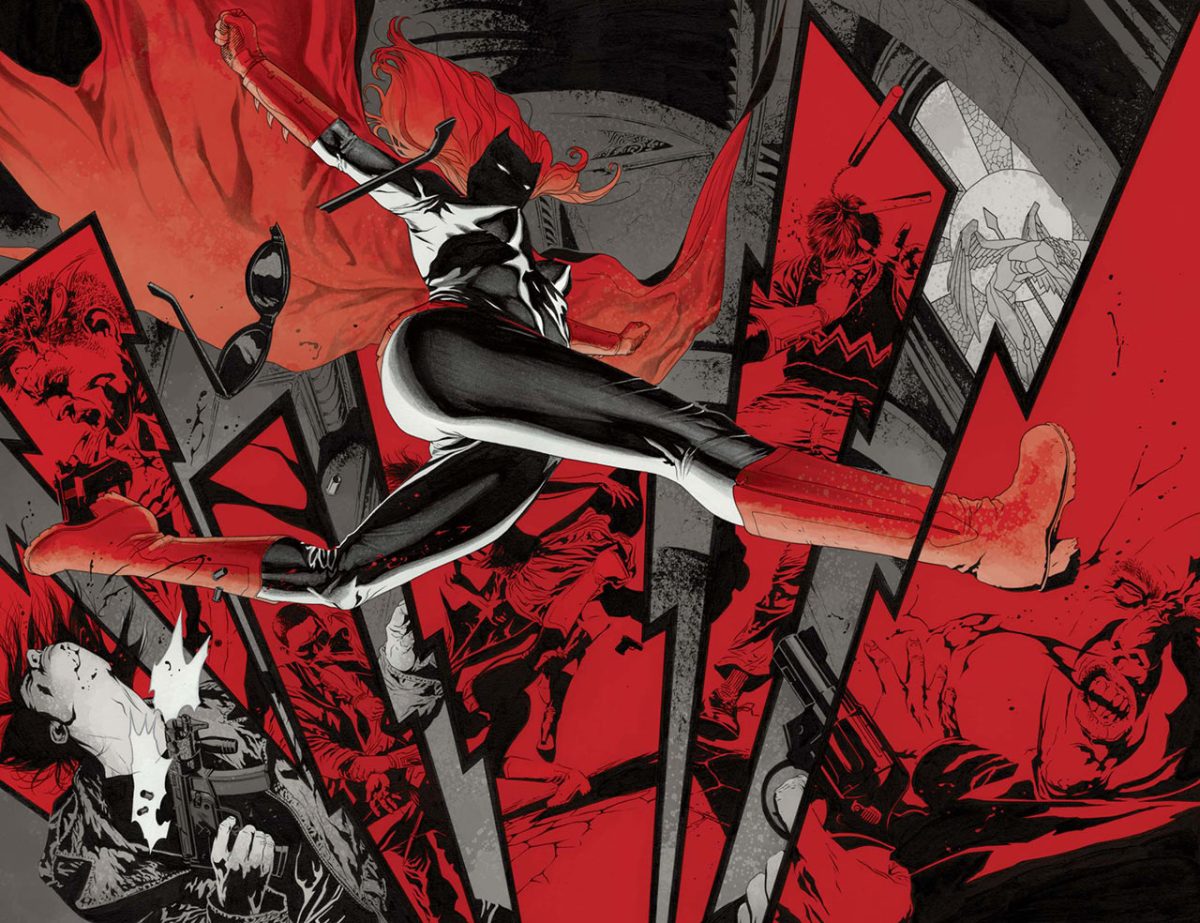
- (2009-2010) Batwoman: Elegy by Greg Rucka & J.H. Williams III
- Visually stunning run starring Kate Kane fighting the Religion of Crime, cementing her as an A-List hero.
- (2009-2010) [EVENT] Blackest Night by Geoff Johns & Ivan Reis
- Climax of Johns’ GL run. Nekron reanimates deceased DC heroes and villains as Black Lantern zombies.
- (2009-2010) Flash: Rebirth by Geoff Johns & Ethan Van Sciver
- Brought Barry Allen back from the dead, introduced Eobard Thawne’s altered past, and set up Flashpoint.
- (2009-2011) Gotham City Sirens by Paul Dini & Guillem March
- Catwoman, Poison Ivy, and Harley Quinn formed a volatile alliance that changed Gotham’s crime world.
- (2009-2013) Green Lantern Corps by Peter J. Tomasi & Patrick Gleason
- The sister title to Geoff Johns’ run, focusing on Guy Gardner, Kilowog, and frontline lantern officers.
- (2010-2011) Brightest Day by Geoff Johns & Peter J. Tomasi
- Bi-weekly follow-up to Blackest Night, exploring the resurrection mysteries of 12 heroes and villains.
- (2010-2011) Zatanna by Paul Dini
- Dark fantasy solo ongoing series showcasing Zatanna’s stage magic and occult investigations.
- (2010-2016) American Vampire (Vertigo) by Scott Snyder & Rafael Albuquerque
- An historical epic exploring vampire archetypes in parallel with the evolution of the United States.
- (2011) Batman: The Black Mirror by Scott Snyder, Jock & Francesco Francavilla
- Dick Grayson as Batman investigating Gotham’s underground dark market alongside Jim Gordon’s son.
- (2011) [EVENT] Flashpoint by Geoff Johns & Andy Kubert
- Barry Allen alters the past to save his mother, creating a dystopian alternate timeline that concludes by rebooting the entire DC Universe into The New 52.
The New 52 Era (2011-2016)
A complete universe-wide reboot resetting DC canon to Issue #1s, introducing modernized origins, darker high-concept series, and major blockbuster events.
- (2011-2012) The Shade by James Robinson & Cully Hamner
- A globetrotting, Victorian-influenced tale expanding the backstory of Robinson’s Starman anti-hero.
- (2011-2013) Action Comics by Grant Morrison & Rags Morales
- Redefined Superman’s early, social-justice-driven beginnings in a t-shirt and jeans fighting corporate corruption in Metropolis.
- (2011-2013) Aquaman by Geoff Johns & Ivan Reis
- Elevated Aquaman into an A-list badass hero, and expanded Atlantean lore.
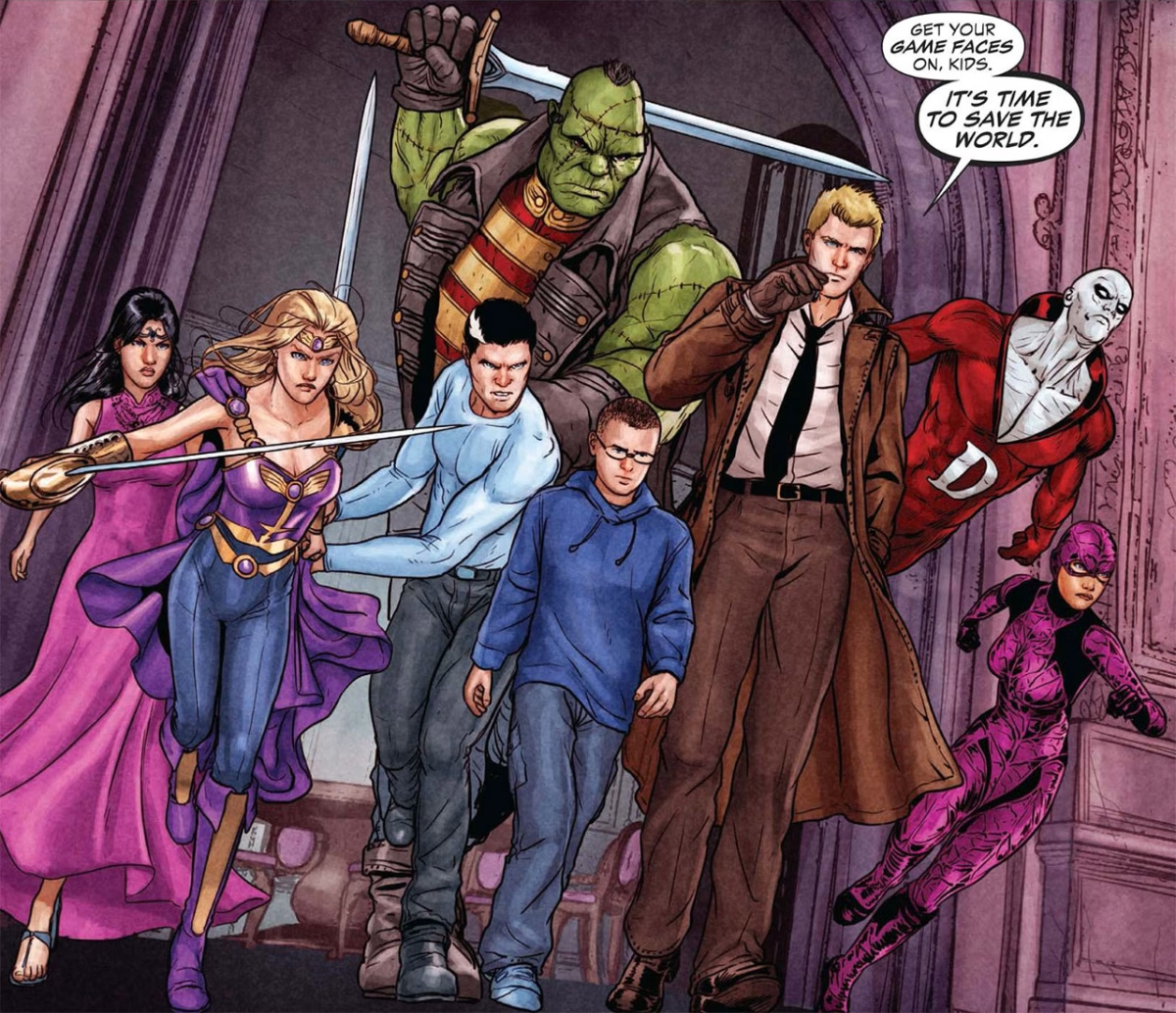
- (2011-2013) Justice League Dark by Peter Milligan & Jeff Lemire
- Gave the Magic Side of the DCU its own occult strike team to handle mystical threats.
- (2011-2013) Batwoman by J.H. Williams III & W. Haden Blackman
- Kate Kane’s solo adventures pitting her instead against esoteric, mythological, and supernatural horrors.
- (2011-2013) Frankenstein: Agent of S.H.A.D.E. by Jeff Lemire & Alberto Ponticelli
- High-concept monster-mash sci-fi following Mary Shelley’s creature leading a team of paranormal operatives for a government agency.
- (2011-2014) Wonder Woman by Brian Azzarello & Cliff Chiang
- Dark fantasy horror run rooted in classical Greek mythology that controversially rebooted Diana’s origins.
- (2011-2014) The Flash by Francis Manapul & Brian Buccellato
- Unravels the true physics of the Speed Force, with its kinetic artwork and fluid visual storytelling.
- (2011-2014) Animal Man by Jeff Lemire & Travel Foreman
- A family drama wrapped inside a visceral, apocalyptic body-horror epic.
- (2011-2014) Batgirl by Gail Simone
- Put Barbara Gordon back under the cowl after two decades as Oracle.
- (2011-2015) Swamp Thing by Scott Snyder & Charles Soule
- Goes from creature-feature body-horror era by Snyder to the mythological fantasy procedural by Soule.
- (2011-2016) Batman by Scott Snyder & Greg Capullo
- Introduced the Court of Owls, overhauled Gotham City’s history, in a psychological horror-heavy run.
- (2011-2016) Justice League by Geoff Johns & Jim Lee / Jason Fabok
- Rethinked the JL dynamic in a high-stakes, modern blockbuster way.
- (2011-2016) Shazam! by Geoff Johns & Gary Frank
- Modernized Billy Batson and introduced his adopted foster-family dynamic.
- (2011-2016) Batman & Robin by Peter J. Tomasi & Patrick Gleason
- Emotional, character-driven exploration of the father-son dynamic between Batman and Damian Wayne.
- (2012-2013) Dial H by China Miéville & Mateus Santolouco
- Re-invented the 1960s Dial H for Hero concept into a dark, Kafkaesque body-horror procedural.
- (2013-2014) [EVENT] Trinity War / Forever Evil by Geoff Johns, Jeff Lemire & David Finch
- The first major line-wide crossover where the villains completely take over the world.
- (2013-2014) Green Arrow by Jeff Lemire & Andrea Sorrentino
- A gritty noir story that strips Oliver down to his absolute bare essentials, a man and his bow.
- (2013-2016) Green Lantern by Robert Venditti
- A cosmic space opera that subverted the explored mechanics of the entire Emotional Spectrum.
- (2013-2014) Superman: Unchained by Scott Snyder & Jim Lee
- Explored the physical and philosophical limitations of the Man of Steel for his 75th anniversary.
- (2013-2016) Harley Quinn by Amanda Conner & Jimmy Palmiotti
- Reshaped Harley into an anti-hero icon in Coney Island, making her the pop-culture icon she is today.
- (2014-2015) [EVENT] The New 52: Futures End by Brian Azzarello, Jeff Lemire, Dan Jurgens & Keith Giffen
- An eleven-month weekly series explored a bleak, cybernetic future five years ahead where Brother Eye has turned Earth’s heroes into terrifying borg hybrids.
- (2014-2015) The Multiversity by Grant Morrison & Various
- A tour of DC’s 52 parallel earths in search of a cursed comic book to stop an extra-dimensional invasion.
- (2014-2016) Grayson by Tim Seeley & Tom King
- Following his identity reveal, Dick Grayson becomes “Agent 37” for the secret spy agency Spyral.
- (2015) [EVENT] Convergence by Jeff King, Dan Jurgens & Scott Lobdell
- Characters from the pre-“Flashpoint” universe are back to save the modern fabric of space and time.
DC Rebirth Era (2016-2021)
Restoring legacy, hope, and optimism to the DC Universe while untangling Watchmen’s cosmic intervention, leading into Dark Multiverse threats and a reimagined multiverse.
- (2016) DC Universe: Rebirth #1 by Geoff Johns, Gary Frank, Ethan Van Sciver et al.
- Brought Wally West back from the Speed Force, restoring heart, legacy, and lost time while revealing Doctor Manhattan’s interference in the timeline.
- (2016-2017) Wonder Woman by Greg Rucka, Liam Sharp & Nicola Scott
- Dual-narrative run (The Lies / Year One) that sorted out Diana’s contradictory New 52 origins and restored her classical Amazonian roots.
- (2016-2018) Superman by Peter J. Tomasi & Patrick Gleason
- Post-Crisis Clark Kent, Lois Lane, and their young son Jon Kent adjusting to life on a Hamilton County farm.
- (2016-2018) Action Comics by Dan Jurgens & Various
- Merged fragmented timelines to help rebuild the definitive modern Superman family.
- (2016-2018) Deathstroke by Christopher Priest
- A non-linear political family drama about Slade Wilson’s moral ambiguity, mercenary contracts, and dysfunctional children.
- (2016-2018) Detective Comics by James Tynion IV & Eddy Barrows / Álvaro Martínez
- Batman and Batwoman formed a Bat-Family military-style team in a high-stakes emotional thriller.
- (2016-2018) Cave Carson Has a Cybernetic Eye (Young Animal) by Gerard Way, Jon Rivera & Michael Avon Oeming
- Psychedelic sci-fi adventure reviving an obscure Silver Age explorer.
- (2016-2018) Hal Jordan and the Green Lantern Corps by Robert Venditti, Rafa Sandoval & Ethan Van Sciver
- High-octane space opera reuniting the core four Earth Lanterns to face the Sinestro Corps.
- (2016-2019) Batman by Tom King, Mikel Janín & David Finch
- Deconstructive, character-driven saga exploring Bruce Wayne’s trauma and his romance with Catwoman.
- (2016-2019) Nightwing by Tim Seeley & Sam Humphries
- Returned Dick Grayson to his superhero costume, moving from international adventure to neon-noir crime procedural in Blüdhaven.
- (2016-2020) The Flash by Joshua Williamson
- A continuity-heavy family tragedy exploring the physical and psychological limitations of Barry Allen.
- (2016-2020) Aquaman by Dan Abnett, Stjepan Šejić & Robson Rocha
- Political thriller detailing Arthur Curry’s struggle as King of Atlantis, leading to the Underworld rebellion.
- (2017) Batman/The Flash: The Button by Tom King & Joshua Williamson
- Batman and Barry Allen investigate the mysterious smiley-face button embedded in the Batcave wall, leading to a Flashpoint universe crossover.
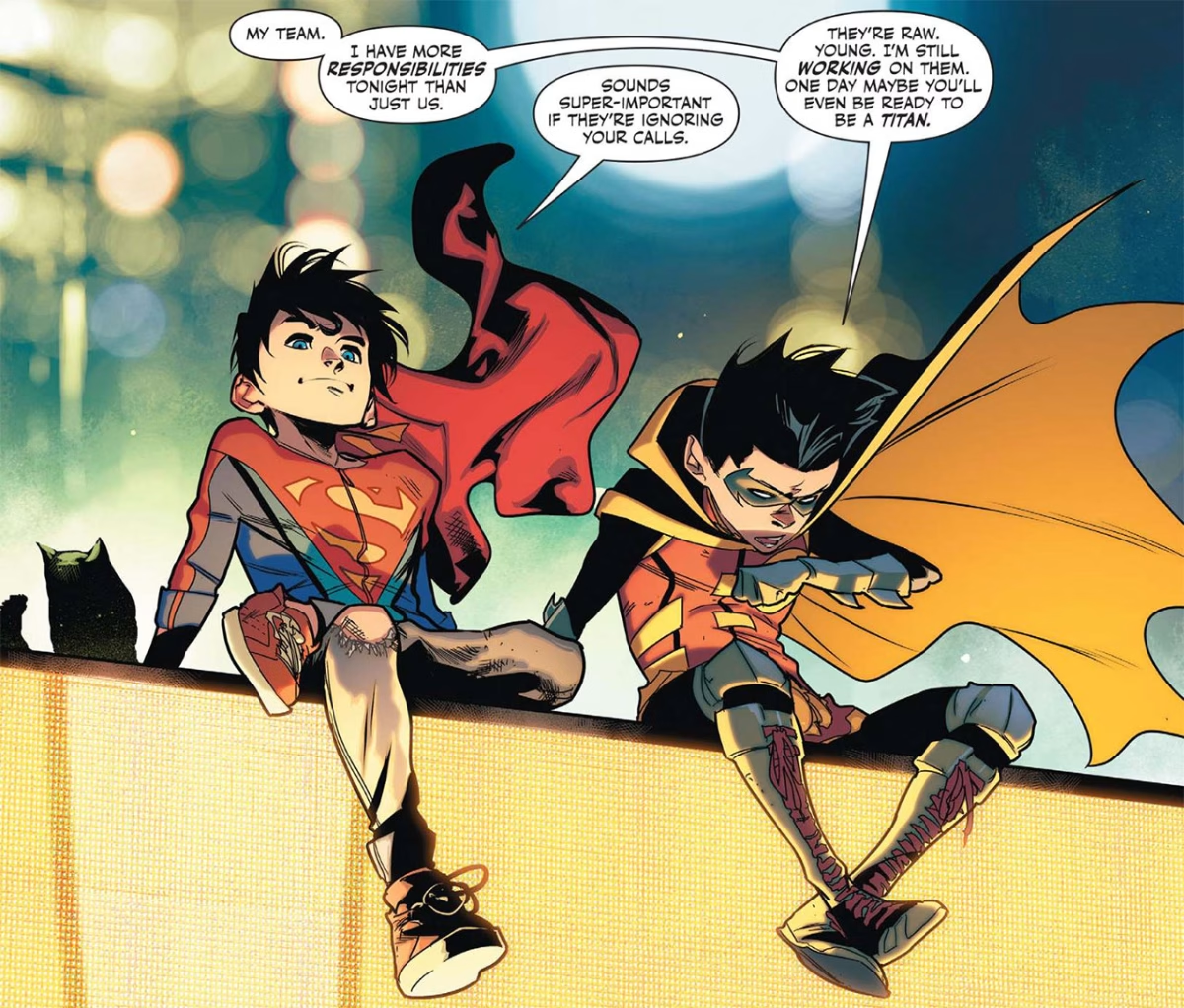
- (2017-2018) Super Sons by Peter J. Tomasi & Jorge Jiménez
- The fun and chaotic buddy-cop adventures of young Robin (Damian Wayne) and Superboy (Jon Kent).
- (2017-2018) Batman: White Knight (Black Label) by Sean Murphy
- Alt-universe story where a cured Joker) becomes a politician to expose Batman as Gotham’s ultimate villain.
- (2017-2018) The Kamandi Challenge by Various Writers & Artists
- A 12-issue round-robin creative experiment celebrating Jack Kirby’s 100th birthday, passing Kamandi from one creative team to the next on cliffhangers.
- (2017-2018) [EVENT] Dark Nights: Metal by Scott Snyder & Greg Capullo
- Introduced the Dark Multiverse, including villain The Batman Who Laughs, leading to the “New Age of Heroes.”
- (2017-2019) Doomsday Clock by Geoff Johns & Gary Frank
- Crossover colliding the DC Universe with Watchmen, examining Doctor Manhattan’s manipulation of Superman and the “Metaverse.”
- (2017-2019) Mister Miracle (Black Label) by Tom King & Mitch Gerads
- Psychological drama dealing with depression, war on Apokolips, and domestic life with Scott Free and Big Barda.
- (2018) Milk Wars (DC / Young Animal) by Steve Orlando, Gerard Way et al.
- Bizarre meta-crossover where the Justice League meets Young Animal characters to stop the Retaliators from corporate-sanitizing reality.
- (2018-2019) [EVENT] Heroes in Crisis by Tom King & Clay Mann
- Murder mystery set inside “Sanctuary,” a secret trauma treatment facility for superheroes dealing with PTSD.
- (2018-2019) The Batman Who Laughs by Scott Snyder & Jock
- Dark thriller in which The Batman Who Laughs launches a calculated shadow campaign inside the DC reality.
- (2018-2020) Justice League by Scott Snyder, James Tynion IV & Jorge Jiménez
- Sprawling cosmic stakes, reality-bending concepts, and an ideological war over the fate of the Multiverse.
- (2018-2021) Justice League Dark by James Tynion IV & Ram V
- A team of misfits assembled by Wonder Woman faces cosmic superhero stakes and deep psychological horror.
- (2018-2021) Hawkman by Robert Venditti & Bryan Hitch
- The run that unified all past, present, and alternate-reincarnation timelines of Carter Hall across space and time.
- (2018-2021) The Green Lantern by Grant Morrison & Liam Sharp
- Episodic, Silver-Age sci-fi procedural following Hal Jordan as an intergalactic beat cop.
- (2019) Event Leviathan by Brian Michael Bendis & Alex Maleev
- Spy mystery where a reformed Leviathan dismantles DC’s secret intelligence organizations overnight.
- (2019-2020) Lois Lane by Greg Rucka & Mike Perkins
- Political journalism noir featuring Lois Lane investigating international corruption alongside Renee Montoya (The Question).
- (2019-2020) Superman’s Pal Jimmy Olsen by Matt Fraction & Steve Lieber
- Slapstick comedy following Jimmy Olsen’s bizarre adventures and viral stunts across Metropolis.
- (2019-2020) [EVENT] Year of the Villain by Scott Snyder, James Tynion IV et al.
- Apex Lex Luthor offers upgraded power boosts to villains to finally defeat their superhero arch-nemeses.
- (2019-2020) Wonder Twins (Wonder Comics) by Gene Luen Yang & Stephen Byrne
- Satirical reboot of Zan and Jayna (from 1970s Super Friends cartoon) adjusting to American high school while interning at the Hall of Justice.
- (2019-2020) Superman Smashes the Klan by Gene Luen Yang & Gurihiru
- Inspired by a classic 1946 radio show, Clark Kent helps a Chinese-American family battle 1940s hate groups.
- (2019-2020) Harleen (Black Label) by Stjepan Šejić
- Dark psychological thriller exploring Dr. Harleen Quinzel’s tragic psychological descent into Harley Quinn.
- (2019-2021) Far Sector (Black Label) by N.K. Jemisin & Jamal Campbell
- Sci-fi political mystery introducing Green Lantern Jo Mullein at the edge of the universe in the City Enduring.
- (2020-2021) Strange Adventures (Black Label) by Tom King, Mitch Gerads & Evan “Doc” Shaner
- Deconstructive war crime investigation into Adam Strange’s celebrated heroics on planet Rann.
- (2020-2021) Rorschach (Black Label) by Tom King & Jorge Fornés
- A political conspiracy thriller set decades after the original Watchmen events following an assassination attempt on a presidential candidate.
- (2020-2021) [EVENT] Dark Nights: Death Metal by Scott Snyder & Greg Capullo
- Apocalyptic metal event reshaping Earth into a hellscape ruled by the Darkest Knight.
- (2020-2021) Batman (“Joker War”) by James Tynion IV & Jorge Jiménez
- Joker steals the Wayne fortune to wage full-scale war on Gotham, shifting the dynamics of the Bat-universe.
- (2021) [EVENT] Future State by Various Writers & Artists
- A glimpse into potential future DC timelines.

Infinite Frontier / Dawn of DC Era (2021-2024)
The establishment of the Omniverse where all history is canon, giving rise to optimistic character-driven runs, expanded legacy families, and high-stakes cosmic shifts.
1. Infinite Frontier & Dark Crisis (2021-2022)
- (2021) [EVENT] Infinite Frontier #0 by Joshua Williamson, James Tynion IV, Geoff Johns et al.
- Officially launched the post-Death Metal status quo, establishing the Omniverse, restoring pre-Crisis memories.
- (2021-2022) Robin & Batman (Black Label) by Jeff Lemire & Dustin Nguyen
- Painted introspective look at Dick Grayson’s early days adjusting to Bruce Wayne’s strict training in the Batcave.
- (2021-2022) Supergirl: Woman of Tomorrow by Tom King & Bilquis Evely
- Sci-fi epic take on True Grit following Kara Zor-El and a young alien girl across the galaxy on a quest for vengeance.
- (2021-2022) Robin by Joshua Williamson & Gleb Melnikov
- Takes Damian Wayne out of Gotham and his father’s shadow to explore his independence.
- (2021-2022) Swamp Thing by Ram V & Mike Perkins
- Introduced Levi Kamei as the new avatar of the Green, blending body horror with ecological intrigue.
- (2021-2022) Catwoman: Lonely City (Black Label) by Cliff Chiang
- An older Selina Kyle leaves prison ten years after the “Fool’s Night” tragedy to pull off one last heist.
- (2021-2023) The Flash by Jeremy Adams
- A wholesome, action-packed epic run focused on Wally West and his family.
- (2021-2023) Action Comics by Phillip Kennedy Johnson
- Took Superman away from his comfortable life on Earth and dropped him into a brutal cosmic arena.
- (2021-2023) Nightwing by Tom Taylor & Bruno Redondo
- Put Dick Grayson as the heart of the superhero community in a vibrant, kinetic run.
- (2021-2023) The Human Target (Black Label) by Tom King & Greg Smallwood
- Slow-burn, neon-noir romance and murder mystery where Christopher Chance investigates his own impending death by poison while tangled with the Justice League International.
- (2021-Present) Batman/Superman: World’s Finest by Mark Waid & Dan Mora
- A retro-modern series showcasing peak Silver/Bronze Age adventures of Clark Kent and Bruce Wayne.
- (2021-2024) Detective Comics by Ram V
- Gothic operatic saga in three acts centered on the Orgham family taking over Gotham and Batman battling an internal demon.
- (2022) [EVENT] Dark Crisis on Infinite Earths by Joshua Williamson & Daniel Sampere
- Deathstorm and Parallax’s Dark Army seemingly eradicate the Justice League, forcing the legacy generation to defend the Multiverse.
- (2022) Flashpoint Beyond by Geoff Johns, Jeremy Adams & Tim Sheridan
- Thomas Wayne awakes back in his failed Flashpoint timeline, uncovering cosmic truths regarding the “Divine Continuum.”
- (2022-2024) The New Golden Age / Justice Society of America by Geoff Johns
- Expanded the lost history of DC’s first superhero team.

2. Dawn of DC Relaunch & Absolute Power (2022-2024)
- (2022-2023) [EVENT] Lazarus Planet by Mark Waid, Gene Luen Yang et al.
- A Lazarus volcano explosion rains magic-altering storm clouds across Earth, mutating meta-human abilities and launching the “Dawn of DC” initiative.
- (2022-2025) Batman by Chip Zdarsky
- High-stakes run introducing Failsafe and focusing on Batman’s obsession with absolute control.
- (2023) [EVENT] Knight Terrors by Joshua Williamson, Howard Porter & Giuseppe Camuncoli
- Insomnia traps heroes and villains inside nightmare realms, forcing Deadman to lead an investigation through the sleep dimension.
- (2023-2024) [EVENT] Titans: Beast World by Tom Taylor & Ivan Reis
- A global eco-horror pandemic that threatened to turn humanity into feral beasts.
- (2023-2024) [EVENT] House of Brainiac by Joshua Williamson & Rafael Sandoval
- Brainiac constructs an army of Czarnian clones to capture meta-humans, forcing Superman and Lobo into an uneasy alliance.
- (2023-Present) Poison Ivy by G. Willow Wilson & Marcio Takara
- Pamela Isley’s eco-journey across America to heal the planet.
- (2023-Present) Superman by Joshua Williamson & Jamal Campbell
- Energetic relaunch pairing Clark Kent with a reformed LexCorp (SuperCorp) to fight updated classic rogues.
- (2023-Present) Green Lantern by Jeremy Adams & Xermánico
- Grounded Hal Jordan’s return to Earth following United Planets’ takeover of Sector 2814.
- (2023-2025) Birds of Prey by Kelly Thompson & Leonardo Romero
- A fast-paced, high-energy, and humorous espionage-action team book.
- (2023-2025) The Flash by Si Spurrier & Mike Deodato Jr.
- Surrealist take on Wally West delving into deep Speed Force dimensional anomalies and horror-infused science.
- (2024) [EVENT] Absolute Power by Mark Waid & Dan Mora
- Amanda Waller forms the Trinity of Evil to drain every superhero on Earth of their powers, concluding the Dawn of DC era.
DC All In & The Absolute Universe Era (Late 2024-Present)
The co-existence of two distinct frontiers: an accessible, optimistic main universe anchored by Justice League Unlimited, alongside the dark, high-risk “Absolute Universe” where classic heroes are forged without their traditional safety nets.
- (2024) [EVENT] DC All In Special #1 by Scott Snyder, Joshua Williamson, Daniel Sampere & Wes Craig
- Dual-perspective launch issue establishing the core premise of the All In era. One side shows the main Earth celebrating a united superhero front, while the other reveals Darkseid creating the alternate, harsh “Absolute Universe.”
- (2024-2025) The New Gods by Ram V & Evan Cagle
- Epic cosmic fantasy exploring high-stakes political intrigue and ideological war between New Genesis and Apokolips.
- (2024-2025) Batman: Dark Patterns by Dan Watters & Hayden Sherman
- Detective mystery exploring four distinct self-contained cases during Bruce Wayne’s early crimefighting career.
- (2024-2025) Black Lightning by Brandon Thomas & Fico Ossio
- Revitalized Jefferson Pierce as a mentor, community hero, and primary defender dealing with localized meta-human crises and family dynamics.
- (2024-Present) Nightwing by Dan Watters & Dexter Soy
- Street-level Blüdhaven noir and Dick Grayson’s evolving role within the superhero hierarchy.
- (2024-Present) Justice League Unlimited by Mark Waid & Dan Mora
- An all-inclusive, revolving-door roster operates out of an expanded Hall of Justice to tackle global threats.
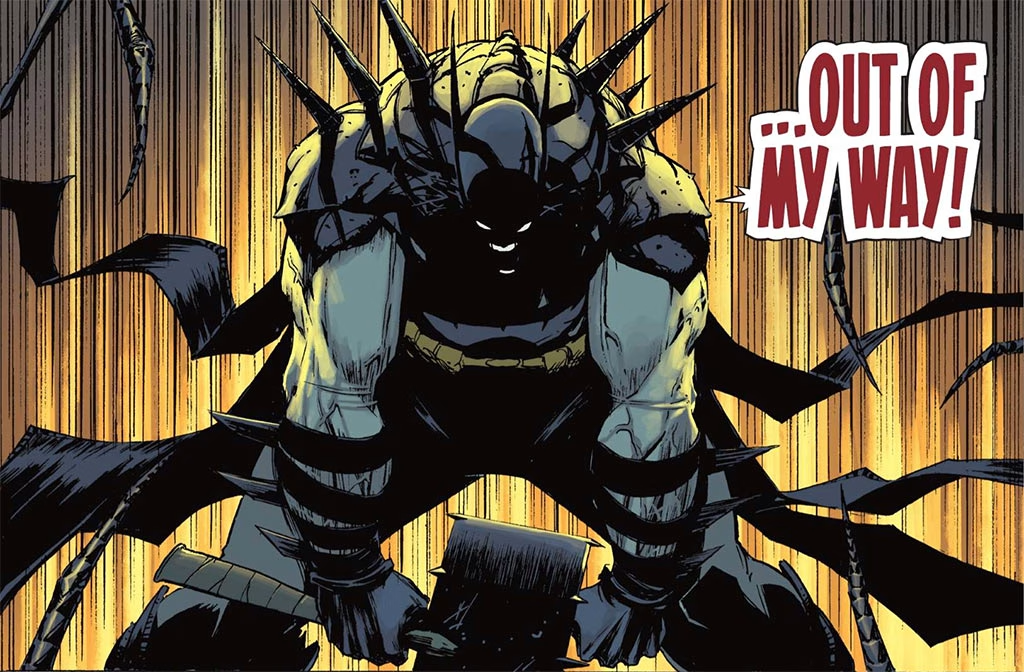
- (2024-Present) Absolute Batman by Scott Snyder & Nick Dragotta
- Reimagines Bruce Wayne without his billionaire wealth, mansion, or butler, working as a blue-collar city engineer fighting a heavily armored, syndicate-controlled Gotham with raw, improvised tactics.
- (2024-Present) Absolute Superman by Jason Aaron & Rafa Sandoval
- Kal-El arrives on Earth not as a beloved farm boy with a cozy Kansas upbringing, but as a lone, working-class alien refugee fighting oppressive global regimes without a Fortress of Solitude.
- (2024-Present) Absolute Wonder Woman by Kelly Thompson & Hayden Sherman
- Raised in Hell rather than Paradise Island, Diana is a battle-hardened, witch-trained warrior wielding massive hell-forged weaponry against demonic pantheons.
- (2025-2026) Absolute Martian Manhunter by Deniz Camp & Javier Rodríguez
- Visually surreal reimaginings of J’onn J’onzz as an unearthly, psychic detective navigating alien horror, identity, and isolation on a harsh, unfamiliar Earth.
- (2025-2026) [EVENT] DC K.O. by Scott Snyder and Joshua Williamson & Various Artists
- DC Universe heroes are forced into an Apokoliptian Tournament to find their champion to defeat King Omega.
- (2026-Present) Batman by Matt Fraction & Jorge Jiménez
- High-energy run focusing on high-tech detective work while Gotham politics is shifting against him and his family.