
A Complete Batman Post-Crisis Reading Order a.k.a. The Modern Age (Work in Progress)
Welcome to the world of the Dark Knight. Undeniably one of DC Comics’ most popular characters, Batman has a long and editorially complex history. With a blog like DC Casebook, it’s hard not to go through the biggest case of all: the ultimate Batman Reading Order. And by Ultimate, I mean a Bat-Family Reading Order. While most of the similar works are focused on Batman alone, because sane people are making them, I have the crazy ambition to cover the whole extended family. Which makes this project even more complicated.
It will take time. I’m talking about years. But I will eventually compile my own version of a complete reading guide for Batman. For now, it’s very much a Work in Progress! So, let’s begin with the Batman Post-Crisis era, also known as the Modern Age.
How to follow the guide
This Batman Reading Order is not based on issues or collected editions, but both. I’m using the collected editions to help you find the stories and to make it clearer to navigate, but I also specify in numerous cases which issues in each book have to be read at a specific time. I also add issues that are not collected. Some sections have a dedicated reading order, like events or specific runs and storylines, in which you’ll find issue-by-issue orders. The goal here is to pack as much as possible while still making the guide usable.
Choices must be made to achieve that, but I’m doing my best to stay on course. It means that I’m making compromises, with the main motivation being to provide the most streamlined/reader-friendly experience I can provide. I’m sure mistakes will be made accidentally, while some may be made voluntarily to avoid spoilers or just because, as a reader, it makes sense to go in one direction without interruption and come back later for comprehension. This will make sense once you dig into it.
The color guide: the darker the text is, the more related to the Dark Knight’s core story those books are.
- The main Batman books to read – These are the main Batman stories. He is the star of the show or, in the case of events, plays a notable part in the story. Those are the ones to read.
- The Bat-Family books extension – Most of those are series focusing on close friends, family members, teams (even some in which Batman is leader), and allies that intersect with the main Batman plotlines or are often impacted by them (see Nightwing and Robin). Not essential, but if you like the characters, they are worth a read.
- The extended Bat-Family Books – Those are the books I don’t think add much to Batman’s universe, but they still are set in it. It’s not that they are uninteresting, but if you are focusing on Batman, they will be serious distractions.
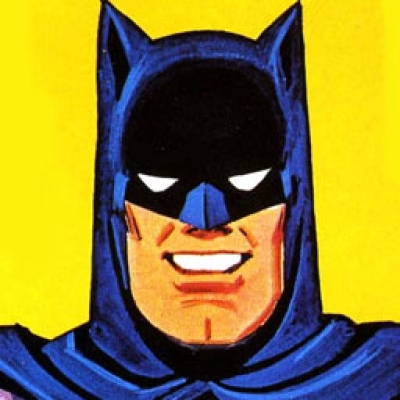
Navigating The Batman Reading Order [Work in Progress]
Welcome to my (in)complete guide to reading Batman Comics! As explained in the introduction, this is very much a work in progress, and it will be for a long time. I decided to start publishing it long before its completion because I know it will take years to finish.
- Golden Age: The Beginning (1939-1955): Batman’s debut, initial Detective Comics run, and early World’s Fair / Robin era.
- Silver Age & Sci-Fi Era (1956-1969): Out-of-this-world adventures, Bat-Family expansion, and camp-adjacent classics.
- Bronze Age a.k.a. The Dark Knight Renaissance (1970-1985): Return to gritty roots (Dennis O’Neil/Neal Adams), Ra’s al Ghul, and more.
- Post-Crisis or the Modern Foundations (1986-2000): The Post-Crisis era starts here. Year One, The Dark Knight Returns, Knightfall, Contagion, and No Man’s Land.
- Modern Age in a World of Crisis (2000-2006): Hush, Under the Red Hood, and War Games.
- The Grant Morrison Epic & Final Crisis (2006-2011) – [Complete]
- Batman & Son: Damian Wayne’s introduction, Resurrection of Ra’s al Ghul
- Batman: R.I.P. & Final Crisis: Bruce Wayne against the Black Glove and Darkseid.
- The New Batman & Robin: The new dynamic duo
- The Return of Bruce Wayne: A time-traveling adventure
- Batman Incorporated: The Leviathan Wakes.
- The New 52 / Scott Snyder Era (2011-2016): Court of Owls, Death of the Family, Zero Year, and Endgame.
- DC Rebirth & Tom King Run (2016-2019): I Am Gotham, The Wedding, City of Bane, and Dark Nights: Metal.
- Infinite Frontier & the All In Era (2020-Present): Joker War, Fear State, Chip Zdarsky’s run, and current ongoing arcs.
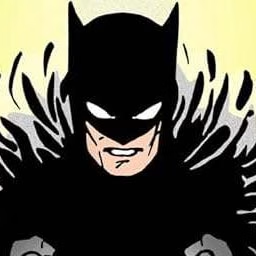
Post-Crisis or the Modern Foundations (1986-2000)
Let’s begin by posing some context. Following the reality-altering event that was DC’s Crisis on Infinite Earths, we got a Batman grounded in gritty, hard-boiled realism. This era provides a new beginning for readers as it revisits Bruce Wayne’s early years as a vigilante in Gotham, his initial encounters with organised crime and supervillains, and the development of the Bat-Family, from James Gordon and Alfred to Dick Grayson, Tim Drake, Barbara Gordon, and many more. This is the first part, the one that culminates in massive, city-altering disasters that test the Dark Knight’s physical and psychological limits.
As you may notice, we are directly jumping into the end of the second part of the Modern Age. Yes, I started with the end, but I’ll come back to the beginning soon. Sorry for that. Once again, it’s a work in progress!

Modern Age in a World of Crisis (2000-2006)
⚠️There is a lot more to come here! From this era, I’m really starting with the “One Year Later” as it provides a good entry point into the action. The series makes a jump of… one year. As a result, we have new status quos introduced.
📂 Infinite Crisis
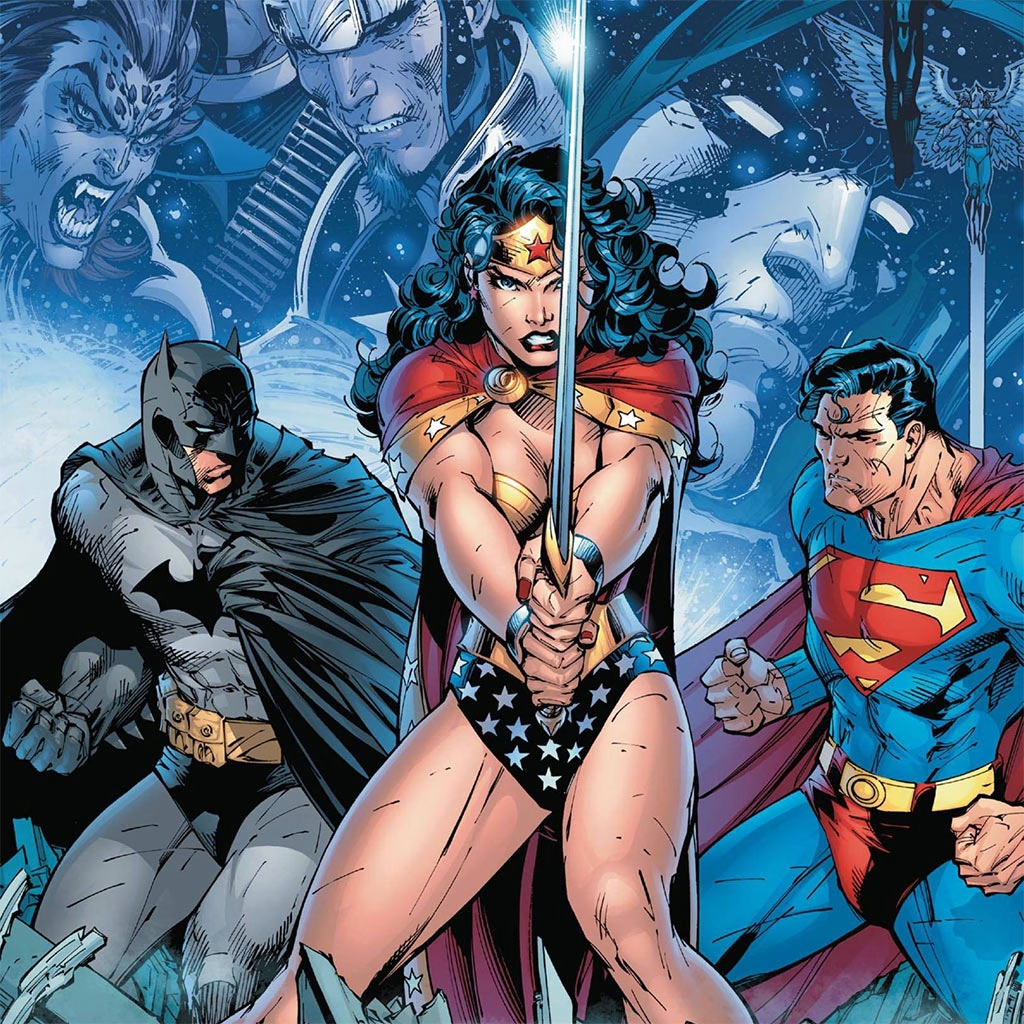
Written by Geoff Johns and illustrated by Phil Jimenez, George Pérez, Ivan Reis, and Jerry Ordway, Infinite Crisis follows the return of several survivors from the original Crisis on Infinite Earths who have spent years watching the modern DC Universe from outside reality.
Convinced that this world has become broken and that its heroes have lost their way, they launch a plan to recreate the multiverse and build a better Earth.
As reality begins to collapse, Batman, Superman, Wonder Woman, and the rest of the DC Universe must confront both the external threat and the divisions that have formed among themselves before everything is rewritten.
🚨 At the time of publication, I have yet to write a complete Infinite Crisis Reading Order. I’m placing the main miniseries here for context, but I’ll later add the tie-ins.
- Infinite Crisis – Infinite Crisis #1–7.
💡52 is not a Batman series, but he made key appearances in issues 30 and 47. Also, this is a recommended read before Final Crisis, and Batwoman and Renee Montoya appear in it. This weekly series, written by Geoff Johns, Grant Morrison, Greg Rucka, and Mark Waid, with layouts by Keith Giffen, told what happened during the “missing year” between the end of Infinite Crisis and the beginning of the “One Year Later” publishing initiative. It follows secondary superheroes as the “big three” disappeared for a while.
- 52 Omnibus – 52 #52-1.
⏱ One Year Later
In 2006, following the events of the “Infinite Crisis” storyline, all of DC Comics’s series made a one-year jump ahead. Some of what happened is quickly revealed, while other plot points are never addressed.
- Birds of Prey: Progeny – Birds of Prey Vol. 1 #92-95
& 96-103 - Batman: Face the Face – Detective Comics #817-820 and Batman #651-654.
- Nightwing: Brothers in Blood – Nightwing #118-124
- Robin: Wanted – Robin #148-153
- Catwoman Vol. 5: Backward Masking – Catwoman (vol. 3) #50-65
- Catwoman Vol. 6: Final Jeopardy – Catwoman (vol. 3) #66-68
& 69-83
📋The Brave and the Bold (Volume 3) – Mark Waid and George Pérez’s resurrection of the series is not a Batman team-up series, unlike previous volumes, but a random team-up series. The Dark Knight appears in the first story arc, almost in a supporting role. He had a few team-ups later on.
- The Brave and the Bold: The Lords of Luck – The Brave and the Bold #1-6.
- Batman/Catwoman: Follow the Money #1: Somebody emptied Wayne Enterprises’ pension fund, the Bat and the Cat investigate, by Howard Chaykin.
- Nightwing: Love and War – Nightwing #125-132
- Birds of Prey: Progeny – Birds of Prey Vol. 1 #
92-95& 96-103 - Robin: Teenage Wasteland – Robin #154-162
- Batman: Legends of the Dark Knight #207-214, not collected yet. Not much context for those stories, but they were published post-Infinite Crisis and don’t seem too out of place here
- Superman and Batman vs. Vampires and Werewolves – Superman and Batman vs. Vampires and Werewolves #1-6.
- Justice League of America: The Tornado’s Path – Justice League of America (vol. 2) #1-7.
- Batman: Detective – By Paul Dini. Detective Comics #821-826
- Batman: Death and the City – Detective Comics #827-834.
- Batman: Joker’s Asylum Vol. 2 – Joker’s Asylum: The Riddler #1, Joker’s Asylum: Killer Croc #1, Joker’s Asylum: Harley Quinn #1, Joker’s Asylum: The Mad Hatter #1, Joker’s Asylum: Clayface #1. The Joker tells old stories featuring other rogues.
- Justice League of America: The Lightning Saga – Justice League of America (vol. 2) #0, #8–12; Justice Society of America (vol. 3) #5–6.
- Robin: The Big Leagues – Robin #163-167
- Detective Comics #835–836, which are not collected yet.
- Birds of Prey: Whitewater – Birds of Prey Vol. 1 #104-108
&109-112 - Superman/Batman: Torment – Superman/Batman #37-42.
- Batman vs. the Undead – Batman Confidential #44-48. A sequel to Superman and Batman vs. Vampires and Werewolves.
🔀 If you want to read the now-considered non-canonical storyline Countdown to Final Crisis, it’s a good time to start. It involves characters from the Batman universe like Jason Todd, Holly Robinson from the Catwoman series, and Harley Quinn. It crossed over with stories like Amazons Attack!, introducing elements for Salvation Run (see next section), but most of the events are largely ignored and/or retconned before it even concluded. I wrote a full Countdown to Final Crisis Reading Order to help you navigate it if you are a completist.
💡 Completely optional for Batman readers, even if he actively participates in the conflict alongside the Justice League, I’m placing Wonder Woman: Amazons Attack! here for Catwoman’s readers as two issues of the series tie into the event.
- Catwoman Vol. 6: Final Jeopardy – Catwoman (vol. 3) #
66-68, 69-70,& 71-83 - 52 Aftermath: The Four Horsemen – 52 Aftermath: The Four Horsemen #1-6
- Outsiders: Five of a Kind – Outsiders (vol. 3) #50, Outsiders: Five of a Kind #1–5.

Batman by Grant Morrison (2006–2011)
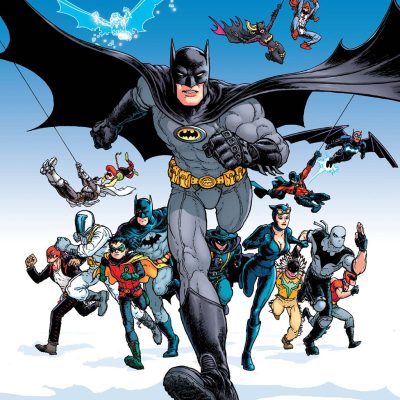
The famous Batman run by Grant Morrison begins here. It starts with the introduction of Damian Wayne, Bruce’s son with Talia Al Ghul, who is part of a plan to resurrect Ra’s al Ghul, and ends at the beginning of the New 52 era. In the middle, we’ve got Final Crisis, a new Dynamic Duo, and Batman became an international franchise of heroes. I explored this run in detail in my guide to Grant Morrison’s Batman.
✨ A great way to read Grant Morrison’s run is the three-volume omnibus collection. I’m not using it for this reading order, but I recommend getting it:
- Batman by Grant Morrison Omnibus Vol. 1 – Batman #655-658, #663-683 and stories from DC Universe #0, #30 and #47.
- Batman by Grant Morrison Omnibus Vol. 2 – Batman & Robin #1-16, Batman #700-702 and Batman: The Return of Bruce Wayne #1-6.
- Batman by Grant Morrison Omnibus Vol. 3 – Batman Incorporated #1-8, Batman: The Return #1, Batman Incorporated #0-13, Batman Incorporated: Leviathan Strikes #1, Batman Incorporated Special #1.
- Batman and Son – Batman #655-658
and #663-666. - Batman: Grotesk – Batman #659-662 by John Ostrander and Tom Mandrake (not collected)
- Batman and Son – Batman
#655-658and #663-666 - Nightwing: The Lost Year – Nightwing #133-137 and Nightwing Annual #2
- Batman: The Black Glove – Batman #667-669
and 672-675.
🔒Batman: The Resurrection of Ra’s al Ghul was not written by Grant Morrison, but it’s a key event as it brings back a classic enemy to life and explains what happens to Damian. Check out my Resurrection of Ra’s al Ghul Reading Order for a more in-depth exploration of the event
- Batman: The Resurrection of Ra’s al Ghul – Batman #670-671, Robin #168-169, Robin Annual #7, Nightwing #138-139, and Detective Comics #838-839.
- Batman: Gotham Underground – Gotham Underground #1-9.
- Justice League of America: The Injustice League – Justice League of America (vol. 2) #13-16; JLA Wedding Special #1.
- Catwoman Vol. 6: Final Jeopardy – Catwoman (vol. 3) #
66-70, 71-74,& 75-83.
📋Batman and the Outsiders (Volume 2) – Chuck Dixon’s relaunch of the team with Batman as leader, following the “Outsiders: Five of a Kind” storyline, which concluded the Outsiders (Volume 3) book led by Nightwing.
- Batman and the Outsiders: The Chrysalis – Batman and the Outsiders (vol. 2) #1-5.
- Batman and the Outsiders: The Snare – Batman and the Outsiders (vol. 2) #6–10.
- Birds of Prey: Whitewater – Birds of Prey Vol. 1 #
104-108 &109-112. For reference, the New Gods were killed during the Death of the New Gods miniseries by Jim Starlin, which ties into Countdown to Final Crisis, but doesn’t fit into Morrison’s Final Crisis. - Justice League of America: Sanctuary – Justice League of America (vol. 2) #17–21.
🔀Salvation Run ends just before Batman and the Outsiders (vol. 2) #10. But what is Salvation Run? A seven-issue limited series about various supervillains who are captured by the Suicide Squad and imprisoned on the distant planet of Cygnus 4019 (aka Salvation). Once there, they split into factions, battling for a way out or to gain total control. The capture of villains occurs during Gotham Underground, at the end of the JLA: The Injustice League storyline, and in Catwoman #75 (issues 75 to 78 are set during the miniseries). It’s also at the heart of Countdown to Final Crisis, but this storyline is now in large part considered non-canonical.
- Catwoman Vol. 6: Final Jeopardy – Catwoman (vol. 3) #
66-78, 79-82. The series ends here. The missing issue #83 is part of Blackest Night. - Robin: Violent Tendencies – Robin #170-174 and the Robin/Spoiler Special.
- Batman: Private Casebook – Detective Comics #840–845 and DC Infinite Halloween Special.
- Justice League of America: The Second Coming – Justice League of America (vol. 2) #22–26.
- Nightwing: Freefall – Nightwing #140-146.
- Birds of Prey: The End of the Beginning – Birds of Prey Vol. 1 #113-117 & 118-127
- Superman/Batman: The Search for Kryptonites – Superman/Batman #44–49.
- Superman/Batman: Finest Worlds – Superman/Batman #50–56.
- Batman: The Black Glove – Batman
#667-669and 672-675. - Batman: Heart of Hush – Detective Comics #846–850.
- Batman In Barcelona: Dragon’s Knight #1 (one-shot)
- The Brave and the Bold (vol. 3) #13 collected in The Brave and the Bold: Demons and Dragons.
📋Trinity (Volume 1) – Another weekly series (like 52 or Countdown to Final Crisis) that DC Comics did at the time. Coming from Kurt Busiek, Fabian Nicieza, Mark Bagley, and more, this one follows Batman, Superman, and Wonder Woman as they are placed at the center of a mystical event of epic proportions.
- Trinity Vol. 1 – Trinity #1-17.
- Trinity Vol. 2 – Trinity #18-35.
- Trinity Vol. 3 – Trinity #36-52.
- Superman/Batman: Night and Day – Superman/Batman #60–63, 65,
66, 67.- Superman/Batman #64, #68-71 collected in Superman/Batman: Big Noise were intended to launch the series in a new direction, exploring the aftermath of old DC crossovers; this one was to be linked to Our Worlds at War from 2001, but this creative approach ended up not working like this. Anyway, I’ll put it in the right place when I work on this specific era in the guide.
- As for Superman/Batman: Worship, collecting Superman/Batman #72-75 and Annual #4, the main story by Paul Levitz contains elements that make it impossible to fit at one specific time. You can read this one here or wherever and whenever you want.
- Superman/Batman: Sorcerer Kings – Superman/Batman #78,
79-80, 81–84. Issues #79-80 are linked to DC One Million, and are set way earlier.- Superman/Batman #84-87 is a story set in the early days of Superman and Batman’s partnership.
- The Brave and the Bold (vol. 3) #27 & 29 collected in Team-ups of the Brave and the Bold Vol. 6. Published later on, but you can read them here, as they are anecdotal team-ups not clearly anchored in the timeline.
- DCU Halloween Special #1 (2008) (one-shot)
- Justice League of America: When Worlds Collide – Justice League of America (vol. 2) #27–28,
#30-34. #29 is part of the “Faces of Evil” crossover (not collected). Final Crisis interrupts the story, and it continues without Batman.
🔒Batman: R.I.P. & Final Crisis
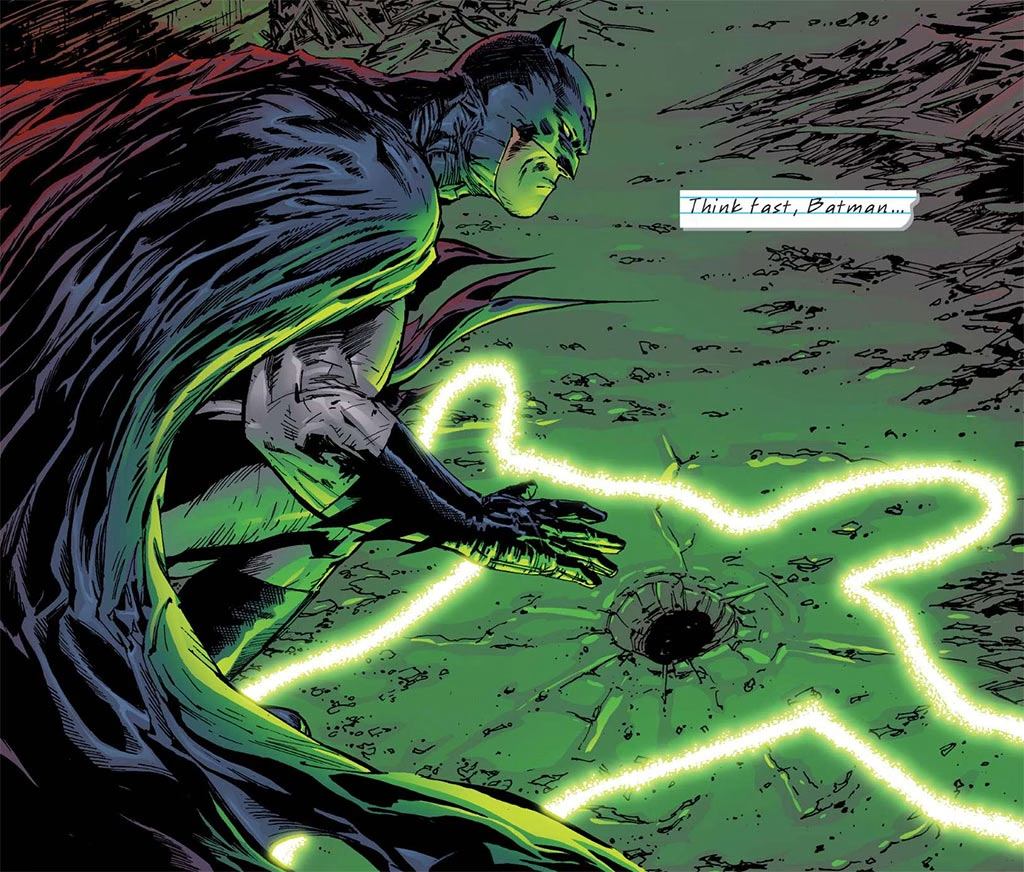
These are key events that led to Bruce Wayne’s famous disappearance. I have already explored those two stories in depth in my Batman R.I.P. Reading Order and Final Crisis Reading Order. The gist of it is that the Black Glove finally attacks Batman, breaking his mental barrier. Then, directly after that, he is thrown into Darkseid’s hands in Final Crisis.
- Batman: R.I.P. – Batman #676-681,
682-683 - Final Crisis – Final Crisis #1-7, Batman #682-683,
Superman Beyond #1-2, and Submit #1. - Detective Comics #851/Batman #684 – A wannabe Two-Face makes Nightwing come back to Gotham to stop him. (not collected).
- Detective Comics #852/Batman #685 – Epilogue to the Heart of Hush story, collected in Batman: Streets of Gotham Vol. 1: Hush Money.
- Nightwing: The Great Leap – Nightwing #147-153. Nightwing moves back to Gotham.
- Robin: Search for a Hero – Robin #175-183. Robin gets his Red Robin costume from Countdown to Final Crisis (I know the story has been mostly retconned, but the costume stayed behind).
- Batman and the Outsiders (vol. 2) #11-14 (not collected).
- Batman and the Outsiders Special #1, collected in The Outsiders: The Deep introduces the idea of the Network put in place in Battle for the Cowl.
- The Outsiders: The Deep – Batman and the Outsiders Special (vol. 2) #1, Outsiders (vol. 4) #15–20. The “Special” issue introduces the new team, now under Alfred’s supervision. The series continues with issue #15, but is renamed “The Outsiders.”
🔒Batman is no more. Who will become the new Batman? One with guns just appeared in Gotham as the Underground is fighting for control, and the GCPD copes with the loss of their greatest ally. Batman: Battle for the Cowl is the crossover event orchestrated by Fabian Nicieza and Tony S. Daniel to deal with Batman’s succession. The event establishes the new Batman and Robin team and sets up the launch of the new Gotham City Sirens, Azrael, and Batgirl comics. I invite you to check out my Batman: Battle for the Cowl Reading Order for a complete overview of the event.
- Batman: Battle for the Cowl: The Complete Collection – Batman: Battle for the Cowl #1-3; Batman: Battle for the Cowl: Arkham Asylum #1; Batman: Battle for the Cowl: Commissioner Gordon #1, Batman: Battle for the Cowl: Man-Bat #1; Batman: Battle for the Cowl: The Network #1; Batman: Battle for the Cowl: The Underground #1; Gotham Gazette: Batman Dead? #1; Gotham Gazette: Batman Alive? #1; Oracle: The Cure #1-3; Azrael: Death’s Dark Knight #1-3; and Secret Six (2008) #9.
The New Batman & Robin
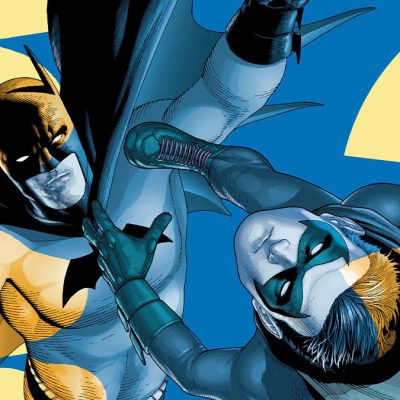
Following Batman: Battle for the Cowl, a new status quo has been established. Dick Grayson and Damian Wayne are now Batman and Robin. Their stories are mainly told in Morrison’s Batman & Robin, but also in the regular Batman comics. They are supporting characters in Paul Dini’s Streets of Gotham (more here about the series). Stephanie Brown is the new Batgirl. Tim Drake is Red Robin, and Batwoman takes Detective Comics over.
- Superman/Batman #76: The issue starts right after Final Crisis #7 with Superman bringing Batman’s body home. However, the second half of the issue is set later and spoils the “Battle for the Cowl” storyline.
- Batman: Long Shadows – Batman #687-691.
- Batman & Robin Vol. 1: Batman Reborn – Batman & Robin #1-3
& 4-6. - Batman: Streets of Gotham Vol. 1: Hush Money – Batman: Streets of Gotham #1-4,
plus Detective Comics #852, Batman #685.
📋Gotham City Sirens follows Catwoman, Poison Ivy, and Harley Quinn, who move together and try to stay on the good side of the law, even if their criminal lives never stop to drag them into high-risk situations. The series works in parallel to Streets of Gotham, notably with developments surrounding the Riddler. I wrote about it in my article about Paul Dini’s Batman Run.
- Harley Quinn & The Gotham City Sirens Omnibus – Gotham City Sirens #1-11
& 8-26, Catwoman #83. - The Outsiders: The Hunt – Outsiders (vol. 4) #21-23
& 24-25.
📋Azrael is a series focused on the second Azrael, Michael Lane, an ex-cop previously introduced in Morrison’s Batman as one of the “Three Ghosts of Batman,” who has been scooped up by The Order of Purity after his downfall during the Batman R.I.P. storyline. The series was set up during the Battle for the Cowl. Lane is now somewhat of an ally to Batman and Robin.
- Batman Annual #27 and Detective Comics Annual #11 – A Batman & Robin/Azrael team-up + a Barbara Gordon mystery (not collected).
- Azrael: Angel in the Dark – Azrael Vol. 2 #1-6.
- Batwoman by Greg Rucka and J.H. Williams III – Detective Comics #854-863, aka Batwoman: Elegy.
- DCU Halloween Special ’09 #1 (one-shot)
- World’s Finest – World’s Finest (2009) #1-4.
Blackest Night is a Green Lantern event first and foremost, but much of the DC Universe is impacted as the dead rise as Black Lanterns. Batman and Robin play their part, but it’s a relatively small one. Bruce Wayne, however, doesn’t return from the dead, despite Black Hand taking his skull from his grave. It’s a mystery that would become significant in the Batman books. I will eventually write a complete Blackest Night Reading Order. But as far as Batman and Robin are concerned, you can focus on their tie-in miniseries.
- Blackest Night: Black Lantern Corps Vol. 1 – Blackest Night: Batman #1-3,
Blackest Night: Superman #1-3, and Blackest Night: Teen Titans #1-3. - Superman/Batman #66–67 are Blackest Night tie-ins starring Bizarro and Man-Bat.
- Justice League of America: Team History – Justice League of America (vol. 2) #38-43. Issues #39-40 are part of the Blackest Night event, and Batman is not in them, as he is only invited to join the team in issue #41.
- The Outsiders: The Hunt – Outsiders (vol. 4) #
21-23 &24-25. - Red Robin Vol. 1: The Grail – Red Robin #1-5. Blackest Night happens during Issue #1.
- Superman/Batman #77 is a Supergirl/Robin team-up set soon after Blackest Night.
- Harley Quinn & The Gotham City Sirens Omnibus – GCS #
1-11, Catwoman #83, Gotham City Sirens #12-15& 16-26. The Catwoman issue ties into Blackest Night. - Red Robin Vol. 2: Collision – Red Robin #6-8
& 9-12 and Batgirl #8 - Batgirl: Stephanie Brown Vol. 1 – Batgirl #1-7
& 8-12. - Batman & Robin Vol. 1: Batman Reborn – Batman & Robin #
1-3& 4-6. - Batman & Robin Vol. 2 Batman vs. Robin – Batman & Robin #7-9 &
10-12 - Birds of Prey Vol. 1: End Run – Birds of Prey #1-6.
- Red Robin Vol. 2: Collision – Red Robin #
6-8 &9-12 and Batgirl #8 - Batgirl: Stephanie Brown Vol. 1 – Batgirl #
1-8 &9-12. - The Outsiders: The Road To Hell – Outsiders (vol. 4) #26-31.
- Justice League of America: The Dark Things – Justice League of America (vol. 2) #44–48; Justice Society of America (vol. 3) #41–42.
- Batman: Life After Death – Batman #692-699.
- Batman #700 collected in Batman: Time and the Batman
- Batman: Streets of Gotham Vol. 2: Leviathan – Batman: Streets of Gotham #5-11.
- Batman: Arkham Reborn – Battle For the Cowl: Arkham Asylum #1, Arkham Reborn #1-3, Detective Comics #864-865.
- Azrael: Killer of Saints – Azrael Vol. 2 #7-13.
- Batman: Impostors – Detective Comics #867-870. A promotional tie-in to the Gotham City Impostors video game.
- DCU Halloween Special 2010 #1 (one-shot)
- Batgirl: Stephanie Brown Vol. 2 – Batgirl #13-14
& 15-24, Bruce Wayne – The Road Home: Batgirl #1, and material from Batman Incorporated: Leviathan Strikes! #1.The “Road Home” issue is also collected in Bruce Wayne: Road Home, see next section. - Justice League of America: Omega – Justice League of America (vol. 2) #49–53.
- Red Robin Vol. 3: Hit List – Red Robin #13-16
& 17. Issue #17 is an epilogue to the Hit List storyline, but is set after the Return of Bruce Wayne.
🔒The Return of Bruce Wayne
Bruce Wayne is lost in time, but he is finding his way back home. His return may end the world! I provide an issue-by-issue reading order at the end of the section.
- Batman: Time and the Batman – Batman #700-703.
- Batman & Robin Vol. 2: Batman vs. Robin – Batman & Robin #
7-9 &10-12. - Batman: The Return of Bruce Wayne – Batman: The Return of Bruce Wayne #1-6.
- Batman & Robin, Vol. 3: Batman & Robin Must Die – Batman and Robin #13-16
and Batman: The Return #1.
🔀Time Masters: Vanishing Point is a miniseries following the efforts of Rip Hunter, Superman, Green Lantern, and Booster Gold to find Batman in the past. It’s optional; Batman doesn’t appear in it, but their story intersects with The Return of Bruce Wayne.
- Bruce Wayne: Road Home – Bruce Wayne – The Road Home: Batman & Robin #1, Red Robin #1, Batgirl #1, Outsiders #1, Catwoman #1, Oracle#1, Commissioner Gordon #1, and Ra’s Al Ghul #1. This book is set between Batman and Robin #15 & #16 and deals with Bruce Wayne reconnecting with everybody but Dick and Damian.
- Red Robin #17 collected in Red Robin Vol. 3: Hit List, see the end of the previous section.
My Recommended Return of Bruce Wayne Reading Order
This is a personal mix between Grant Morrison’s recommended reading order and my personal choices. You can read the series in blocks, but finish with Batman & Robin #16.
- Batman #700 & 703
- Batman & Robin #10
- Batman: The Return of Bruce Wayne #1
- Batman & Robin #11
- Batman: The Return of Bruce Wayne #2
- Batman & Robin #12
- Batman: The Return of Bruce Wayne #3
- Batman & Robin #13
- Batman #701-702
- Batman: The Return of Bruce Wayne #4
- Batman & Robin #14
- Batman: The Return of Bruce Wayne #5
- Batman & Robin #15
- Time Masters: Vanishing Point (very optional)
- Batman: The Return of Bruce Wayne #6
- Bruce Wayne: Road Home
- Batman & Robin #16
Batman Incorporated
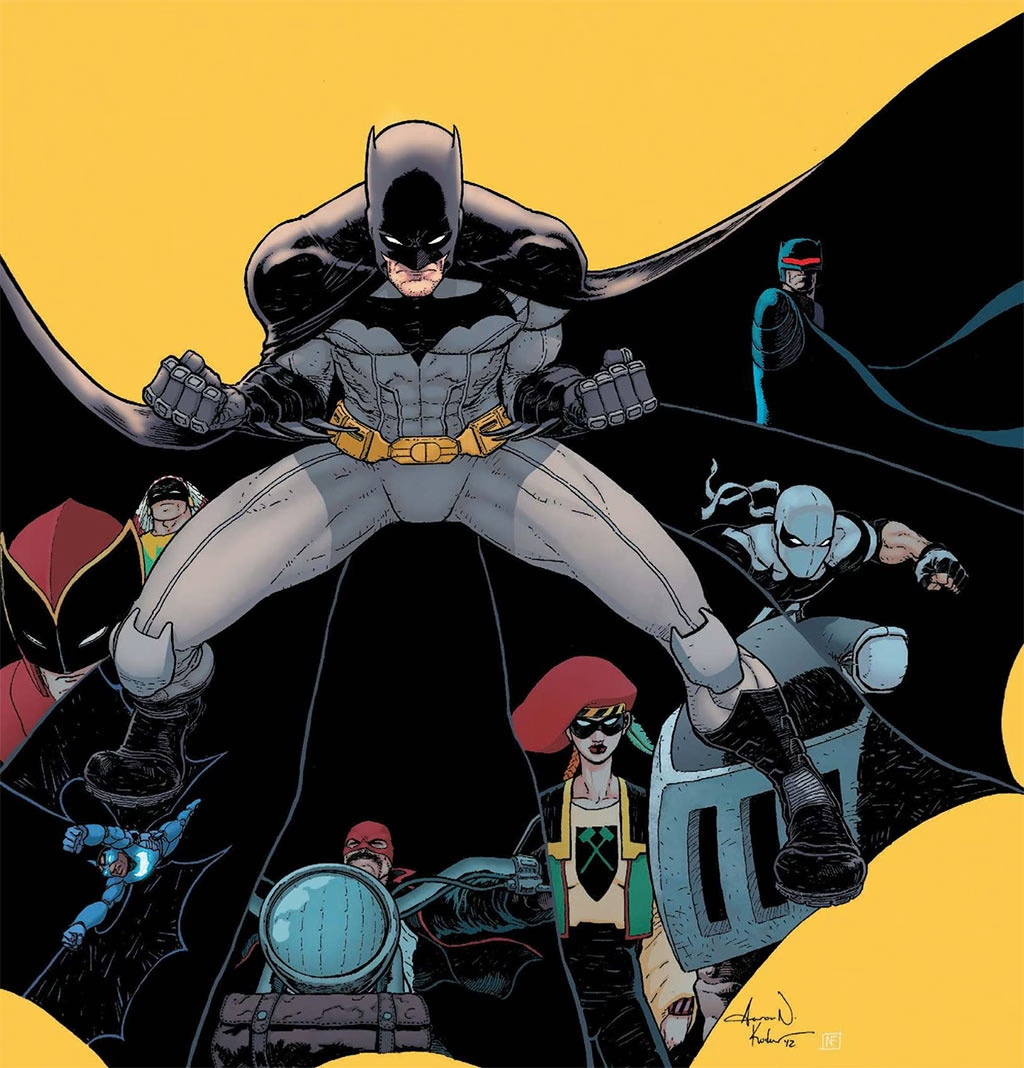
Bruce Wayne is back, but he doesn’t want to go back to his old Gotham. He decides to open a franchise: Batman Incorporated and travels the world to recruit new Batmen all around the world to fight the mysterious organisation named Leviathan.
In Gotham City, Dick and Damian are still fighting crime as Batman and Robin.
- Batman: Streets of Gotham Vol. 3: The House of Hush – Batman: Streets of Gotham #12-14, 16-21.
- Batman: The Return #1 collected in Batman & Robin, Vol. 3: Batman & Robin Must Die.
- The Outsiders: The Great Divide – Outsiders (vol. 4) #32-39, Batman and the Outsiders (vol. 2) #40. Issue #37 is part of the Superman: Return of Doomsday storyline.
- Batgirl: Stephanie Brown Vol. 2 – Batgirl #
13-14,15-18& 19-24, Bruce Wayne – The Road Home: Batgirl #1, and material from Batman Incorporated: Leviathan Strikes! #1. - Red Robin Vol. 4: 7 Days of Death – Red Robin #18-21
, 23-26 and Teen Titans #92. - Batman: Eye of the Beholder – Batman #704-707, #710-712
- Batman Incorporated: Leviathan Strikes – Batman Incorporated #1-5
& 6-8, Batman Incorporated: Leviathan Strikes! #1. - Batman and Robin: Dark Knight, White Knight – Batman & Robin #17-25.
- Harley Quinn & The Gotham City Sirens Omnibus – Gotham City Sirens #
1-15 &16-21& 22-26, Catwoman #83. - Batman: Gotham Shall Be Judged – Azrael #14-18, Batman #708-709, Red Robin #22, and Gotham City Sirens #22.
- Harley Quinn & The Gotham City Sirens Omnibus – Gotham City Sirens #
1-22 &23-26,Catwoman #83. - Birds of Prey Vol. 2: The Death of Oracle – Birds of Prey #7-15.
- Batgirl: Stephanie Brown Vol. 2 – Batgirl #
13-18 &19-21, Bruce Wayne – The Road Home: Batgirl #1, and material from Batman Incorporated: Leviathan Strikes! #1. - Red Robin Vol. 4: 7 Days of Death – Red Robin #
18-21, 23-26 and Teen Titans #92. - Batman: Dark Knight: Golden Dawn – Batman: The Dark Knight #1-5. This graphic novel also includes a short tale from Superman/Batman #75 and Batman: The Return #1.
- Batman: The Black Mirror – Detective Comics #871–881.
- Batman: Knight and Squire – Knight And Squire #1-6.
- Justice League of America: The Rise of Eclipso – Justice League of America #54-60 and Justice Society of America #43.
- Batman: Gates of Gotham – Batman: Gates of Gotham #1-5, Detective Comics Annual #12, and Batman Annual #28.
- Batman Incorporated: Leviathan Strikes – Batman Incorporated #
1-5 &6-8,Batman Incorporated: Leviathan Strikes! #1. - Batman & Robin #26 is not collected. It’s a Parisian team-up with Nightrunner against crazy criminals in Dadaist style.
- Batman #713 is not collected. It’s mostly a retrospective issue.
- Batgirl #22 from Batgirl: Stephanie Brown Vol. 2
- Batman Incorporated: Leviathan Strikes! #1 from Batman Incorporated: Leviathan Strikes
- Batgirl #23-24 from Batgirl: Stephanie Brown Vol. 2
Flashpoint
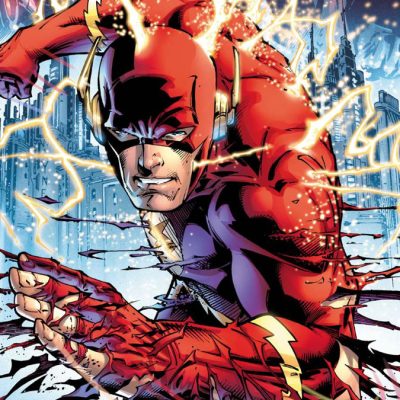
This is the end of the Modern Age/Post-Crisis era. I invite you to check out my complete Flashpoint Reading Order for a more detailed overview of the event. As far as Batman is concerned, he is not in the event. The story takes place in an alternate version of the world: what would happen if Barry Allen changed the past. However, this story introduces a Batman, Thomas Wayne, who will eventually play a part in the main continuity.
Next Case File: Batman: The New 52 Reading Order Guide → [Coming Soon]