Comic Book Reviews

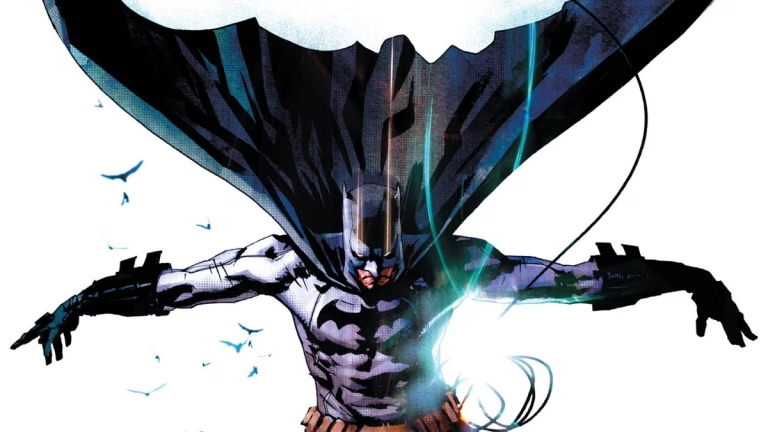
  • The Batman Case Files: Scott Snyder’s Batman: The Black Mirror (Review)

    If you revisit Batman’s adventures as the Modern Age was about to end, you realise the New 52 reboot wasn’t planned too far in advance. Even in late 2010, mere months before the end of the era, many storylines were being set in motion to take the characters in new, intriguing directions.

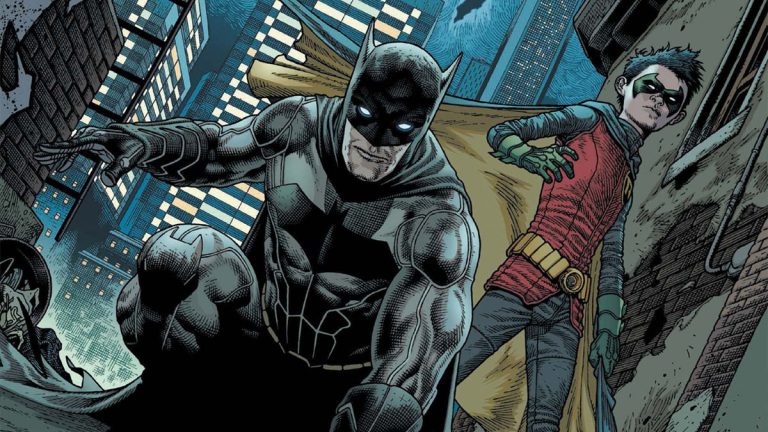
    It was a time when Bruce Wayne was doing some globe-trotting, recruiting more Batmen throughout the world to fight an impending menace as well as helping local vigilantes stop criminals. At home, in Gotham City, Dick Grayson was Batman, patrolling familiar rooftops alongside his Robin, Damian Wayne.

    It was then that writer Scott Snyder made his DC Comics debut on Detective Comics, working with artists Jock and Francesco Francavilla. Now simply known as “The Black Mirror”, his 11-issue run showed he had what it takes to go further, and this led him to become Batman’s lead writer during The New 52. So, let’s take a look at his early work in the Dark Knight universe.

    Read More “The Batman Case Files: Scott Snyder’s Batman: The Black Mirror (Review)”
  • |

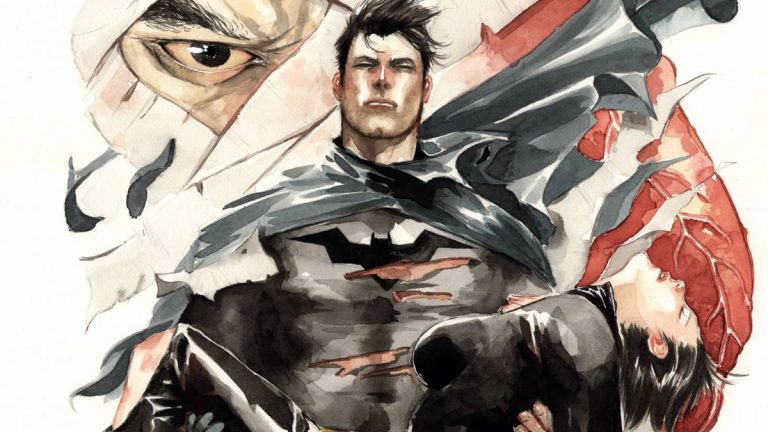
    The Batman Case Files: Paul Dini’s Run, From Heart of Hush to Gotham City Sirens (Review and Reading Order)

    Known to Batman fans for his award-winning work on Batman: The Animated Series, Paul Dini also left a mark on the character’s comic book history. Running parallel to Grant Morrison’s Batman epic from 2006 to 2011, Dini’s work across Detective Comics, Batman: Streets of Gotham, and Gotham City Sirens explored a different side of Gotham City, with a stronger focus on its criminal underworld.

    It was the time when the Riddler was rehabilitated into a legitimate private investigator, Hush made his violent comeback, a new Ventriloquist was introduced, Harley Quinn was getting away from the Joker, and more things I’m going to explore in this tentatively comprehensive guide breaking down Paul Dini’s run in which Batman had to use his talents as the World’s Greatest Detective.

    Read More “The Batman Case Files: Paul Dini’s Run, From Heart of Hush to Gotham City Sirens (Review and Reading Order)”
  • Is Grant Morrison’s Epic Batman Run Still Worth the hype? A 2026 Retrospective Review

    In 2006, when Grant Morrison took over the flagship Batman title, he decided that all of the character’s publication history was, in fact, canon. The most outlandish tales were probably just the result of his view of real events distorted by all the drugs, commotions, and otherworldly experiences his crime-fighting adventure subjected him to.

    That’s the idea behind the selected stories in the Black Casebook. He took concepts, and sometimes just names, out of those old comics and went on creating a unified narrative to explore Batman as an idea. But Morrison being Morrison, the run went epic, cosmic, and at times quite confusing.

    Two decades later, those stories have become highly influential, and it makes sense to revisit this era that introduced Damian Wayne, made the Batman of Zur-En-Arrh into a psychological construct, redefined the bats as a symbol integral to Gotham and the Waynes’ history, and took the brand global!

    Returning to Grant Morrison’s Batman run helped me to organise my reading order, but I also wanted to share my thoughts on it in a retrospective review. Let’s begin.

    Read More “Is Grant Morrison’s Epic Batman Run Still Worth the hype? A 2026 Retrospective Review”
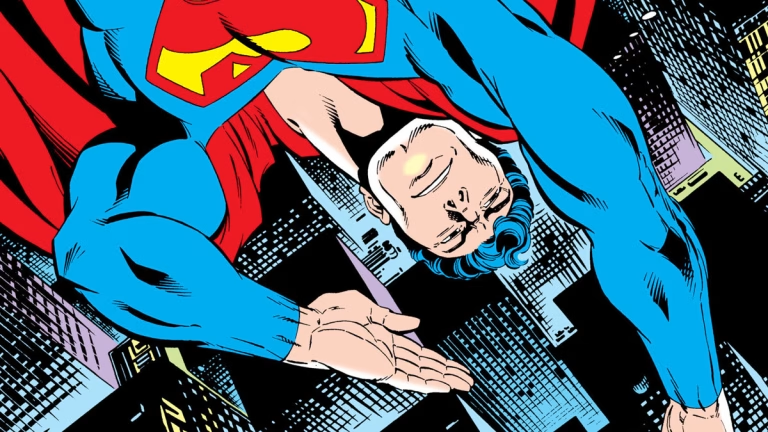
  • Is John Byrne’s Superman Still Good? A 2026 Retrospective Review

    In 1986, John Byrne undertook the challenging project of reimagining Superman as a relatable contemporary figure. This involved making some controversial decisions. He abandoned the optimism of the Silver Age in favour of a more psychologically grounded interpretation, shaped by the cultural logic of the 1980s. It was criticized by some for being Superman for adults. Four decades later, does it still resonate, or was it purely a product of its time?

    While later interpretations have emphasized Superman as a near-mythical ‘space god’, Byrne’s work is the most notable ‘human-first’ reimagining of the character. It established the modern Lex Luthor and a proactive, credible Lois Lane, but it also led to a Superman who violated his own moral code in a conclusion that remains controversial. Whether regarded as a necessary modernization or a fundamental misreading of the character, Byrne’s influence continues to shape virtually every screen adaptation of Superman.

    Although I have read DC Comics for decades, I was never particularly interested in Superman. To broaden my understanding of the character, I approached this landmark series from a contemporary perspective. So, in this review, we’re looking past the nostalgia.

    Read More “Is John Byrne’s Superman Still Good? A 2026 Retrospective Review”