• My Complete DC Roadmap: Key Runs, Events, and Milestones

    Navigating nearly nine decades of DC Comics can feel less like diving into a universe and more like trying to map an infinite multiverse without a compass. Since Action Comics #1 debuted in 1938, so many creators have contributed to stacked timelines on top of resets, birthed golden-age legends, spun off dark-fantasy imprints, and launched cosmic-level crises. For seasoned fans seeking forgotten gems or new readers overwhelmed by where to begin, the sheer volume of material often makes knowing what to read the hardest part of the journey.

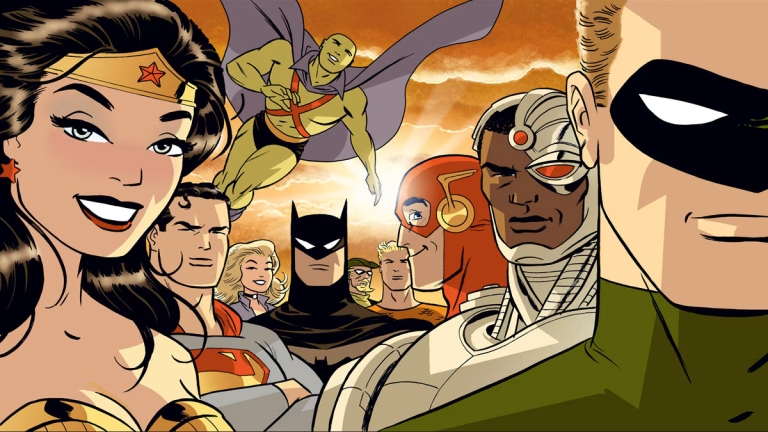
    That’s exactly the problem I faced recently (at the time of writing) while exploring possibilities for my next reading project for DC Casebook. As a result, I started looking into essential creator runs, historical milestones, monumental events, and obscure gems that shaped DC Comics history, from the sci-fi boom of the Silver Age to the mature dread of Vertigo and the modern ever-expanding universe. It soon spun out of control. What I came up with is what I call my DC Roadmap. It’s not exhaustive. It’s not definitive either. It’s full of runs, a lot I have not read, too. I just dig into the DC Comics catalog to look for books with a good reputation. I also tried to cover many of the big characters, because I have the ambition to read about some I barely know about.

    Simply put, it’s my way of getting a grasp on the evolution of the DC Universe, a tentative blueprint for the very best, or at least the most intriguing, DC has to offer. I’m open to more suggestions. The roadmap will never end.

    🚩Note on the organisation of the list: It’s not strictly chronological in terms of reading order, as I based it on start and end dates without giving it much further thought. When I explore a run, I’ll write a guide, but in the meantime, consider this a starting point, nothing more.

    Read More “My Complete DC Roadmap: Key Runs, Events, and Milestones”
  • Unsolved Cases: Whatever Happened to Misfit (Charlotte Gage-Radcliffe)?

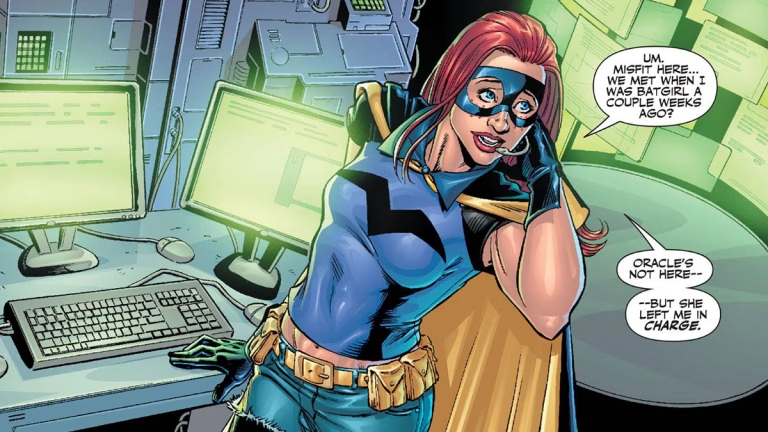
    After briefly crossing her path while reading Batman: Battle for the Cowl and Final Crisis, I was reminded of Misfit (aka Charlotte Gage-Radcliffe). I checked when she last appeared in the pages of a comic. It turns out she did make a cameo in Cheetah and Cheshire Rob the Justice League #4 by Greg Rucka and Nicola Scott (who created the Misfit costume originally), published last November (2025, for reference). That was the first appearance in over a decade! And I barely consider that relevant.

    In the late 2000s, Oracle’s inner circle was expanding, and no new recruit had more breakout potential than Charlotte Gage-Radcliffe. Dressed in a homemade, stitched-together Batgirl costume and shouting her trademark battle cry (“Dark Vengeance!“), Misfit brought a chaotic, endearing energy to Metropolis and Gotham.

    She had the powers, the tragic backstory, and Gail Simone writing her. So, what happened to Misfit?

    Read More “Unsolved Cases: Whatever Happened to Misfit (Charlotte Gage-Radcliffe)?”
  • The Complete Grant Morrison Batman Reading Order

    Grant Morrison’s seven-year epic run on Batman does not follow the usual structure. It’s not just a few years on the main Batman comic book series. It’s a three-act saga, each being told in a separate series. And despite some small and bigger events, it feels like a self-contained narrative, for the most part.

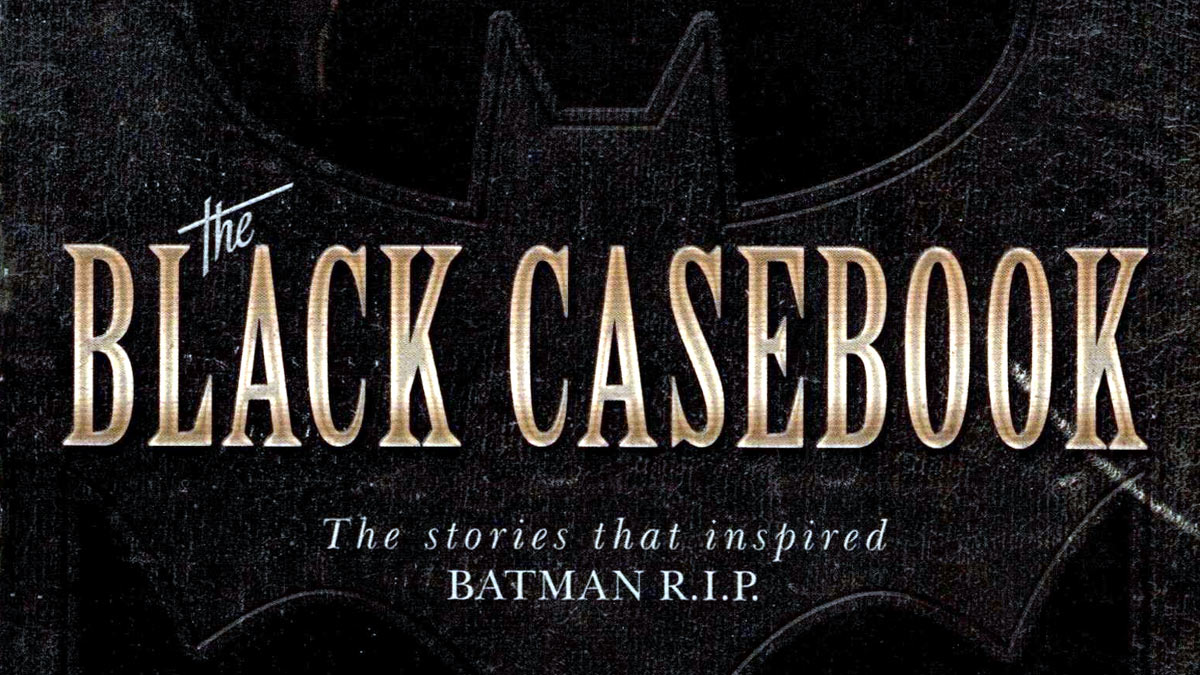
    As I already wrote an overview of the full run, I won’t spend time introducing the story and characters again. Let’s note, though, that it’s not required reading, but The Black Casebook is a good way to familiarize yourself with stories Morrison referenced and updated during his run.

    And now, here is the ultimate contextual reading order for Grant Morrison’s Batman comics.

    Read More “The Complete Grant Morrison Batman Reading Order”
  • Is Grant Morrison’s Epic Batman Run Still Worth the hype? A 2026 Retrospective Review

    In 2006, when Grant Morrison took over the flagship Batman title, he decided that all of the character’s publication history was, in fact, canon. The most outlandish tales were probably just the result of his view of real events distorted by all the drugs, commotions, and otherworldly experiences his crime-fighting adventure subjected him to.

    That’s the idea behind the selected stories in the Black Casebook. He took concepts, and sometimes just names, out of those old comics and went on creating a unified narrative to explore Batman as an idea. But Morrison being Morrison, the run went epic, cosmic, and at times quite confusing.

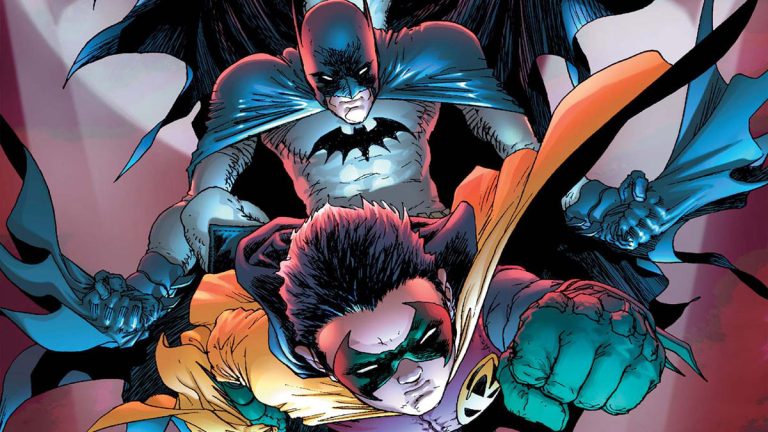
    Two decades later, those stories have become highly influential, and it makes sense to revisit this era that introduced Damian Wayne, made the Batman of Zur-En-Arrh into a psychological construct, redefined the bats as a symbol integral to Gotham and the Waynes’ history, and took the brand global!

    Returning to Grant Morrison’s Batman run helped me to organise my reading order, but I also wanted to share my thoughts on it in a retrospective review. Let’s begin.

    Read More “Is Grant Morrison’s Epic Batman Run Still Worth the hype? A 2026 Retrospective Review”
  • The Batman Case Files: Introduction to Grant Morrison’s Masterpiece Run (2006-2013)

    Grant Morrison’s seven-year run on Batman is widely considered one of the most ambitious long-form epics in the history of modern comic books. Running across multiple titles from 2006 to 2013, the story functions as a massive three-act saga that breaks down Bruce Wayne before rebuilding him on a global scale.

    As it is a big read, this may not be the most inviting entry point for new readers. But it’s one influential run that continues to impress and, at times, leave a little confusion. It’s a dense and coherent narrative driven by big ideas, fueled by deep cuts into obscure DC lore.

    This article presents Grant Morrison’s run, outlining the key ideas, plot points, and characters. It serves as a roadmap providing context for my detailed reading order and retrospective review. So, let’s start exploring this rich case file!

    Of course, Morrison was not alone. During his run, he worked with artists Andy Kubert, J.H. Williams III, John Van Fleet, Tony Daniel, Ryan Benjamin, Lee Garbett, Frank Quitely, Philip Tan, Cameron Stewart, A,dy Clarke, Frazer Irving, Scott Kolins, Chris Sprouse, Ryan Sook, Yanick Paquette, George Jeanty, David Finch, Scott Clark, and Chris Burnham.

    Read More “The Batman Case Files: Introduction to Grant Morrison’s Masterpiece Run (2006-2013)”
  • |

    Batman: Battle for the Cowl Reading Order: Looking For a New Batman

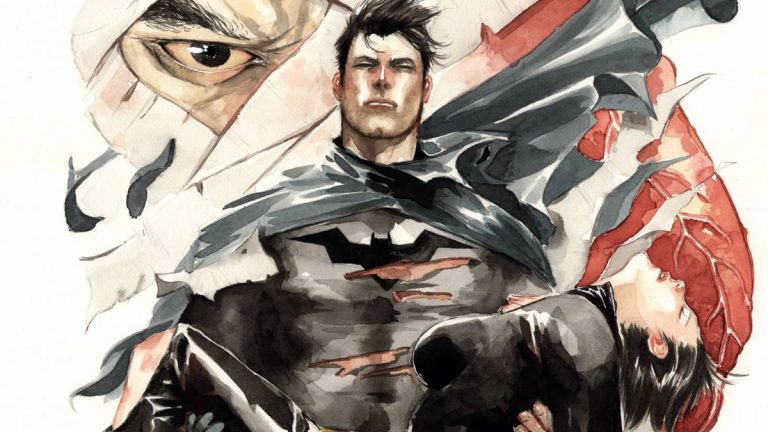
    In 2009, following the psychological warfare of Batman R.I.P. and the cosmic sacrifice of Final Crisis, Gotham City woke up to its ultimate nightmare: a world without Batman. Battle for the Cowl deals with the Dark Knight’s succession.

    Written and illustrated by Tony S. Daniel, this three-issue limited series focuses on what would happen when Batman, as a symbol more than a superhero, were to vanished from Gotham City. With the tie-ins, the story examines what happens in such a case, leaving a vacuum that both the underworld and the Bat-Family scramble to fill. This is a key event as it sets up the next era of Batman.

    Read More “Batman: Battle for the Cowl Reading Order: Looking For a New Batman”
  • |

    Batman R.I.P. Reading Order: The Batman of Zur-En-Arrh Rises

    Following the world-spanning quest of The Resurrection of Ra’s al Ghul, Batman faced a threat in Gotham that didn’t target his body or his family, but his very sanity. Batman R.I.P. is the downfall of Batman. It is the moment where every reference in the Black Casebook (the aliens, the hallucinations, the bizarre transformations) is revealed to be part of a singular, sinister conspiracy.

    The “Black Glove,” a secret society of the world’s wealthiest and most depraved individuals led by the mysterious Doctor Hurt, wages a war of “total weaponized trauma” against Bruce Wayne. Their goal? Not to kill Batman, but to prove that he can be broken into something pathetic, insane, and common.

    Read More “Batman R.I.P. Reading Order: The Batman of Zur-En-Arrh Rises”
  • |

    Final Crisis Reading Order: The Day Evil Won (2008)

    With Batman R.I.P., Grant Morrison not only wrote the psychological destruction of the Dark Knight, but also paved the way for a new threat menacing the whole DC Multiverse, one that went beyond physical conquest. Final Crisis is the story of the “God of Evil,” Darkseid, finally discovering the Anti-Life Equation and using it to enslave the consciousness of the human race.

    This isn’t a war fought only in the streets, it’s a war fought for the soul of reality. As the “New Gods” of Apokolips fall to Earth and inhabit human hosts, the sky turns red, time begins to collapse, and the heroes of the DC Universe are forced into a final stand against a darkness that has already won.

    Read More “Final Crisis Reading Order: The Day Evil Won (2008)”
  • |

    Countdown to Final Crisis Reading Order: The Year the Multiverse Fractured

    Published between 2007 and 2008 by DC Comics, Countdown to Final Crisis was designed as the weekly lead-in to Final Crisis, following in the publishing model established by 52. Running for 51 issues, the series attempted to lay the groundwork for the next major crisis in the DC Universe while following multiple parallel storylines involving cosmic threats, multiversal instability, and several major DC characters.

    Things didn’t turn out as well as with 52. It was a massive editorial blunder. As Grant Morrison explained it at the time: “Final Crisis was partly-written and broken down into rough issue-by-issue plots before Countdown was even conceived, let alone written.” But despite that, the writing led by Paul Dini seems to lack enough details to not contradict what would eventually happen in Final Crisis. As a result, plotlines in Countdown had diverged so much that continuity between the two publishing initiatives became partly nonsensical. Some elements complement Final Crisis and add a greater understanding of the end story, but most do the opposite. Characters who died end up alive (and are killed again), and whole storylines are redone in Final Crisis, and the overall tone doesn’t fit. If you add to that Death of the New Gods by Jim Starlin, to which Countdown began to respond before veering away from it, the confusion became maddening.

    Today, Countdown to Final Crisis is a complicated affair to deal with for readers. If you are a completist, you can’t skip it. Idem if you are trying to follow some secondary characters. Ultimately, this is widely considered to be non-canonical.

    Read More “Countdown to Final Crisis Reading Order: The Year the Multiverse Fractured”
  • The Black Casebook: Deconstructing the Silver Age Ghosts of Grant Morrison’s Batman

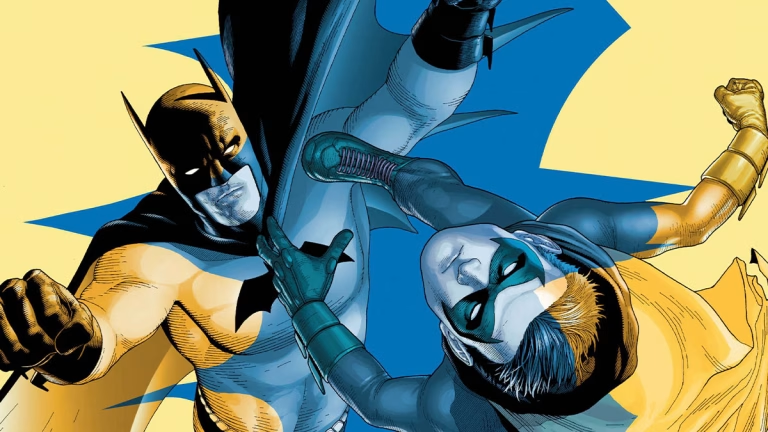
    To a reader who is not all too familiar with Batman comics, Grant Morrison’s Batman run can, at times, feel like a fever dream. Why is there a “Bat-Mite”? Who are the “International Heroes”? The answer lies in The Black Casebook, a meta-fictional journal where Bruce Wayne recorded every encounter that defied logic, physics, or sanity.

    When I first read this run, my knowledge of Batman was limited to recent publications. I lacked a broader understanding of what the character went through. Even some recurring characters were not known to me. I caught up quickly, as the stories Morrison wrote don’t require you to be a Dark Knight scholar to be understood, but the more you know, the more you can appreciate what the author did.

    So, in this DC Casebook investigation, we strip away the modern shadows to reveal the 1950s and 60s “Golden & Silver Age” stories that Morrison transformed into psychological pieces to explore the mind of the Bat.

    Read More “The Black Casebook: Deconstructing the Silver Age Ghosts of Grant Morrison’s Batman”