
The Batman Case Files: Paul Dini’s Run, From Heart of Hush to Gotham City Sirens (Review and Reading Order)
Known to Batman fans for his award-winning work on Batman: The Animated Series, Paul Dini also left a mark on the character’s comic book history. Running parallel to Grant Morrison’s Batman epic from 2006 to 2011, Dini’s work across Detective Comics, Batman: Streets of Gotham, and Gotham City Sirens explored a different side of Gotham City, with a stronger focus on its criminal underworld.
It was the time when the Riddler was rehabilitated into a legitimate private investigator, Hush made his violent comeback, a new Ventriloquist was introduced, Harley Quinn was getting away from the Joker, and more things I’m going to explore in this tentatively comprehensive guide breaking down Paul Dini’s run in which Batman had to use his talents as the World’s Greatest Detective.
Table of Contents
- A Complete Review
- Detective Comics
- Heart of Hush & Streets of Gotham
- Gotham City Sirens
- Collecting Paul Dini’s Batman Comics in 2026
- Full Reading Order
- Paul Dini’s Other Comics
1. The Review: The Master of the Single-Issue Case
When you read Grant Morrison’s Batman alongside the other Batman stories published at the time, it’s almost like you are in two different universes. It’s not a bad thing, though. There are different approaches to telling a Batman story. Paul Dini’s focused more on Gotham and its criminal underworld with a lighter emphasis on serial storytelling. It was about building the (under)world one comic at a time and playing in it.
Part. 1: Detective Comics
Paul Dini’s run on Detective Comics went back to the classic, single-issue detective story. Noir-tinted mysteries filled with eccentric villains. It’s clearly evident that the villains were the main appeal for the writer, who didn’t hesitate to revisit some ideas he used (similarly or differently) during his time on Batman: The Animated Series. This plays like fun throwbacks for fans or an author who wanted a redo. I personally quite like that, even if it threw me off a little at first. I was questioning myself: why do I remember this plot point so well? Probably because I rewatched the show not so long ago! Those references are just adding to the fun.
And fun it is to read this run. I especially enjoyed The Riddler being reformed and working as a private detective with Batman looking over his shoulder. I almost wished this had become his status quo in the DC Universe, but it was not destined to stay that way. What stuck, however, was Harley Quinn’s evolution. At this point in time, I have not read a lot of Harley comics. It’s something I’ll try to do in the near future, but I’ve never been too interested in her. That said, who better than Dini, his co-creator, to write her? Harley Quinn is moving away from her time as a Joker sidekick, realising the toxicity of that relationship and working towards independence. Her appearances perfectly set the stage for her more heroic adventures during Countdown to Final Crisis. Dini clearly has favourites. He likes Penguin and Riddler, but he also clearly enjoys writing Zatanna and, apparently, Tommy Elliot.
Part. 2: Heart of Hush & Streets of Gotham
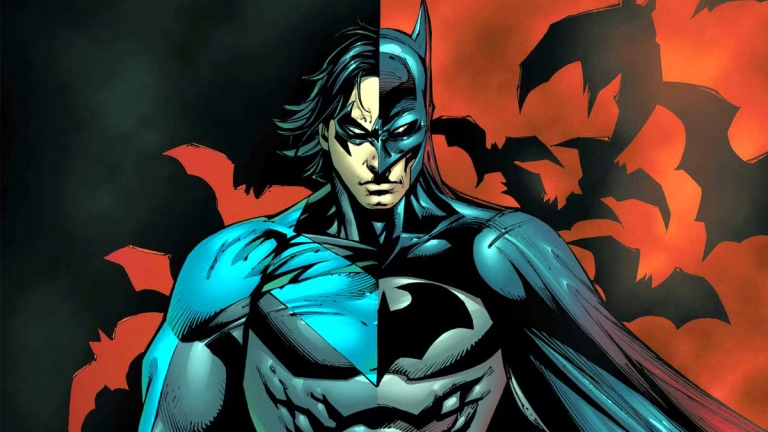
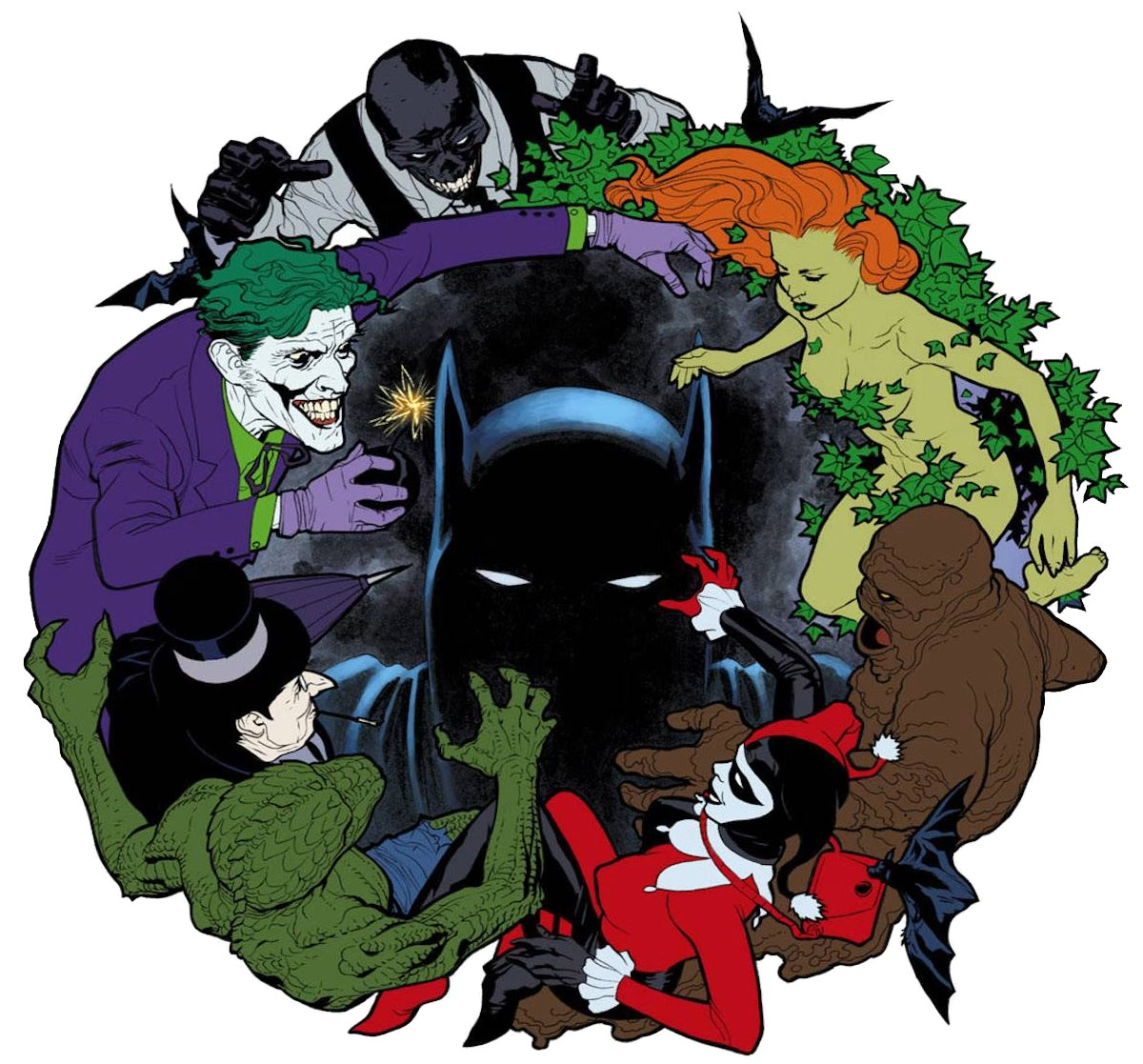
I had not cared much for Heart of Hush the first time I read it. Revisiting it didn’t affect my view of it by a lot. I thought that Tommy Elliot had the quality of a one-time villain, and bringing him back felt like reducing him to a gimmick villain. I don’t really see what makes him interesting as a recurring Batman rogue, other than his personal connection to Bruce Wayne, which has already been largely exploited. His own brand of crazy doesn’t make him too special, in my opinion. In this story, the stakes are once again personal, but there’s not a lot of mystery surrounding it and Tommy as a distorted reflection of Bruce doesn’t generate a lot of sparks to get me excited.
But maybe the context didn’t help for me. Heart of Hush was published in parallel to Batman R.I.P. and, if the two have similarities in the way the antagonists have intimate knowledge of Batman’s secret identity and want to destroy him by making it extremely personal, Dini’s story lacks the epicness of Morrison’s. As a result, it felt tacked on before the big show, and read as a rushed and not fully realised comeback.
Still, once his run on Detective Comics ended, Dini kept exploring Hush in a new way with Streets of Gotham, which ended with House of Hush, a storyline that deepened the link between the Waynes and the Elliots, with added hatred to satisfy Tommy’s needs. Unlike Heart of Hush, this doesn’t work as a singular storyline, but as the conclusion of Dini’s work on the character. Tommy had surgically altered his appearance to look like Bruce Wayne. With his enemy out of the picture, he sweeps in and starts dilapidating the Wayne fortune in a very public manner. The idea takes the character in a new direction, but it doesn’t lead too far (House of Hush found a way out of the situation that made sense, though). So for the most part Tommy is “Bruce Wayne” under the supervision of Batman’s allies, and also pops up in other series from that time, making cameos that add to the complications of the situation. Like with The Riddler becoming good, Dini defied expectations with Tommy Elliot, but there was not enough space to explore the whole concept completely, sadly.
In Streets of Gotham, Paul Dini had more to do than deal with Hush (even if this ends up being a third of the series). The idea was to keep focusing on Batman rogues, not just one. Paul Dini introduced The Broker, not a bad guy, just a real estate agent who provides secret lairs for them. It’s another brilliant addition that makes sense in Dini’s version of Gotham’s Underworld. The Broker also popped up in Gotham City Sirens, like Jenna “The Carpenter” Duffy, another fun creation from Dini (and Dustin Nguyen). She’s a minor villain with a gimmick. When she’s not committing crime, she will use her tools to fix up your lair, add a few deadly traps, and happily take the money for the mostly legit work she’s done. Jenna has a very grey moral compass, a true Gothamite. On the opposite side, Dini started developing Abuse, a vigilante who’s really a kid transforming into a huge and strong man when needed. He fights for the orphans and becomes an ally of Damian Wayne. It reads like a gritty street-level take on Shazam that could have led somewhere if the character had found a place in the Bat-Family.
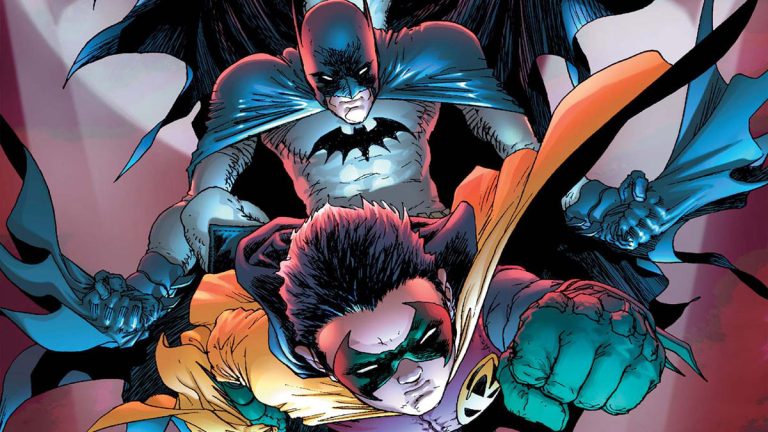
Damian and Dick, who are Robin and Batman at the time, did appear in supporting roles throughout the series. Dini didn’t put them too much forward, but wrote them well. That’s his strength. The characterisation is always solid. The stories, however, are not always strong. Like House of Hush that gets muddled in too many flashbacks, Dini’s stories in Streets of Gotham tend to get lost in his desire to add a lot more context than required, leaving less space for the pay-offs to fully capitalise on the dramatic weight of the plot. As a result, the series doesn’t work as well as his Detective Comics run.
In the end, Streets of Gotham is more for those who like the focus on small characters and smaller stakes. My main regret is that Jenna Duffy, The Broker, and Abuse didn’t come back for more comics.

Part. 3: Gotham City Sirens
While Dini wrote Streets of Gotham, he also co-created the slightly more ambitious Gotham City Sirens with artist Guillem March. It starts with Catwoman recovering from Tommy Elliot tearing out her heart in Heart of Hush. She’s not at her best and convinces Poison Ivy and Harley Quinn to move into an abandoned hideout with her. Together, they are stronger and can work on staying on the right side of the law.
The Sirens are not really a team. It’s an odd trio of roommates who can’t seem to avoid problems, despite their best efforts. Unlike Streets of Gotham, Gotham City Sirens had a more serialised approach to its storytelling. That way, it explored Harley’s lingering codependency on the Joker and Ivy’s struggle with humanity, while Catwoman was looking to find her strength again.
Thanks to Paul Dini’s talent for character development, the series was a compelling read, establishing strong ties between the three dangerous ladies who would go on to become important figures in the years that followed. Gotham City Sirens is reminiscent of BTAS in a very good way. The tone is light-hearted, but serious enough to allow the dark undertones to work. The book explores what makes Catwoman, Ivy and Harley tick: their traumas, hang-ups, ambitions and relationships with Batman. The series ran long enough to see some interesting character development and evolution, but Dini only wrote 9 issues. I would recommend reading it in its entirety, though, as I particularly liked the way Harley’s toxic love for the Joker was handled. It’s certainly eccentric, but still provides an interesting commentary on the subject.
Finally, on the art side, Guillem March’s collaboration with Dini was the more fruitful, as the artist did have a flair for unconventional panel composition that helped make the Sirens’ adventure more dynamic. Different artists did interesting things on Detective Comics and, on Streets of Gotham, Dustin Nguyen did a solid job, but I was not that engaged. It may be because I was never too fond of his way of drawing the characters.
Overall, Gotham City Sirens is some of the strongest work from Dini during that time. It may not be part of what is called “Paul Dini’s Batman comics,” for good reason, but it’s a compelling companion series.
2. Collecting the Case in 2026
To explore Dini’s run, you have two primary collection paths: the Batman by Paul Dini omnibus (which does not collect the Gotham City Sirens comics) or the classic trade paperbacks.
The Omnibus Collection:
- Batman by Paul Dini Omnibus – Collects Batman #685 (1940-), Batman Annual #1 (2016-), Batman Black and White #3 (2013-), Batman: Gotham Knights #14 (2000-), Batman: Streets of Gotham #1-4, #7, #10-14, #16-21, DCU Holiday Special #1, Detective Comics #821-824, #826-828, #831, #833-834, #837-841, #843-850, #852, #1000.
- Harley Quinn & the Gotham City Sirens Omnibus – Gotham City Sirens #1-26; Catwoman #83. Dini only wrote the first half of it.
Trade Paperback Breakdown:
- Batman: Detective – Detective Comics #821–826.
- Batman: Death and the City – Detective Comics #827-834.
- Batman: The Resurrection of Ra’s al Ghul – Batman #670-671, Robin #168-169, Robin Annual #7, Nightwing #138-139, and Detective Comics #838-839.
- Batman: Private Casebook – Detective Comics #840–845 and DC Infinite Halloween Special.
- Batman: Heart of Hush – Detective Comics #846–850.
- Batman: Streets of Gotham Vol. 1: Hush Money – Batman: Streets of Gotham #1-4, plus Detective Comics #852, Batman #685.
- Batman: Streets of Gotham, Vol. 2 – Leviathan – Batman: Streets of Gotham #5–11.
- Batman: Streets of Gotham, Vol. 3 – The House of Hush – Batman: Streets of Gotham issues #12-14, 16–21.
- Gotham City Sirens: Book One – Gotham City Sirens #1-13.
3. Paul Dini’s Batman in Chronological Reading Order
Before jumping into Paul Dini’s run on Detective Comics, here is what you need to know. First, we are in the post-Infinite Crisis part of DC’s history. There was a one-year time jump. During that missing year, Batman, Robin, and Nightwing were out of town. Batman had left a (temporarily) cured Harvey Dent in charge. In Batman: Face the Face, the Dark Knight is back and has to deal with villains getting assassinated. That’s when the first Ventriloquist, Arnold Wesker, was killed. It’s important because Paul Dini introduced his replacement.
🚨 The following guide is a breakdown of the run, with everything you need to know to understand the major changes introduced in other books. I’ll publish a complete reading order for that specific era of Batman comics soon, but this article is focused on Dini’s work. For Morrison’s run, I invite you to check out my reading order dedicated to his epic Batman tale.

Part. I: Dini’s Detective Comics
Don Kramer is the main artist on the following issues (J. H. Williams II, Joe Benitez, Andy Clarke, and Ryan Benjamin also pencilled a few issues) up until Detective Comics #840, when Dustin Nguyen came on board.
- Detective Comics #821: Someone is getting after Gotham’s rich socialites.
- Detective Comics #822: Coming out of a coma, The Riddler is now cured and goes legit, working as a private investigator.
- Detective Comics #823: Poison Ivy is targeted by plants!
- Detective Comics #824: Penguin is back in town and reopens the Iceberg Lounge. Batman, Zatanna, and Lois Lane have to look into it.
- Detective Comics #825 by Royal McGraw
- Detective Comics #826: Christmas is coming, and Joker kidnaps Robin!
- Detective Comics #827: Scarface is back, but who is the new Ventriloquist?
- Detective Comics #828: Batman and Riddler investigate the mysterious death of an old friend of Bruce Wayne.
- Detective Comics #829-830 by Stuart Moore
- Detective Comics #831: Harley is kidnapped by the Ventriloquist.
- Detective Comics #832 by Royal McGraw
- Detective Comics #833-834: When a magic show ends with a death, Batman teams up with Zatanna to find the culprit.
- Detective Comics #835-836 by John Rozum
- Detective Comics #837: A “Countdown” Tie-In. Bruce Wayne hires Nygma to investigate the disappearance of an employee. If you read Countdown to Final Crisis, it is set after issue #42.
💡 The next three issues are part of the Batman: The Resurrection of Ra’s al Ghul crossover that brought back this old classic enemy to life. It was written by Grant Morrison, Peter Milligan, Fabian Nicieza, and Keith Champagne. Check out my Resurrection of Ra’s al Ghul Reading Order to know how to read those issues.
- Detective Comics #838-840: The Resurrection of Ra’s al Ghul.
- Detective Comics #841: The Mad Hatter and the Wonderland Gang strike at the Gotham Fashion Week.
- Detective Comics #842 by Peter Milligan
- Detective Comics #843: Zatanna is opening for a new club when Scarface attacks.
- Detective Comics #844: The true story of the new Ventriloquist revealed.
- Detective Comics #845: Batman and the Riddler are separately tracking the same killer.
The Heart of Hush
Hush returns to Gotham with a cold, calculated plan to destroy Bruce Wayne, not by attacking Batman directly, but by targeting what Bruce loves most. Tommy ambushes Catwoman (Selina Kyle), surgically removes her heart, and places her on advanced life-support systems at Gotham General Hospital.
- Detective Comics #846-850: Heart of Hush.
- Detective Comics #851 by Denis O’Neil
We have reached a critical point with Morrison’s Batman R.I.P. storyline (then Final Crisis) that led to Bruce Wayne’s disappearance. You can learn a lot more about that in my Batman R.I.P. Reading Order
- Detective Comics #852-Batman #635: Set after Batman R.I.P., this is an epilogue to the “Heart of Hush” storyline.
Part. II: In The Streets of Gotham with The Sirens
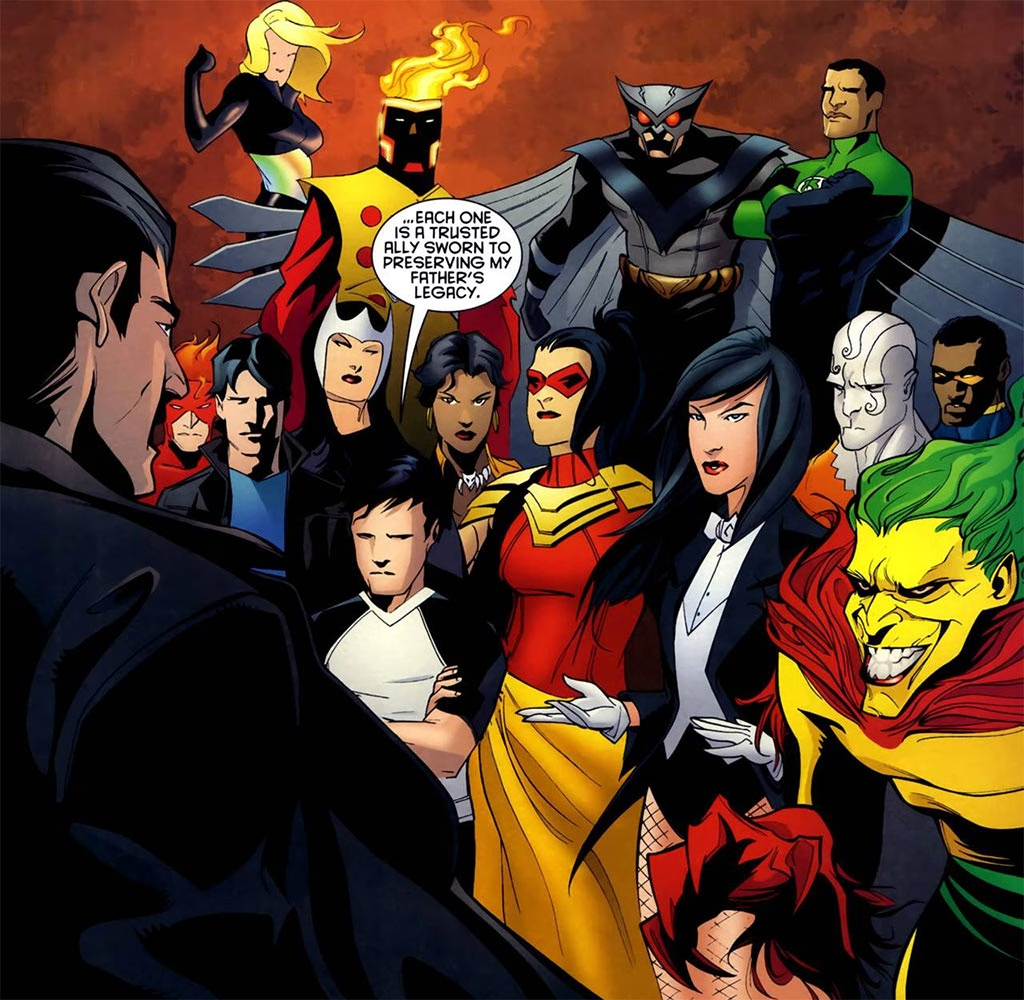
Following the events of Final Crisis, Bruce Wayne is missing. Dick Grayson and Damian Wayne take over as Batman and Robin, as explained during the Battle for the Cowl storyline.
At that point, Paul Dini is not writing Detective Comics anymore, but he still did, in a way, picking up with artist Dustin Nguyen where they left off in the new ongoing series Batman: Streets of Gotham. He also did, at the same time, Gotham City Sirens with artist Guillem March.
- Batman: Streets of Gotham #1-3: Firefly is threatening Gotham, and Tommy Elliot, who now looks like Bruce Wayne, takes advantage of the chaos to escape and come out to the public as a very charitable Bruce Wayne. All the while, the mysterious vigilante Abuse is patrolling the streets to protect runaway kids.
- Batman: Streets of Gotham #4: The Broker just provided a new lair to White Shark and a new slaughterhouse to Victor Zsasz. Batman and Robin want the details.
- Batman: Streets of Gotham #5-6 were written by Christopher Yost and tell a story about Man-Bat and Huntress.
- Gotham City Sirens #1-2: Selina Kyle, Pamela Isley, and Harleen Quinzel form an unstable alliance to protect each other and, thanks to the Broker, find the perfect place to live. But first, Ivy wants to know who Batman really is.
- Gotham City Sirens #3 by Scott Lobdell is a Riddler story.
- Gotham City Sirens #4-6: Tommy Elliot kidnapped Harley and planned to kill her to get back at Selina, but “Joker” wants to be the one to kill Harley. Ivy and Selina have to put themselves in the middle of it. Also, Selina has recruited Jenna Duffy to fix up her new secret lair.
- Gotham City Sirens #7: It’s Christmas, and the Sirens look back at what their life were to decide what they will be.
- Batman: Streets of Gotham #7: Batman and Robin track a fake Santa Claus and find dead kids.
- Batman: Streets of Gotham #8-9 were written by Mike Benson and follow Dick Grayson tracking a killer of criminals.
- Gotham City Sirens #8 by Marc Andreyko is about a killer who framed Poison Ivy.
- Batman: Streets of Gotham #10-11: The vigilante named Abuse and Damian Wayne are looking into the dead kids case, which led them to Victor Zsasz.
- Gotham City Sirens #9-10: Selina, Ivy, and Harley ask Nygma for help when a body is delivered to their apartment. He soon runs into Doctor Aesop, and things get deadlier.
- Batman: Streets of Gotham #12-13: A Hollywood wacko looking to make snuff movies about killing heroes recruits Jenna Duffy to build the sets. The money is good, if she can get out of this alive and free.
- Gotham City Sirens #11: Catwoman and Harley search for the neighborhood’s missing animals while Ivy starts her new job at S.T.A.R. Labs. This is Dini’s last issue on the series.
House of Hush
Tommy Elliot is looking for a way to escape Batman’s allies when an old-school mafioso, newly released from prison, comes after Bruce Wayne for revenge. The Waynes’ and the Elliots’ past is creating a new opportunity for Hush to destroy his nemesis.
💡 The character of Jane Doe, who ends up playing a key role in the story, was previously at the centre of the Manhunter backup stories published in the first half of Batman: Streets of Gotham.
- Batman: Streets of Gotham #14, 16-21: House of Hush.
- Batman: Streets of Gotham #15, written by Iván Brandon, is the continuation of his Two-Face story started as a backstory in the previous issue.
🏷️ Paul Dini’s Other Comics
Paul Dini loves to use Zatanna in his comics. She appeared in his Detective Comics run, in Streets of Gotham, and in Gotham City Sirens, but the writer’s work on the character didn’t stop there because he wrote The Mistress of Magic’s first ongoing series. The run was recently reprinted in the Zatanna by Paul Dini Omnibus.
Dini’s most celebrated work is Batman: The Animated Series, and he also wrote many comics set in the universe of the show, famously The Batman Adventures: Mad Love, a one-shot retelling of Harley Quinn’s origins. He also wrote some issues of The Batman and Robin Adventures. One day, I’ll write a complete guide to this universe, but not now. For more Harley & Joker, Dini also wrote the two-issue miniseries Harley Quinn: Harley Loves Joker. And since 2021, he officially launched a follow-up to the TV show in Batman: The Adventures Continue and has done three short runs (aka seasons of 7-8 issues each) since. He is not ready to call it quits, as he produced a one-shot Christmas special this year (2026) titled The Joker’s Christmas Carol #1.
Finally, only because I wrote a full guide, I cannot forget to reference his contribution to Countdown to Final Crisis, but it’s not on top of anyone’s list of best Dini’s work in comics.