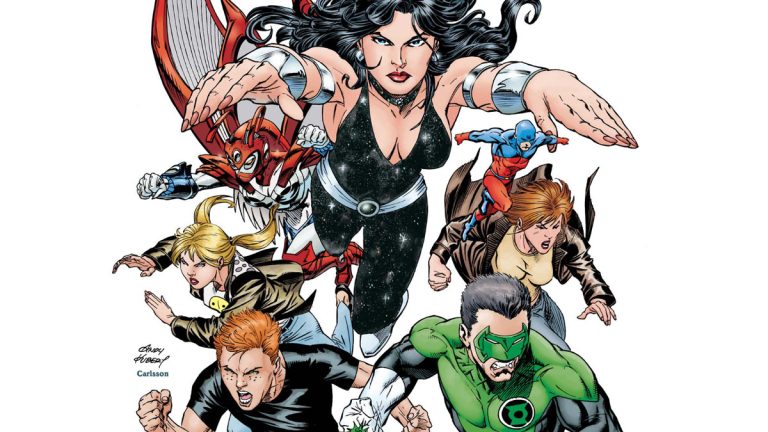
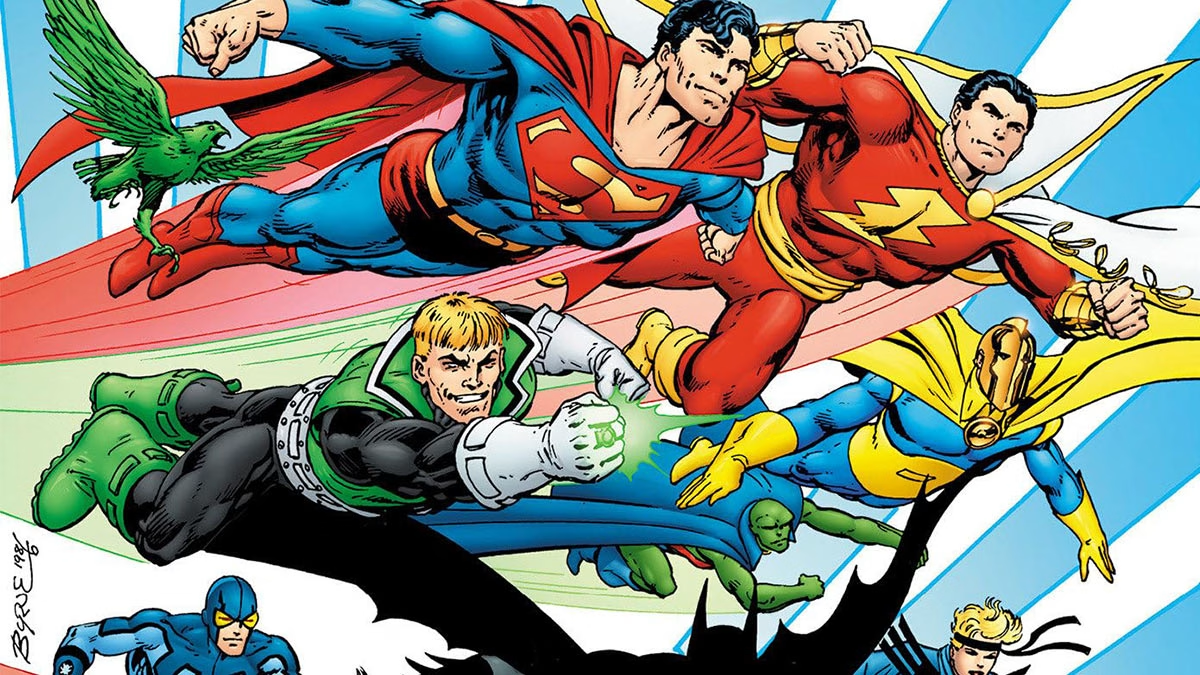
The heroes flight to the first Post-Crisis crossover

Legends (1986) Reading Order: The First Post-Crisis Crossover

Disclaimer: As an Amazon Associate, we earn from qualifying purchases (Affiliate Disclosure). Thanks!

In 1986, DC Comics was fresh off the success of Crisis on Infinite Earths. It was a new era with a rebooted universe. After that, the question was: What next? The answer seems to have been “another crossover event.”

Before we got the Legends we know today, there was “Crisis of the Soul.” This scrapped 12-issue project was designed to show a world turning on its heroes through spiritual corruption. Though canceled after months of development, some of his ideas survived. In August 1986, editor Mike Gold and a star-studded creative team launched Legends. It wasn’t a sequel to Crisis, but an “introduction” to the modern DC Universe.

  1. Historical Context
  2. Collecting Legends in 2026
  3. Full Reading Order

1. Opening Up the DCU: Reintroducing the Heroes

Plotted by John Ostrander, scripted by Len Wein, penciled by John Byrne, and inked by Karl Kesel, Legends saw Darkseid attacking Earth by using an original tactic: destroying their status as living legends, presenting them as the problem, not the solution. He sent agents to manipulate public opinion, leading people to reject those they swore to protect.

Reading the event today, the plot feels a bit flimsy, and the crossover in itself has to push hard to keep up with it. I found Legends to be very optional, except for two things: if you are reading the Justice League Detroit era and want the conclusion, and if you are interested in the Suicide Squad. And even then, most of the event is skippable.

Key Historical Story Elements:

  • The Modern Suicide Squad: This event is the first appearance of the John Ostrander-style Task Force X.
  • The End of a Justice League: The old Justice League comes and goes, making space for Keith Giffen and J. M. DeMatteis’ relaunch, the Justice League International.
  • Wonder Woman Meets the Heroes: George Pérez’s run on Wonder Woman started to be published only two months before Legends #6, in which Diana makes her first appearance outside of her title, meeting the other heroes.
  • Captain Marvel’s Introduction: Billy Batson was reintroduced in the DCU during the event, but played a more significant part in the story. The following year, his new origin story was published in Shazam!: The New Beginning by Dann and Roy Thomas, and artist Tom Mandrake

2. Finding the Legends event in 2026

For a long time, DC Comics had only made available a trade paperback published in 2016 to celebrate the 30th anniversary of the Legends event that collected the 6 main issues.

In 2026, in time for the 40th anniversary, the new massive hardcover edition collects this time the main eventwith all the tie-ins.

  • Legends 30th Anniversary Edition – Collects Legends #1-6.
  • Legends 30th Anniversary – Digital Edition – Collects Legends #1-6.
  • Legends Omnibus – Collects Legends #1-6, Batman #401, Detective Comics #568, Green Lantern Corps #207, Cosmic Boy #1-4, Justice League of America #258-261, Secret Origins #10 and #14, The Fury of Firestorm #55-56 and #58-59, Blue Beetle #9-10, The Warlord #114-115, Superman #3, Adventures of Superman #426, and Action Comics #586

3. The Complete Legends Reading Order

There are three ways to read Legends. The first is to stick with the 6-issue miniseries. The second is to go through the 28+ issues published under the Legends banner. The third is to read the mini and only the tie-ins connected to the characters you are interested in.

The following reading guide to the Legends crossover will help you select the issues you want to read:

The Prologue

  • Batman #401: The first post-crisis Batman story ft. Magpie (see Man of Steel #3) and G. Gordon Godfrey, who is the man arguing for a ban on superheroes.
  • Detective Comics #568: Batman vs. the Penguin. Only the last page referenced the growing anti-hero sentiment and Godfrey.
  • Legends #1: The official beginning of the event.
  • Green Lantern Corps #207: Guy Gardner’s back on Earth. A prelude to his appearance in Legends #2.

Fun fact: The “G. Gordon Godfrey” name is a reference to G. Gordon Liddy, one of the co-conspirators in the Watergate scandal.

The Rising Tension

  • Legends #2: The tension rises
  • Cosmic Boy #1: What happened to Legion of Super-Heroes’s Cosmic Boy directly after the events of Legends #2.
  • Justice League of America #258: The JLA is disbanded. It’s the beginning of the end. Part 1/4.
  • Secret Origins (Vol. 2) #10: Four possible origins of the Phantom Stranger. Only one “Footsteps” will be referenced in later books.
  • Firestorm (Vol. 2) #55: What happened to Firestorm directly after the events of Legends #2.
  • Booster Gold #13: Not officially labeled as part of the event, it is set at this point and follows Booster while recovering from a battle.
  • Legends #3: Enter The Suicide Squad.

The World at War

  • Cosmic Boy #2: The continued adventures of Cosmic Boy and Night Girl as public opinion of the heroes turns sour and violent.
  • Justice League of America #259: Someone is after the leaguers. Part 2/4.
  • Firestorm (Vol. 2) #56: In Pittsburgh, Godfrey’s acolyte creates chaos, but Firestorm fights inner conflict.
  • Blue Beetle (Vol. 6) #9: Back in Chicago, BB is having office problems. Introduces the Chronos story that concludes in Legends #4.
  • Legends #4: The situation descends into chaos.
  • Warlord #114: Follow-up to what happened after Darkseid sent his assistant DeSaad to Skartaris to destroy the legend of Warlord.
  • Cosmic Boy #3: Cosmic Boy and Night Girl can’t go back to their time and have to fix their Time Bubble.
  • Justice League of America #260: J’onn J’onzz tries to save the Leaguers. Part 3/4.
  • Blue Beetle (Vol. 6) #10: Following Legends #4, BB tracks the Time-Thief.
  • Warlord #115: The real Warlord learns what happened and goes after DeSaad.

Note: This reading order follows the official one, but if you prefer, you can read all the Justice League of America comics consecutively. Idem for the Warlord and Cosmic Boy issues. It doesn’t affect the overall story.

The Superman “Apokolips” Trilogy

The next three Superman tie-ins form a complete storyline. Darkseid kidnapped Clark Kent, bringing him to Apokolips, where he’ll try to help the little people.

  • Superman (Vol. 2) #3
  • Adventures of Superman #426
  • Action Comics #586

The Grand Finale

  • Legends #5: G. Gordon Godfrey’s rhetoric reaches a new level.
  • Cosmic Boy #4: The end of the 4-issue miniseries. Can be read directly after CB #3.
  • Justice League of America #261: Part 4/4. The end of the Detroit era of the JLA.
  • Legends #6: The Final confrontation and the formation of the new Justice League.
  • Secret Origins (Vol. 2) #14: The Secret Origin of the Suicide Squad.

After the Legends: Where to Go Next?

While the events saw the conclusion of Volume 1 of Justice League of America, Legends wasn’t an ending, but a launchpad. Here is a quick map to follow what came after:

  • Cosmic Boy and Night Girl’s story continues in the pages of Legion of Super-Heroes #36.
  • Justice League of America is dead. Long live the Justice League International.
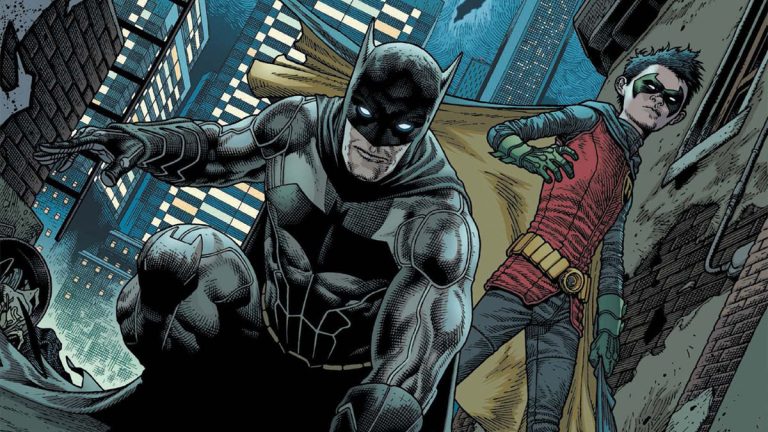
  • Batman started his Modern Age run with the first two issues of the event.
  • Superman continues his reinvention under John Byrne’s direction
  • Captain Marvel is back in Shazam!: The New Beginning.
  • The Suicide Squad members are back in their own series by John Ostrander.
  • Wonder Woman had only begun her Modern Age renaissance with the freshly launched reboot (Volume 2).
  • The Flash (aka Wally West) runs in a new solo title, The Flash (Volume 2), right after Legends.
  • Blue Beetle (Vol. 6) continues for over 10 more issues. He’ll join the JLI with Booster Gold.
  • Warlord continues up to issue #133.
  • Firestorm had barely reached the halfway mark of its volume. It continued for years.
  • The fate of Glorious Godfrey is revealed in Suicide Squad #3.

The Case Continues: The Road to Millennium

The resolution of the Legends conflict brought a brief moment of stability to the DC Universe, but it also left the world’s heroes exposed. As the new Justice League found its footing and the “Modern Age” of the Man of Steel began, a far older threat was preparing to strike from within.

The paranoia established by G. Gordon Godfrey was merely a prelude to the Manhunter conspiracy. Having spent centuries embedding sleeper agents into the lives of Clark Kent, Wally West, and the Guardians of the Universe, the Manhunters were finally ready to activate their global network.

[Continue the history: The Millennium (1988) Reading Order]
More Files from the Casebook

  • |

    The Batman Case Files: Paul Dini’s Run, From Heart of Hush to Gotham City Sirens (Review and Reading Order)

    Disclaimer: As an Amazon Associate, we earn from qualifying purchases (Affiliate Disclosure). Thanks!

    Known to Batman fans for his award-winning work on Batman: The Animated Series, Paul Dini also left a mark on the character’s comic book history. Running parallel to Grant Morrison’s Batman epic from 2006 to 2011, Dini’s work across Detective Comics, Batman: Streets of Gotham, and Gotham City Sirens explored a different side of Gotham City, with a stronger focus on its criminal underworld.

    It was the time when the Riddler was rehabilitated into a legitimate private investigator, Hush made his violent comeback, a new Ventriloquist was introduced, Harley Quinn was getting away from the Joker, and more things I’m going to explore in this tentatively comprehensive guide breaking down Paul Dini’s run in which Batman had to use his talents as the World’s Greatest Detective.

    Read More “The Batman Case Files: Paul Dini’s Run, From Heart of Hush to Gotham City Sirens (Review and Reading Order)”
  • Flashpoint Reading Order: The End of The Post-Crisis era

    Disclaimer: As an Amazon Associate, we earn from qualifying purchases (Affiliate Disclosure). Thanks!

    As the massive crossover event Crisis on Infinite Earths did in 1985-1986, Flashpoint put an end to another major era of the DC Universe continuity in 2011: The Modern Age. The kind of events comic book companies always teased, but rarely delivered, the ones that really changed everything.

    Written by Geoff Johns and illustrated by Andy Kubert, Flashpoint centers on Barry Allen, the freshly returned Silver Age Flash, who wakes up in a world he doesn’t recognize. In this fractured reality, the Justice League was never formed, Superman is a prisoner of the state, and a genocidal war between Atlantis and Themyscira has brought humanity to the brink of annihilation.

    It’s not just another event to file in the DC Casebook, it’s the one that closed the book on the Post-Crisis era (1986-2011). Published as a five-issue limited series in 2011, it paved the way for the line-wide reboot known as the New 52.

    Read More “Flashpoint Reading Order: The End of The Post-Crisis era”
  • A Complete Batman Post-Crisis Reading Order a.k.a. The Modern Age (Work in Progress)

    Disclaimer: As an Amazon Associate, we earn from qualifying purchases (Affiliate Disclosure). Thanks!

    Welcome to the world of the Dark Knight. Undeniably one of DC Comics’ most popular characters, Batman has a long and editorially complex history. With a blog like DC Casebook, it’s hard not to go through the biggest case of all: the ultimate Batman Reading Order. And by Ultimate, I mean a Bat-Family Reading Order. While most of the similar works are focused on Batman alone, because sane people are making them, I have the crazy ambition to cover the whole extended family. Which makes this project even more complicated.

    It will take time. I’m talking about years. But I will eventually compile my own version of a complete reading guide for Batman. For now, it’s very much a Work in Progress! So, let’s begin with the Batman Post-Crisis era, also known as the Modern Age.

    Read More “A Complete Batman Post-Crisis Reading Order a.k.a. The Modern Age (Work in Progress)”
  • |

    Countdown to Final Crisis Reading Order: The Year the Multiverse Fractured

    Disclaimer: As an Amazon Associate, we earn from qualifying purchases (Affiliate Disclosure). Thanks!

    Published between 2007 and 2008 by DC Comics, Countdown to Final Crisis was designed as the weekly lead-in to Final Crisis, following in the publishing model established by 52. Running for 51 issues, the series attempted to lay the groundwork for the next major crisis in the DC Universe while following multiple parallel storylines involving cosmic threats, multiversal instability, and several major DC characters.

    Things didn’t turn out as well as with 52. It was a massive editorial blunder. As Grant Morrison explained it at the time: “Final Crisis was partly-written and broken down into rough issue-by-issue plots before Countdown was even conceived, let alone written.” But despite that, the writing led by Paul Dini seems to lack enough details to not contradict what would eventually happen in Final Crisis. As a result, plotlines in Countdown had diverged so much that continuity between the two publishing initiatives became partly nonsensical. Some elements complement Final Crisis and add a greater understanding of the end story, but most do the opposite. Characters who died end up alive (and are killed again), and whole storylines are redone in Final Crisis, and the overall tone doesn’t fit. If you add to that Death of the New Gods by Jim Starlin, to which Countdown began to respond before veering away from it, the confusion became maddening.

    Today, Countdown to Final Crisis is a complicated affair to deal with for readers. If you are a completist, you can’t skip it. Idem if you are trying to follow some secondary characters. Ultimately, this is widely considered to be non-canonical.

    Read More “Countdown to Final Crisis Reading Order: The Year the Multiverse Fractured”
  • The Black Casebook: Deconstructing the Silver Age Ghosts of Grant Morrison’s Batman

    Disclaimer: As an Amazon Associate, we earn from qualifying purchases (Affiliate Disclosure). Thanks!

    To a reader who is not all too familiar with Batman comics, Grant Morrison’s Batman run can, at times, feel like a fever dream. Why is there a “Bat-Mite”? Who are the “International Heroes”? The answer lies in The Black Casebook, a meta-fictional journal where Bruce Wayne recorded every encounter that defied logic, physics, or sanity.

    When I first read this run, my knowledge of Batman was limited to recent publications. I lacked a broader understanding of what the character went through. Even some recurring characters were not known to me. I caught up quickly, as the stories Morrison wrote don’t require you to be a Dark Knight scholar to be understood, but the more you know, the more you can appreciate what the author did.

    So, in this DC Casebook investigation, we strip away the modern shadows to reveal the 1950s and 60s “Golden & Silver Age” stories that Morrison transformed into psychological pieces to explore the mind of the Bat.

    Read More “The Black Casebook: Deconstructing the Silver Age Ghosts of Grant Morrison’s Batman”
  • Is Grant Morrison’s Epic Batman Run Still Worth the hype? A 2026 Retrospective Review

    Disclaimer: As an Amazon Associate, we earn from qualifying purchases (Affiliate Disclosure). Thanks!

    In 2006, when Grant Morrison took over the flagship Batman title, he decided that all of the character’s publication history was, in fact, canon. The most outlandish tales were probably just the result of his view of real events distorted by all the drugs, commotions, and otherworldly experiences his crime-fighting adventure subjected him to.

    That’s the idea behind the selected stories in the Black Casebook. He took concepts, and sometimes just names, out of those old comics and went on creating a unified narrative to explore Batman as an idea. But Morrison being Morrison, the run went epic, cosmic, and at times quite confusing.

    Two decades later, those stories have become highly influential, and it makes sense to revisit this era that introduced Damian Wayne, made the Batman of Zur-En-Arrh into a psychological construct, redefined the bats as a symbol integral to Gotham and the Waynes’ history, and took the brand global!

    Returning to Grant Morrison’s Batman run helped me to organise my reading order, but I also wanted to share my thoughts on it in a retrospective review. Let’s begin.

    Read More “Is Grant Morrison’s Epic Batman Run Still Worth the hype? A 2026 Retrospective Review”

Leave a Reply

Your email address will not be published. Required fields are marked *