The Complete Zero Hour: Crisis in Time! Reading Order & Review (1994)
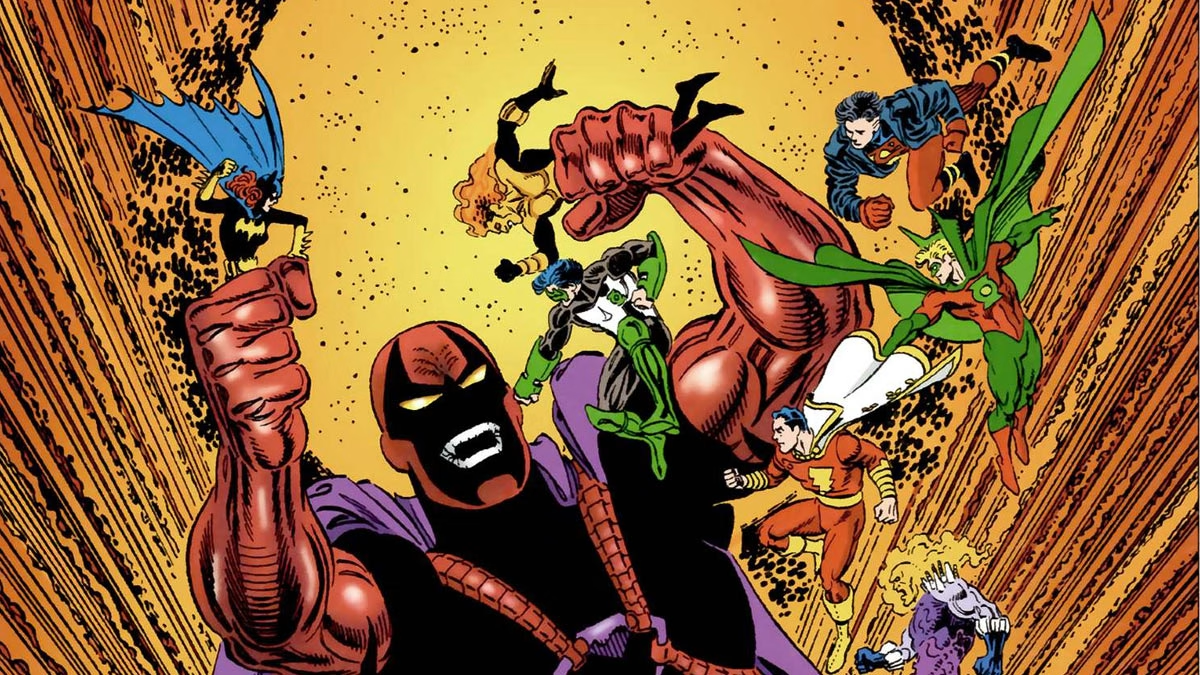
In late 1994, a decade after Crisis on Infinite Earths relaunched the DC Universe, continuity was once again a mess. It’s the DC Comics curse. Dan Jurgens wanted to fix that with his line-wide temporal reboot miniseries titled Zero Hour: Crisis in Time.
When it was published, the event was a success, one of the bestsellers of the year, but time revealed that it was not the crisis to end all crises. While Extant and Parallax erased past, present, and future, their defeat didn’t make the DC timeline more structurally sound for long.
Still, the intentions were good, and some changes did lead to some great comics. So, let’s count once again backwards to zero by revisiting this ambitious story that affected a lot of series, confounded many superheroes, and opened up the way for many retcons!
- What is Zero Hour about?
- My Zero Hour Review
- Collecting Zero Hour in 2026
- The Complete issue-by-issue Reading Order
- What came after Zero Hour?
📝 Zero Hour: A Crisis To Close the Temporal Loopholes
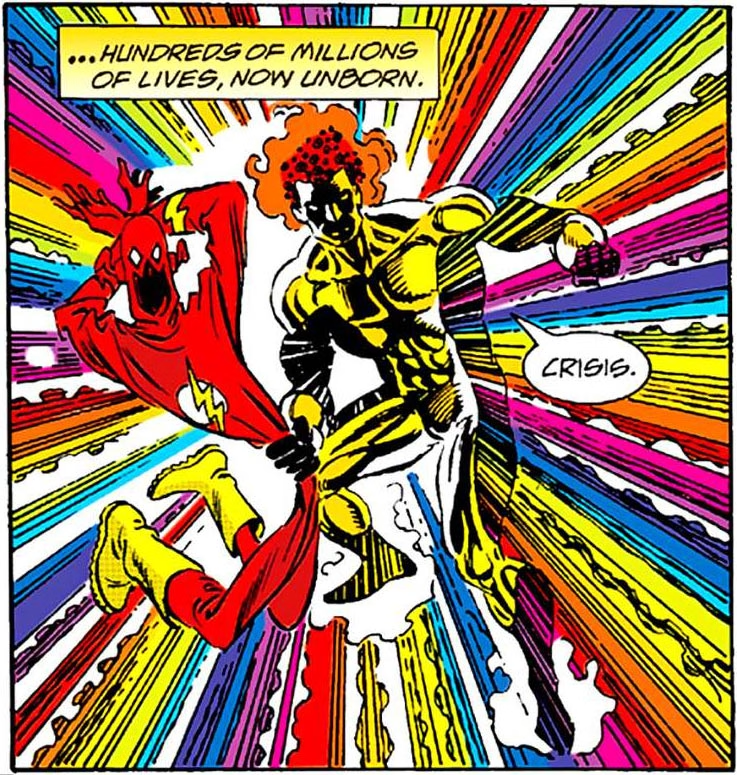
Written and pencilled by Dan Jurgens, Zero Hour: Crisis in Time! sees the DC Universe collapsing inward as waves of pure entropy erase both the past and the future. Simply put, time is running out for the heroes!
Previously known as Monarch in Armageddon 2001, the temporal villain Extant wants to wipe the slate clean and rebuild a “perfect” timeline (according to him, a psychopathic dictator from a now-erased future) from scratch. From Vanishing Point, the Linear Men who work at protecting the timeline must act fast. Waverider recruits heroes to help him, but they may not be able to put an end to the crisis fast enough to save reality as they know it.
Key Historical Changes Coming From The Crisis:
- The Fall of the Golden Age JSA: Since Crisis on Infinite Earths, the JSA hasn’t had much luck. Zero Hour famously ended the team, clearing the path for a new incarnation a few years later.
- The Legion of Super-Heroes Reboot: The 30th-century timeline is completely erased by the entropy wave, wiping out decades of convoluted continuity and launching the clean-slate “Reboot” (or “Archie”) Legion era.
- The Hawkman Consolidation: In an attempt to fix years of contradictory Thanagarian and Golden Age backstories, all existing versions of Hawkman were merged into a single “Hawk-God” avatar (spoiler: this didn’t really fix anything).
✍️ My Review of Zero Hour: (A Mostly Forgotten) Crisis in Time
Reading Zero Hour: Crisis in Time! is a bit confusing, as the DC Universe changed so much. It’s often the case with old events, but the 1994 status quo is particularly jarring, with many characters who have not been active for a long time. Sure, you’ve got a bit of Batman and Superman, but it was a time when Kyle Rayner just debuted as the last Green Lantern and Guy Gardner was trying to stay relevant as a hero. There were so many Legionnaires in activity, there were the Darkstars running around, the Justice League was in disarray, and the Hawkman mythos was messy (at best). It was the end of Team Titans (who? you may ask).
Waverider, the hot-headed time-traveller from Armageddon 2001, is the headliner for the event. I don’t know if it was considered an odd choice at the time to build this entire Crisis on characters from a crossover from round three years earlier who did not do a lot since then, but that’s what happened. So, it’s once again Waverider & every available hero vs. Monarch (now Extant)… until it’s revealed that it was not exactly that. But I didn’t care for any of it, to be honest. The main miniseries went in all directions possible, most of the tie-ins barely add anything to the plot, and the more the story unravels, the less use there is for the iconic superheroes. Superman is propped up a bit at first, because of who he is, while Batman and Wonder Woman barely find a place on the pages. Yet, you’ve got Damage, who was a hero for 48 hours (only five issues) before the event, playing a key part in the end!
As you’ll see with the first part of my reading order, I had to go back many issues for most series to know what led the characters to the main event. In most cases, it was nothing. There was barely any set-up, it just happened. After the event, DC put out an ad (designed as a mocked-up front-page edition of the Daily Planet) resuming the event in a way that plays with the idea that almost nobody has noticed anything due to the temporal effects of the crisis. It’s not that nothing happened, but when I finished reading it, I was not convinced a lot did. All everybody does is react to events they can’t do anything about. Some characters, like the JSA and Wally West, are quickly affected by it, but everybody else is just running around, hoping not to be erased from reality.
It’s not surprising that, today, Zero Hour seems not to be discussed much, even after DC Comics put it back on the shelves with its DC Finest collection. In fact, if you just read this edition, you’ll probably be confused by some of the tie-ins that don’t seem to take place during the event, until the last page. The whole thing is all about the conclusion. Jurgens seems to have started with the end and just filled the emptiness that precedes it with a lot of noise. DC Comics wanted an excuse for a soft reboot, not a strong tale for the ages. So, that’s what this is: an excuse to make some light changes to the continuity.
🛍️ Collecting Zero Hour in 2026
Like most crossover events, you can stick to the central miniseries. It’s available digitally on Kindle and DC Universe Infinite. Those two collections also add the one-shot issue Zero Hour 30th Anniversary Special #1, published in 2024. In 2018, DC Comics reprinted the miniseries in a hardcover.
- Zero Hour: A Crisis in Time (2018, Hardcover) – Zero Hour: Crisis in Time #0-4, stories from Showcase ’94 #8-9 and the Zero Month Sampler.
For a more complete experience, meaning the Zero Hour miniseries and the legion of tie-ins, you have two options. The first is the big fat hardcover omnibus edition (reprinted in 2024). The second is the two big paperback volumes available in the DC Finest collection.
- Zero Hour: Crisis in Time Omnibus – Action Comics #703, Adventures of Superman #516, Anima #7, Batman #511, Batman: Shadow of the Bat #31, Catwoman #14, Damage #6, Darkstars #24, Detective Comics #678, The Flash #0 and #94, Green Arrow #90, Green Lantern #0 and #55, Guy Gardner: Warrior #24, Hawkman #13, Justice League America #92, Justice League International #68, Justice League Task Force #16, L.E.G.I.O.N. ’94 #70, Legionnaires #18, Legion of Super-Heroes #61, Outsiders #11, Robin #10, Steel #8, Superboy #8, Superman #93, Superman: Man of Steel #37, Team Titans #24, Valor #23, Zero Hour #4-0, and stories from Showcase ’94 #8-10.
- DC Finest: Events: Zero Hour Part One – Superman #93, The Flash #94, L.E.G.I.O.N. #70, Green Lantern #55, Superman: The Man of Steel #37, Team Titans #24, The Darkstars #24, Valor #23, Batman #511, Batman: Shadow of the Bat #31, Detective Comics #678, Legionnaires #18, Hawkman #13, Showcase ’94 #8-9, Steel #8, Superboy #8, Outsiders #11, and Zero Hour: Crisis in Time #3-4.
- DC Finest: Events: Zero Hour Part Two – The Flash #0; Green Arrow #90; Adventures of Superman #516; Justice League America #92; Action Comics #703; Justice League International #68; Legion of Super-Heroes #61; Green Lantern #0; Superman: The Man of Steel #0; Guy Gardner: Warrior #24; Justice League Task Force #16; Catwoman #14; Robin #10; Showcase ’94 #10; Damage #0, #6; Zero Hour: Crisis in Time #0-2; Anima #7.
📜 Complete Issue-by-Issue Reading Ordder
To build this reading order, I tried to bulk up the list of comics to read before the events, compared to what you’ll find with other reading orders. I don’t say you have to read them all, but I wanted to provide more context because of the way the collecting editions put the issues together. Most of what you get with those books are the last issues of already developing stories. It’s a bit hard to grasp what’s going on, especially today, as some of those series feature characters you don’t read much about.
🛣️ The Road to Zero Hour
This first salvo of comics is about setting the stage for the characters before Zero Hour.
- Armageddon 2001 #1-2: The bookend issues of the 1991 event introduced Waverider and Monarch into DC Comics’ continuity. I invite you to check out my article dedicated to the event to learn more about it.
- Superman (Vol. 2) #61: Dealing with direct consequences from Armageddon 2001, this issue introduced Waverider to the Linear Men and Vanishing Point.
- Superman (Vol. 2) #73: This is the issue in which Waverider joins the Linear Men, explaining why he is with them at the beginning of Zero Hour.
- The Linear Men also appeared in one of the short stories in Superman – The Legacy of Superman #1.
- ⭐ Green Lantern (Vol. 3) #48-50: Key event leading to Zero Hour, the famous Emerald Twilight storyline in which Green Lantern Hal Jordan lost his mind, destroyed the Corps, and became Parallax. I wrote a little something about it in my review/reading guide.
- Guy Gardner: Warrior #18-21 deals with the immediate consequences of Hal’s actions on OA, showing what happened to him after Emerald Twilight.
- Team Titans #21-23: Team Titans spun off Armageddon 2001 and is about to reach its conclusion. Here is what happens to lead Donna Troy to the Darkstars (see next series) and the Team Titans’ new life once their original mission has ended.
- The Darkstars #21-23: Picks up after the confrontation with Hal Jordan on OA. Shows what happened to John Stewart and how Donna Troy launched her hunt for Jordan.
⏱ Early time distortions
Right before the event, some members of the superhero community investigated early time distortions as a teaser for the upcoming crisis. Part of those issues are collected in the omnibus or the DC Finest books.
- Green Lantern (Vol. 3) #54: Kyle Rayner receives a power ring and begins learning how to be a Green Lantern by himself, starting with issue #51. In issue #54, he faces an event connected to Los Angeles from the future!
- Showcase ’94 #8-9: From Vanishing Point, Waverider and Hunter of the Linear men decide to go after Monarch in 1994, where time seems to be in flux.
- Outsiders #11: This is the conclusion of the “Final Blood” story, and of the first arc of The Outsiders Vol. 2 (1993-1995). Despite the “Zero Hour” banner on the cover, you can skip it.
- Detective Comics #678: Back home, Batman discovers his parents lamenting his death. Facing a time anomaly, he tries to avenge himself.
- Steel #8: Back in Washington, Steel is attacked by Black Ops. During the fight, a time-displaced teenage version of John Henry Irons intervenes.
- The Flash #94: To protect Linda, Wally, who just had to deal with the arrival of Impulse in his life, attacks Kobra’s base, but time is shifting! Note: The story starts with issue #92, but only the end is connected to Zero Hour #4. What precedes is about Impulse’s introduction and the Kobra menace.
- Valor #18-21: Valor is dead. Now, Valor has to relive his life to maintain the timestream’s integrity, and he is not too happy about that. If he refuses to do it, the timestream will be disrupted. Do the Linear Men get to him before it’s too late?
- Legion of Super-Heroes #59/Legionnaires #17/Valor #22/Legion of Super-Heroes #60: The “End of an Era” storyline. Someone’s been messing with the Legionnaires’ history for years. Reality is now in turmoil.
- Hawkman #9-12: Hawkman and Hawkwoman are affected by visions of a dark god. As they seek answers, they encounter more and more time slips which are freeing the god from its shackles. It’s the Godspawn storyline.
- New Titans #114: Arsenal makes a deal with the government, but the Titans may need to recruit new members to continue.
- L.E.G.I.O.N. ‘94 #68-69: There’s a traitor setting up the fall of L.E.G.I.O.N.
- The Ray #5 & The Ray #0: Ray must face his father and one deeply personal secret.
- Justice League America #92: After appearing in the last panel of Justice League International #67, claiming to be one of the Justice League founders, the mysterious (time-displaced) Triumph tells the tale of his battle alongside the original JL against an enemy that was never defeated and is back.
⏳ The Crisis In Time
Because Zero Hour counts backward from Issue #4 down to Issue #0, the issues below are arranged to preserve character arcs and prevent narrative spoilers.
Read the main series alongside the concurrent tie-ins as entropy eats the DC Universe.
- Zero Hour: Crisis in Time #4: When the future starts disappearing, the Linear Men investigate and realise a Crisis is afoot. Metron visits Superman and Batman to warn them of the danger to come.
- Batman #511: Repeats and continues Batman & Robin’s story from ZH #4, dealing with a young and not-crippled Batgirl.
- Superman: The Man of Steel #37: The events that led to Superman and Batman meeting in ZH#4, connecting the plot to the end of Batman #511.
- Green Lantern #55: Kyle Rayner faces Major Force to avenge Alex before meeting with Alan Scott, who explains the Green Lantern Corps to him. The issue ends with Kyle meeting Superman and Metron in ZH #4.
- Darkstars #24: What happened to Donna Troy and the Darkstar before receiving Superman’s message in ZH#4.
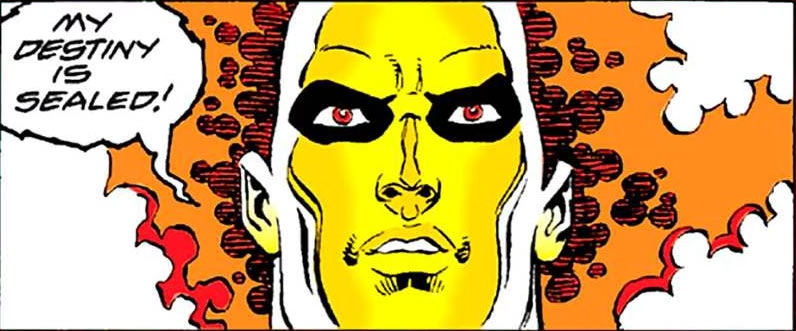
- Legionnaires #18: The “End of an Era” storyline continues as Glorith and Mordru are remaking reality. Superman’s message arrives mid-issue.
- Valor #23: The “End of an Era” storyline continues, and the truth behind the Legion and the Legionnaire clones is revealed.
- Superboy #8: Following Valor #23, there is a meeting in Smallville between Superboy and the original Boy of Steel. Ends when Superboy receives Superman’s message.
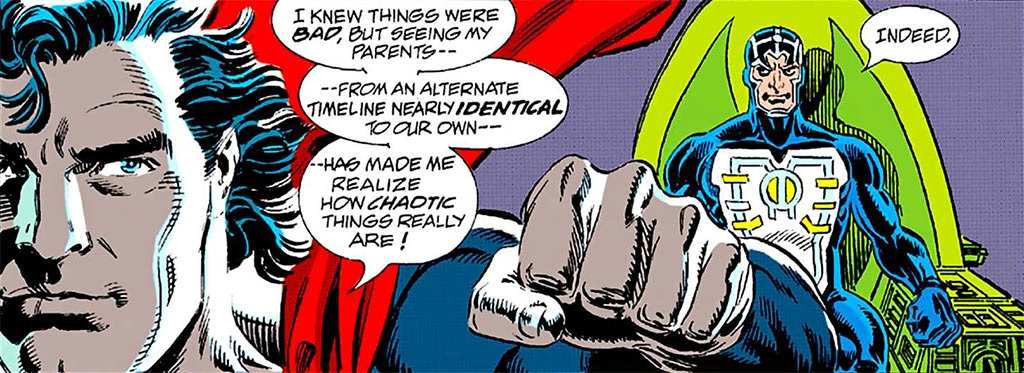
- Superman #93: After sending his message to all of the heroes, Superman learns that his biological parents just appear alive and well at the Kents’.
- Hawkman #13: The Godspawn storyline ends as Hawkman faces off against the Hawk Entity, hoping to end the time distortions.
- Zero Hour: Crisis in Time #3: As the universe is unravelling and heroes unite in New York, the JSA goes to Vanishing Point to investigate and meets with an unexpected enemy.
- Batman: Shadow of the Bat #31: An alternate version of Alfred appears, one dedicated to becoming a detective. Very optional as a Zero Hour tie-in.
- L.E.G.I.O.N. #70 – Dox lost control of L.E.G.I.O.N., and now, with his last allies, they must run for their life as time disruptions complicate things.
- Justice League Task Force #16: After battling against Triumph, the leaguers give him a chance and go on a trip to Washington.
Return of the Hero: This Justice League storyline, slightly intertwined with The Ray, doesn’t fit perfectly with some of what you can see in Zero Hour: Crisis in Time #3. The Ray is active very early in the event, but Triumph only plays an active part in Zero Hour: Crisis in Time #0. In any case, you can read those together if you prefer: The Ray #5, Justice League America #92, The Ray #0, Justice League Task Force #16, Justice League International #68… or not reading them, this story adds nothing to the main plot.
- Team Titans #24 – Dinosaurs, Frontier Men, political figures from different time periods… chaos reigns, and order is hard to maintain for the Team Titans members trying to help as time destabilises further.
- Adventures of Superman #516 – Struck by lightning in the middle of a time storm, Superman is projected to an alternate Metropolis protected by a hero named Alpha Centurion.
- Zero Hour: Crisis in Time #2: After the JSA’s defeat, the heroes must attack on two fronts as time runs out.
- Green Arrow #90: Timelines diverge as Green Arrow chases down a regular thug.
- Action Comics #703: As the timestream collapses and Metropolis disappears, Superman goes back to his hometown but doesn’t find what he expected.
- Guy Gardner: Warrior #24: Warrior, Batgirl, Steel, and Supergirl follow Extant through time.
- Zero Hour: Crisis in Time #1: Continuing directly from Warrior #24. Zero Hour is approaching. The universe disappears, and the real mastermind behind this Crisis reveals himself.
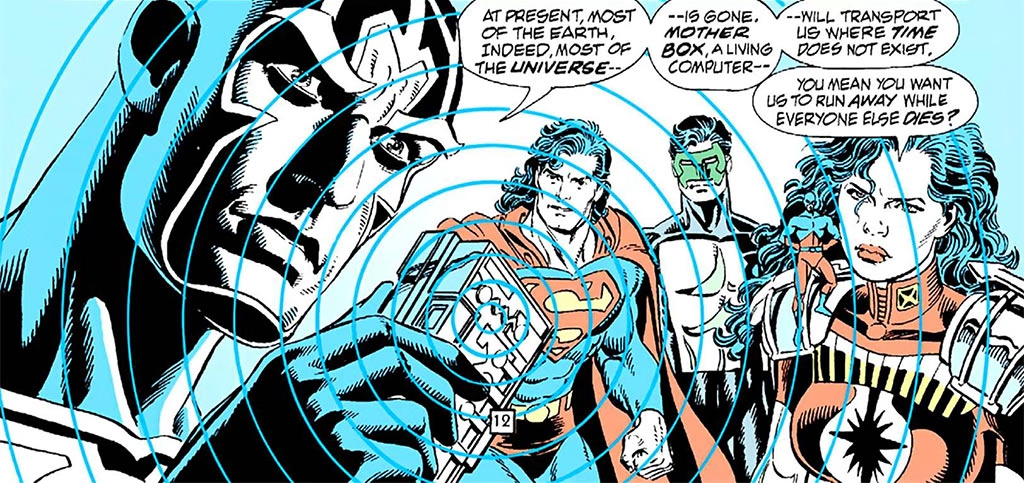
⏰ The following comics all end the same way, fading to white like everything else in the DC Universe. You can read them in any order you wish, or even skip most of them. Only Damage as a part to play in Zero Hour: Crisis in Time #0, and reading Damage #6, which concludes the first arc of the series, won’t give you a lot of info about the character if you don’t already know him.
- Legion of Super-Heroes #61: The “End of an Era” storyline concludes. Facing their extinction, the Legionnaires have one last move to make to ensure a future.
- Justice League International #68: After Justice League Task Force #16, Triumph is joined by the leaguers in his fight against the Plasma Men.
- Robin #10: In Gotham, Robin is teaming up with a Robin from another time to catch a Thief.
- Catwoman #14: As the world unravels around her, Catwoman teams up with a caveman to save a time-displaced sabre-toothed tiger.
- Anima #7: Captured, Animus fights for his life against a deadly minion of the Nameless One, while Anima learns more about her opponent.
- Showcase ’94 #10: “Deja View” – Chronos, Clock King, Calendar Man, and Time Commander are facing time anomalies in the middle of a heist.
- Damage #6: The New Titans arrive at the scene to apprehend Damage as time starts to unravel around them.
- Zero Hour: Crisis in Time #0: The Universe is dead, and a new one is created, but who will direct its destiny?
🗓️ The Aftermath & Zero Month
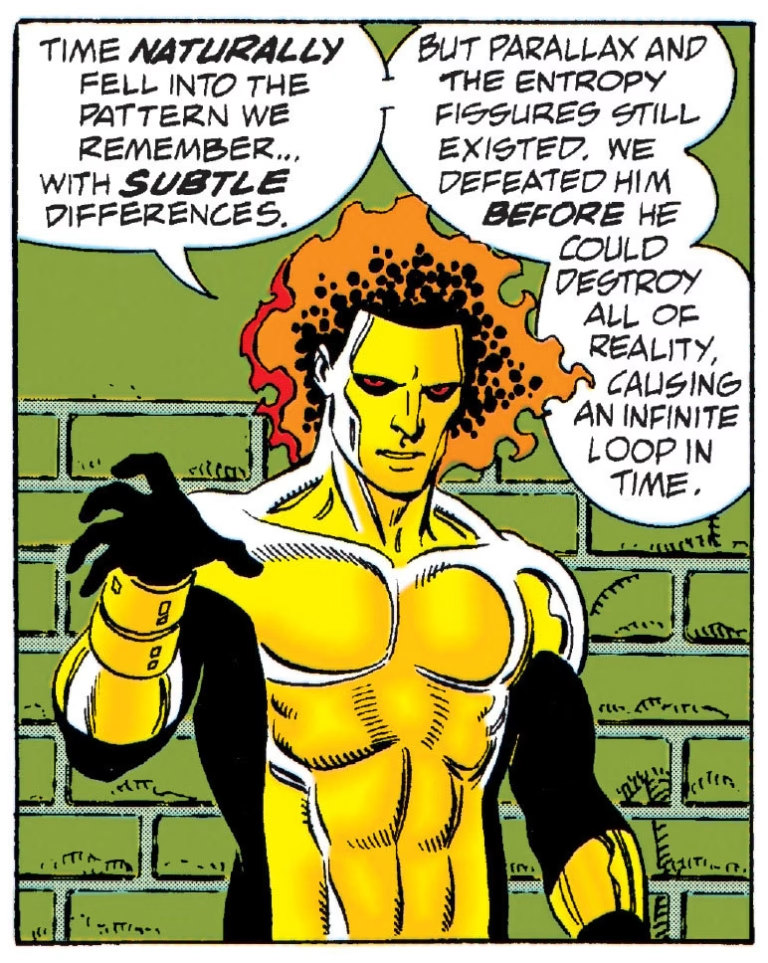
Following Zero Hour #0, which established a new unified universe and suggested that minor changes to the continuity would appear, DC Comics organised the “Zero Month,” in which most of the ongoing DC titles (not including Vertigo books) published a #0 issue in October 1994 (some to establish modernised origins).
The two you need to read are Green Lantern #0, which deals with what happened to Hal Jordan and Kyle Rayner directly after the event’s conclusion, and The Flash #0, which follows left-for-dead Wally West after Zero Hour: Crisis in Time #4.
Back in 1994, DC editorial tried to present the post-Zero Hour era as a new beginning. Yet, the event is mainly remembered for its impact on the JSA, with Hourman, Dr. Midnight, and the original Atom being dead, and the other members going into retirement because of their old age. The new Starman series was then launched, exploring Starman’s legacy and leading to the creation of a new JSA a few years later.
Team Titans, L.E.G.I.O.N. ’94, Valor, and Justice League International (vol. 2) were ended with Zero Hour, while Legion of Super-Heroes (vol. 4) and Legionnaires were rebooted. A few new titles were also launched: R.E.B.E.L.S. ’94 (replacing L.E.G.I.O.N. ’94), Manhunter (starring Chase Lawler), Fate (starring Jared Stevens), Primal Force (with Dr. Mist assembling a brotherhood of heroes to protect Earth from ecological destruction), Extreme Justice (a Justice League spin-off), and the Xenobrood miniseries.
Finally, in 2024, DC Comics published Zero Hour 30th Anniversary Special #1, in which Kyle Rayner faces a remnant of the event when he is pulled into a pocket universe created by Parallax back then, and this universe is now disappearing.
👉 What’s Coming Next?
It may have been a new beginning, but it was not the end of the line-wide crossover events. The next one came in 1996. During Final Night, the heroes have to prevent the impending mass extinction of all life on Earth! An event known for being the next big chapter in the Parallax/Hal Jordan saga.
[Proceed to Next Case: Final Night] (coming soon)