The Else-Files: A review of JSA: The Golden Age (1993) by James Robinson and Paul Smith
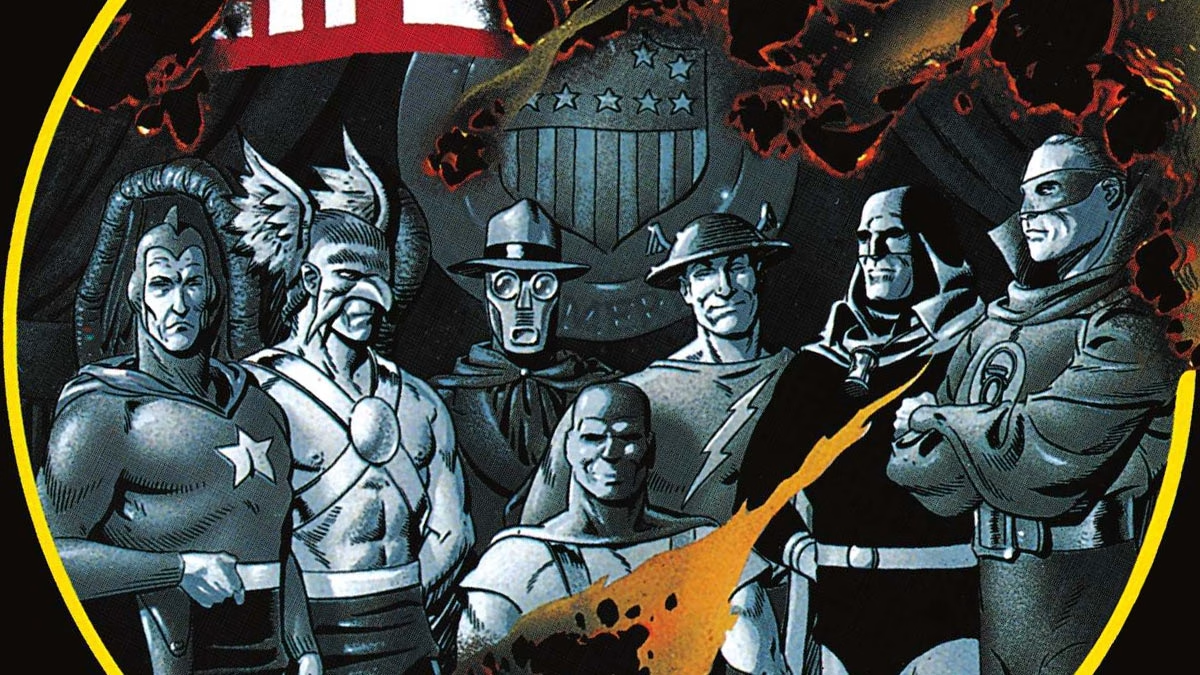
The Justice Society of America was first assembled in late 1940 and stayed active for a good decade. Today, they eventually came back and had a long history until Zero Hour: Crisis in Time! put an end to it… Before the ground was laid for a comeback in a new form, one that relied heavily on legacy characters. James Robinson played a key role with his Starman series. Before that, though, he went back to the late 1940s to reframe the JSA’s collapse as part of the changing times in post-WWII America.
JSA: The Golden Age is an Elseworlds story. A four-issue miniseries (each issue is double-sized, though) pencilled by Paul Smith and colored by Richard Ory. It’s not part of DC’s main continuity. Still, I think it’s a good introduction to the JSA and Robinson before jumping into Starman, especially since the series echoes some ideas surrounding Ted Knight (the original Starman).
- The Premise: What about that Golden Age?
- Collecting the Golden Age in 2026
- My Review
- What To Read After The Golden Age?
🔍 The Premise: What about that Golden Age?
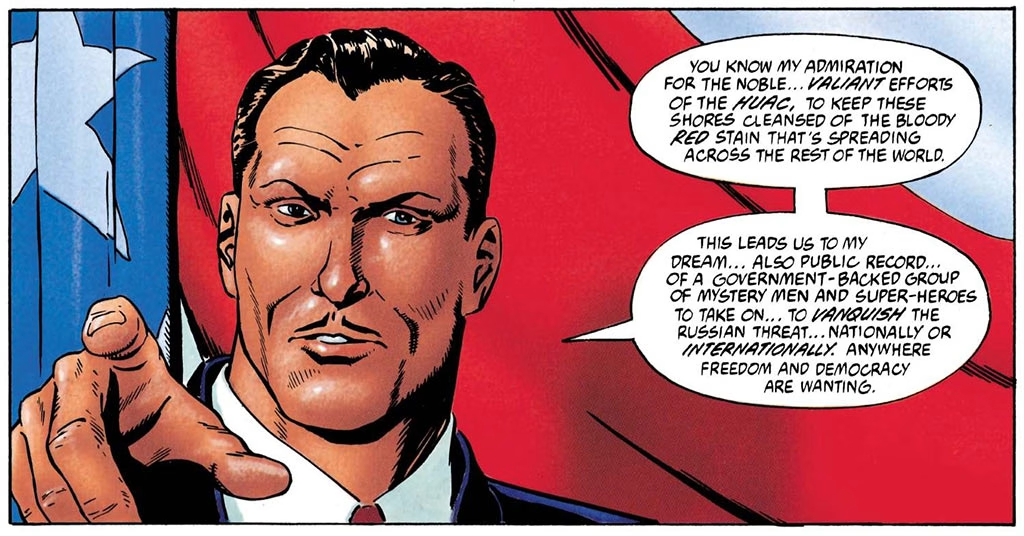
The story takes us back to America in the mid-1940s. World War II is over, the Justice Society of America has disbanded, and America’s masked mystery men have returned to civilian life. Most of them were not able to participate, as the Germans had a powerful super-powered soldier who disabled the powers of its enemies, rendering most heroes useless and easy to eliminate.
One vigilante, Tex Thompson (aka Mr. America), did a lot, though. He infiltrated the enemy and helped kill major targets from the inside, even Hitler himself. Now, he returns as a true American hero and starts leveraging his wartime heroics to enter the U.S. Senate and spearhead anti-communist crusades. Others, however, suffer the psychological weight of their action, like Ted Knight (Starman), who is now in a psychiatric facility, driven there by his overwhelming guilt over his scientific contributions to the atomic bomb.
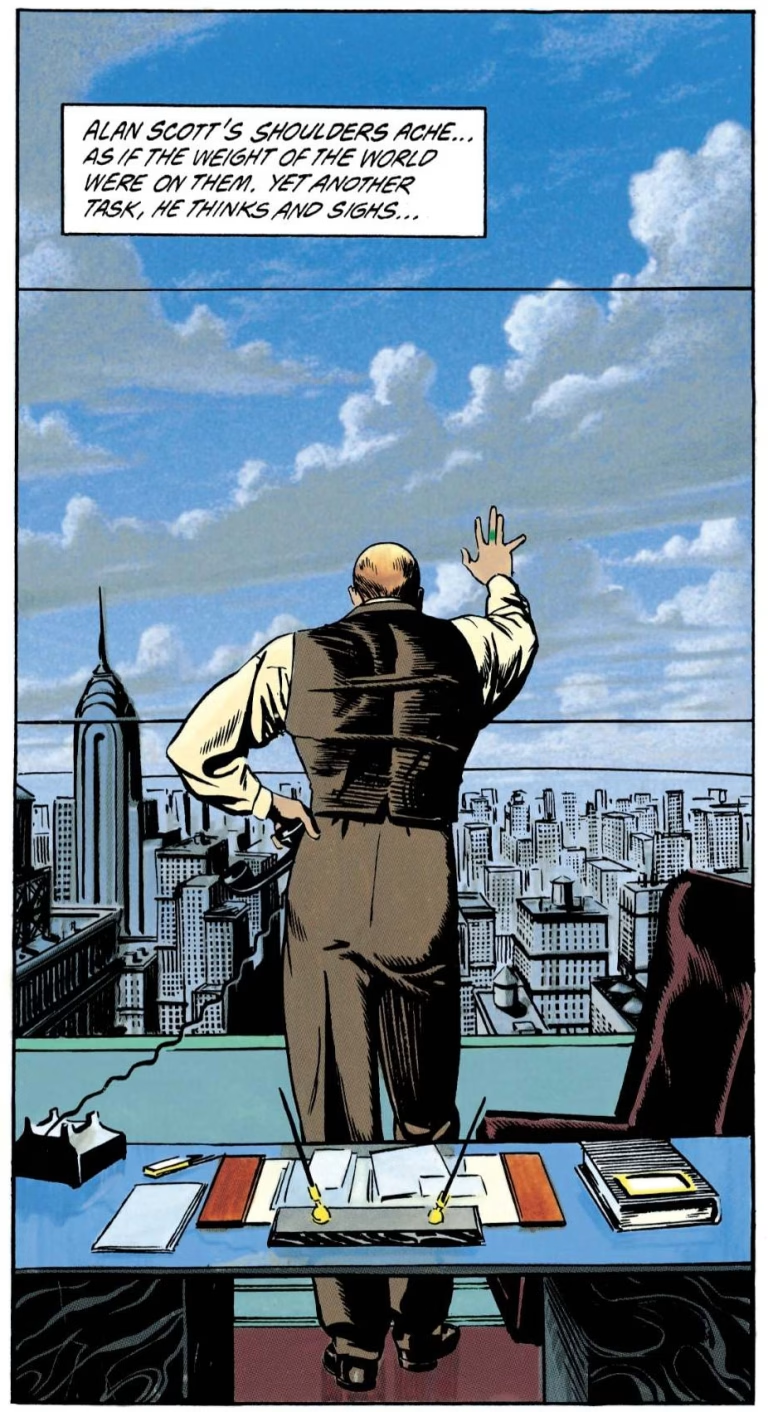
As Alan Scott (Green Lantern)’s broadcast empire is facing congressional pressure due to the hunt for communists, the superhero backed by the U.S. government and promoted by Tex Thompson, Dynaman, is there to replace the disbanded JSA. But despite Thompson’s growing popularity, America’s superheroes have more and more difficulty finding relevance in this changing world.
📚 Collecting JSA: The Golden Age in 2026
Before going into the review, let’s start with the different formats the story is available in for you to read it nowadays. All those editions collect The Golden Age #1-4.
- JSA: the Golden Age (trade paperback, reprinted in 2024)
- JSA: The Golden Age Deluxe Edition (hardcover, 2017)
- In digital from Kindle/Comixology or DC Universe Infinite
✍🏻 My Review of JSA: The Golden Age
The first time I read The Golden Age, I thought I had found the missing link between Watchmen and DC: The New Frontier. While it is neither a deconstruction nor an optimistic celebration of the superhero genre, it does have a tone similar to that of Alan Moore’s classic, and a respect and love for the era resembling that found in Darwyn Cooke’s epic.
James Robinson’s writing is modern in the sense that it delivers layered characters dealing with complicated, mature struggles and dilemmas, all wrapped up in a story that looks at the grim, paranoia-fuelled political tensions of the post-war era without trying to counterbalance them with positive superheroics. It’s a nostalgia-free trip back to the late 1940s, a time when the US was flourishing in some ways but experiencing growing pains in others. It is an exploration of how patriotism can easily be weaponized against the beliefs it celebrates. It is a reminder that no one can be a hero alone. And that a government cannot go unchecked for too long.
For young readers, knowing about real events like what happened in Germany during WWII, the trauma that came with it for those who came back, and the action of the HUAC (McCarthyism in general) is more useful for getting the full picture than possessing comic book facts about Alan Scott, Carter Hall, Robotman, Ted Knight, Liberty Belle, Hourman, Paul Kirk’s Manhunter, Johnny Thunder, Al Pratt and many others.
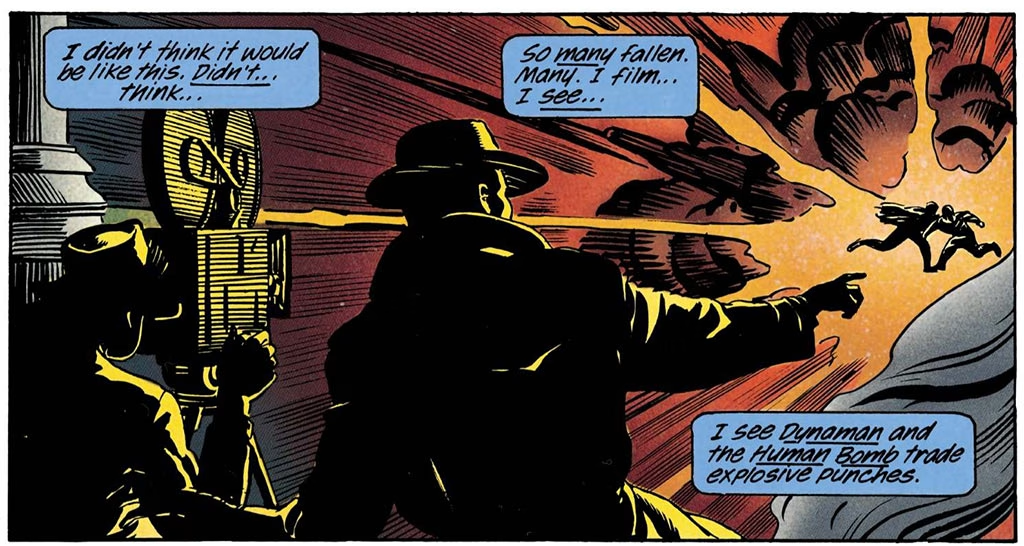
JSA: The Golden Age has a look and feel reminiscent of the art that flourished during the post-war era, particularly film noir with its dark and cynical portrayal of contemporary society. Paul Smith has achieved a realistic look, without making the dated costumes feel out of place. He made the 1940s feel authentic, imbuing the fights with cartoonish qualities that never made the action look out of place. The result is immersive, and Richard Ory’s colouring brings the characters to life in a world that appears all too “‘noir.” This fits with the thriller vibe, while ensuring the hero’s costumes blend seamlessly into this down-to-earth aesthetic.
The ending of The Golden Age is optimistic, and that would seem almost out of place if this were not about the end of an era that led to the colourful Silver Age. The book in itself is not the lightest read. It deals with dark topics, with an emphasis on PTSD, that are still relevant today. Not all, but sadly too many. What Robinson, Smith, and Ory created is a perfect example of the use of superheroes as a narrative tool to explore strong topics in an entertaining way that never diminishes the value of the themes developed. It may be an Elseworlds story, but only a few tweaks would have made it a perfect Vertigo miniseries.
My only complaint, and it seems it may have been corrected, is that in my edition (the 2017 reprint), the colour of some of the speech bubbles (the blue and red ones), which sometimes made the text hard to read.
👉 What To Read After The Golden Age?
Like most Elseworlds stories, JSA: The Golden Age is not part of a bigger narrative. Robinson didn’t write a follow-up.
However, as I mentioned in the introduction, he did write the Starman series from the 1990s that focused on Jack Knight, who has to become the new Starman, working with his now old and retired father in Opal City. The series is full of connections to the old JSA, not necessarily from this Golden Age story, but the author did use some backstory elements from it in a way, making this 4-issue miniseries a sort of prequel (but only in part).
After Starman, Geoff Johns and David Goyer relaunched the JSA, but in a modern setting, mixing old characters with legacy ones, and also using some characterizations from this book in their own exploration of the past.