
The Complete Grant Morrison Batman Reading Order
Grant Morrison’s seven-year epic run on Batman does not follow the usual structure. It’s not just a few years on the main Batman comic book series. It’s a three-act saga, each being told in a separate series. And despite some small and bigger events, it feels like a self-contained narrative, for the most part.
As I already wrote an overview of the full run, I won’t spend time introducing the story and characters again. Let’s note, though, that it’s not required reading, but The Black Casebook is a good way to familiarize yourself with stories Morrison referenced and updated during his run.
And now, here is the ultimate contextual reading order for Grant Morrison’s Batman comics.
📂 Collecting Grant Morrison’s Batman Run (2026 Edition)
Being a very popular run, DC Comics reprinted Grant Morrison’s Batman epic in multiple formats over the years.
Grant Morrison Batman Omnibus
- Batman by Grant Morrison Omnibus Vol. 1 – Batman #655-658, #663-683 and stories from DC Universe #0 and #30 and #47.
- Batman by Grant Morrison Omnibus Vol. 2 – Batman & Robin #1-16, Batman #700-702 and Batman: The Return of Bruce Wayne #1-6.
- Batman by Grant Morrison Omnibus Vol. 3 – Batman Incorporated #1-8, Batman: The Return #1, Batman Incorporated #0-13, Batman Incorporated: Leviathan Strikes #1, Batman Incorporated Special #1.
The classic Trade Paperback Collection
There is a Deluxe edition and Absolute for those books, but you may have a harder time finding some of them. The same with the paperback editions, but some have recently been reprinted.
- Batman and Son – Batman 655-658, #663-669 and #672-675.
- Batman R.I.P. – Batman #676-683.
- Batman and Robin Vol. 1: Batman Reborn – Batman and Robin (vol. 1) #1-6.
- Batman and Robin Vol. 2: Batman vs. Robin – Batman and Robin (vol. 1) #7-12.
- Batman and Robin Vol. 3: Batman & Robin Must Die! – Batman and Robin (vol. 1) #13-16; Batman: The Return #1.
- Batman and Robin Vol. 4: Dark Knight vs. White Knight – Batman and Robin (vol. 1) #17-25.
- Batman Incorporated Vol. 1 – Batman Incorporated (vol. 1) #1–8, Batman Incorporated: Leviathan Strikes! #1.
- Batman Incorporated Vol. 1: Demon Star – Batman Incorporated (vol. 2) #0–6.
- Batman Incorporated Vol. 2: Gotham’s Most Wanted – Batman Incorporated (vol. 2) #7–13, Batman Incorporated Special #1.
The New Ongoing Trade Paperback Collection
This new collection of bigger trades is still ongoing, but should be completed by the end of next year.
- Batman by Grant Morrison Book One – Batman #655-658 and #663-675; 52 #30, #47; Batman Unwrapped by Andy Kubert #1; and Batman Unwrapped: R.I.P. #1.
- Batman by Grant Morrison Book Two – Batman #676-683, #700; Batman & Robin #1-9; DC Universe #0.
- Batman by Grant Morrison Book Three – Batman and Robin #10-16, Batman: The Return of Bruce Wayne #1-6, and Batman #701-702.
The Digital Collection
Obviously, you can also find those comics in digital format.
- There is the “Batman: The Complete Grant Morrison Saga” available on DC Universe Infinite. Some issues are not correctly placed, be aware.
- Kindle also sells the digital version of the new TPB collection: Book One, Book Two, Book Three.
📂 The Complete Grant Morrison Batman Chronology
Phase One: The Rise of the Black Glove (The Bruce Wayne Era)
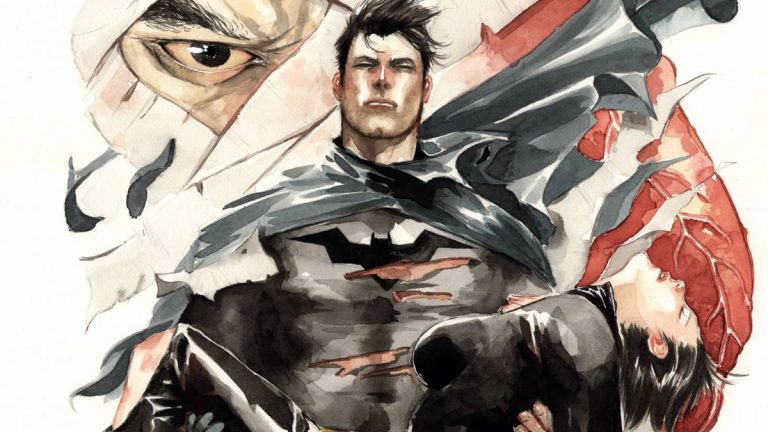
The first act of the Morrison epic is a psychological thriller. It begins with the introduction of a son Bruce never knew he had and ends with a secret organization attempting to systematically destroy Batman’s mind.
1. The Introduction of the Heir
The debut of Damian Wayne. This is the “inciting incident” that changes Batman’s status quo forever.
- Batman #655: Batman takes down the Joker, and he has finished cleaning up Gotham. What now? It’s time to go back to being Bruce Wayne.
- Batman #656: At a London Gala, Bruce meets Jezebel Jet before meeting his son.
- Batman #657: Batman is back in Gotham with a new son.
- Batman #658: Batman and Son against Mother.
📋Batman #659-662: “Grotesk” is an optional 4-part fill-in storyline by John Ostrander and Tom Mandrake about gruesome murders in Gotham. You can skip it, there’s nothing in it related to Morrison’s run.
- Batman #663: “The Clown at Midnight.” A prose-only issue (with digital 3D art) that redefines the Joker as a “self-reinventing” virus. Do not skip this; it sets up the Joker’s role in the finale.
2. The Black Casebook Shadows
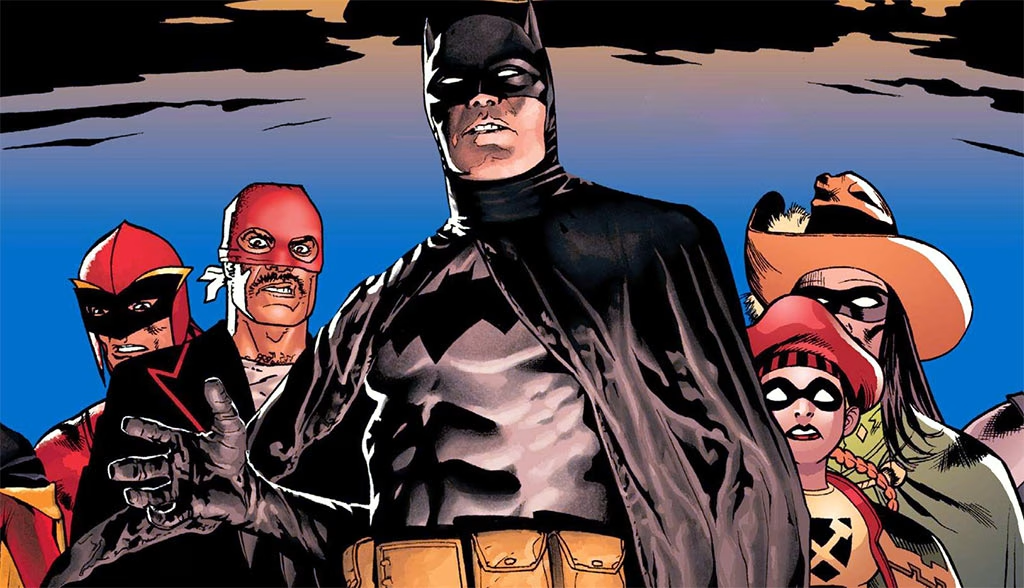
The following stories are rooted in the Black Casebook, which is even referenced by Batman in the “Three Ghosts of Batman” storyline. The International Club of Heroes was created by John Mayhen in World’s Finest #89 and unites lesser-known crimefighters, some of whom also had shared previous adventures with Batman and Robin.
- Batman #664: After a weekend with Jet, Batman tracks down a new menace linked to the Black Casebook.
- Batman #665: Batman faces a Bane-Like monster dressed in his colors.
- Batman #666: In a possible future, Damian Wayne is Batman, and he fights the “Third Batman” who made a deal with the Devil.
- Batman #667: John Mayhew calls for a reunion of the “International Club of Heroes,” but he is nowhere to be found.
- Batman #668: A group of heroes is stuck in a mansion, and someone is killing them one by one.
- Batman #669: Secrets from the past are revealed, and the culprit is unmasked.
Interlude: The Resurrection of Ra’s al Ghul
The Resurrection of Ra’s al Ghul is spread across several Bat-family titles: Batman, Detective Comics, Nightwing, and Robin. Grant Morrison and artist Tony S. Daniel are responsible for two of the seven chapters that make up the story. Go visit my Resurrection of Ra’s al Ghul Reading Order to know how to get into the whole crossover.
📋If you are reading Morrison’s run through the omnibus editions, you will find additional pages at the start of each issue explaining what happens in the other chapters.
- Batman #670 – A war to control the league takes shape as Ra’s Al Ghul comes back to life. By Grant Morrison.
- Batman #671 – To save his sons, Batman makes a deal with Ra’s Al Ghul.
3. The Black Glove is Thrown
The following events set the stage for the Black Glove’s attack on Batman (in Batman R.I.P.). Some story elements are once again rooted in the Black Casebook.
- Batman #672 – The third of the “Ghosts of Batman” appears.
- Batman #673 – A trip into Batman’s mind, looking at trauma and revenge.
- Batman #674 – Batman faces the Ghost, but questions arise.
- Batman #675 – Bruce and Jezebel Jet go on a date, then the terrorists show up.
🪦The Batman R.I.P. storyline leads to Final Crisis, but there are also related issues in other series. You don’t need to read more than what Morrison wrote. It’s the full story. But if you are looking for a bigger vision of the events, check out my Batman R.I.P. Reading Order, which goes into detail.
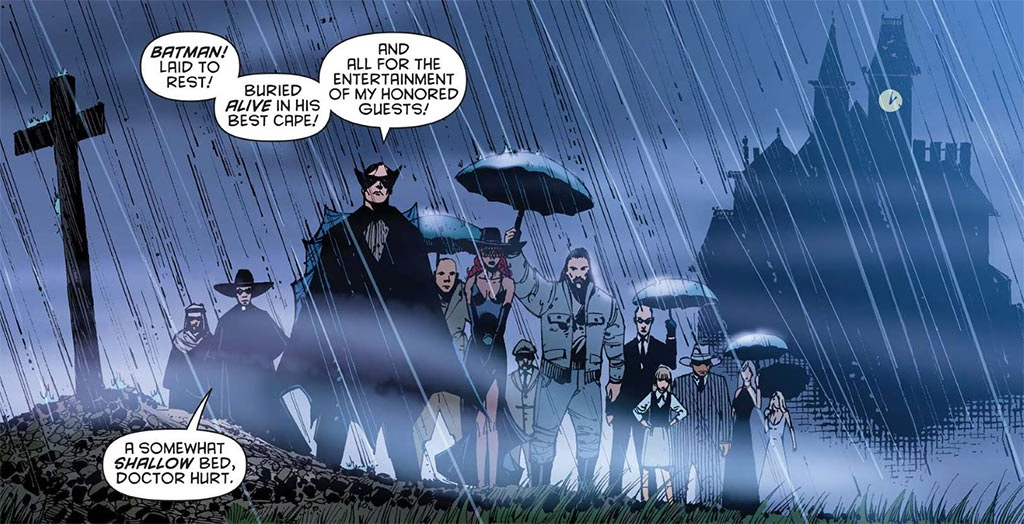
- Batman #676: Reeling from recent events, Batman tries to focus on the elusive Black Glove.
- Batman #677: A visit from Jezebel Jet led to danger.
- Batman #678: A trip to the rougher side of Gotham in search of Batman.
- Batman #679: Looking for the Black Glove.
- Batman #680: The Joker enters the scene.
- Batman #681: The downfall.
The Final Crisis: The Death of the Bat
While Batman #681 left everybody doubting Bruce Wayne was still alive, Grant Morrison kept him going a bit longer to famously kill him in Final Crisis. In it, Darkseid has finally discovered the Anti-Life Equation and is using it to enslave the consciousness of the human race. I invite you to check out the Final Crisis Reading Order if you are looking into exploring it in its entirety.
The “Essential” Final Crisis Path:
If you just want to stick to Batman’s part in Final Crisis, here is what you need to read. You may not get the whole scope of the event, but even by reading it, it’s hard to get a complete understanding.
- Batman #701: What happened directly after Batman #681, before leading right into the events of Final Crisis #1. Doesn’t have to be read here, though. In fact, it contains (non-spoiler) elements from Batman & Robin #10-12.
- Final Crisis #1-2: The beginning of the end.
- Batman #682-683: A retrospective of Batman’s life justified by what is happening to him during the event.
- Final Crisis #6-7: Batman puts an end to the Crisis.
Interlude: The Battle for the Cowl
Batman is dead. Long live Batman! But who is the new, deadlier Batman running around Gotham? Nightwing, Robin, and the rest of the Bat-Family are trying to find out and stop him while also dealing with an all-out gang war. Coming from Tony S. Daniel, this event installed Dick Grayson and Damian Wayne as the new Batman and Robin. I explored the event in detail in my Batman: Battle for the Cowl Reading Order.
📋If you are reading Morrison’s run through the omnibus editions, this takes place between volumes 1 and 2. Also, you can skip it. You just need to know who’s under the cowl before going further.
Phase Two: The New Dynamic Duo (The Dick Grayson Era)
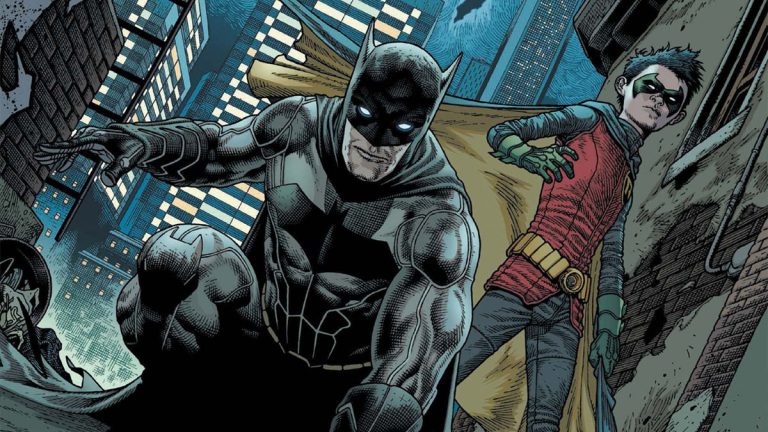
Following the events of Final Crisis and the Battle for the Cowl, the mantle of the Bat passes to Dick Grayson, who chose Damian Wayne as his Robin. For the first time, the Batman/Robin dynamic is flipped: a light-hearted, acrobatic Batman paired with a grim, lethal, and deadly serious Robin.
📋While Grant Morrison and Frank Quitely launched their new Batman & Robin comics, the regular Batman book is continuing with a new creative team. Judd Winick and Mark Bagley wrote Batman: Long Shadows (Batman #687-691), dealing with the direct aftermath of the event, but it’s optional here.

1. The Rebirth of the Duo
- Batman & Robin #1-3: Batman and Robin are together again, for the first time (with a flying Batmobile. As chaotic as their relationship is, it’s nothing compared to what Professor Pyg has planned.
- Batman & Robin #4-6: Red Hood and Scarlet are the new dynamic killing duo in town. They have to face Batman and Robin, and a dangerous killer who wants to eat their faces.
💡The next three issues were branded as Blackest Night tie-ins, but they are not connected to the events, except thematically, to a certain extent. It’s one crossover you can skip while reading this run.
- Batman & Robin #7-9: Batman is in England, teaming up with Knight and Squire to find a previously undiscovered Lazarus Pit to bring back Bruce Wayne. They stumbled on a cult and Batwoman.
- Batman #700: In this milestone comic book, Batman from different eras faces supervillains and the mystery surrounding the death of a time traveller in his locked laboratory.
2. The Return of Bruce Wayne
At that point, it has been established that the dead body of Bruce Wayne was a fake. So, where is Bruce Wayne? He is lost in time, sent in the past by Darkseid as a time bomb. To tell this story, Grant Morrison wrote concurrently Batman & Robin and the 6-issue miniseries The Return of Bruce Wayne. The first one works as a culmination of Morrison’s run on Batman thus far, dealing with the aftermath of The Black Glove’s machinations, Final Crisis, and Damian’s conflict with his mother, while the second one makes an amnesic Bruce Wayne jump from one past era to the next of Gotham’s history, linking his ancestors to the myth of the Bat-People who always lived there.

As the two series slowly start to echo each other, they also reference events depicted in the Time Masters – Vanishing Point miniseries and Red Robin ongoing series. You don’t need to read them to understand what is happening. As always, you only need to stick with what Morrison wrote.
- Batman & Robin #10: Alfred found clues about Master Bruce’s disappearance.
- The Return of Bruce Wayne #1: Found by cavemen, the Man of Bats fights Vandal Savage.
- Batman & Robin #11: It’s Batman vs. Robin.
- The Return of Bruce Wayne #2: In puritanical America, Bruce Wayne faces witch hunters and dragons.
- Batman & Robin #12: The al Ghul Family Feud ends here.
- The Return of Bruce Wayne #3: 1734. The pirate Blackbeard wants the treasure hidden by the “Black Pirate” in the Bat-People’s caves.
- Batman #701–702: Picking up the story directly after Batman #681, these issues fill in the gaps between Batman R.I.P. and Final Crisis.
💡Why read those two issues now? While those two issues could be read in connection to Final Crisis, they are referencing elements of The Return of Bruce Wayne and add context to what is being revealed about the events surrounding Batman’s death. You may want to read them earlier, and you can, but they make more sense here.
- Batman & Robin #13: Thomas Wayne is back with a vengeance.
- The Return of Bruce Wayne #4: In Gotham, Jonah Hex is recruited to take down a mysterious ghost seeking a box bearing a bat symbol.
- Batman & Robin #14: When does the Joker not joke?
- The Return of Bruce Wayne #5: The actress Ms. Lamarr recruits an amnesiac to help find Martha Wayne’s murderer.
- Batman & Robin #15: The ceremony of the Bat has begun again.
- The Return of Bruce Wayne #6: At the end of time, Bruce Wayne planned to stop his enemy’s bomb.
- Batman & Robin #16: Batman’s return to save Gotham.
📋After Batman & Robin #16, while Morrison kept on writing his story in the pages of Batman Incorporated, the series continues with, first, writer Paul Cornell and artist Scott McDaniel, then writer Peter J. Tomasi and artist Patrick Gleason, for more Dick and Damian’s adventures.
Phase Three: Batman Incorporated (The Global War)
In the final act of the Morrison epic, Bruce Wayne returns with a radical new vision. Realizing that one man cannot fight a global crime syndicate like Leviathan, he takes Batman “public.” No longer a local vigilante, Batman becomes a worldwide franchise, training “Batmen” in every major city on Earth. Bruce is globetropping, fighting crime all around the world, Dick and Damian defend Gotham.
1. The First Recruitment
- Batman: The Return #1: Batman sets its plan in motion.
- Batman Incorporated (Vol. 1) #1-2: Batman and Catwoman go to Japan to recruit a local Batman.
- Batman Incorporated (Vol. 1) #3-5: To convince Gaucho from the Club of Heroes to join Batman Incorporated, Batman teams up with him to find kidnapped children.
- Batman Incorporated (Vol. 1) #6: Recruiting for Batman Inc. continues.
- Batman Incorporated (Vol. 1) #7: Batman helps Man-of-Bats and Red Raven from the Club of Heroes, who are targeted by Leviathan.
- Batman Incorporated (Vol. 1) #8: Waynetech launches its Internet 3.0, a virtual world, but the investors are taken hostage inside of it.
- Batman Incorporated: Leviathan Strikes! #1: Having helped Stephanie Brown complete her undercover mission, Batman attacks Doctor Deadalus, revealing the identity of the leader of Leviathan.
2. The Final War (The New 52 Era)
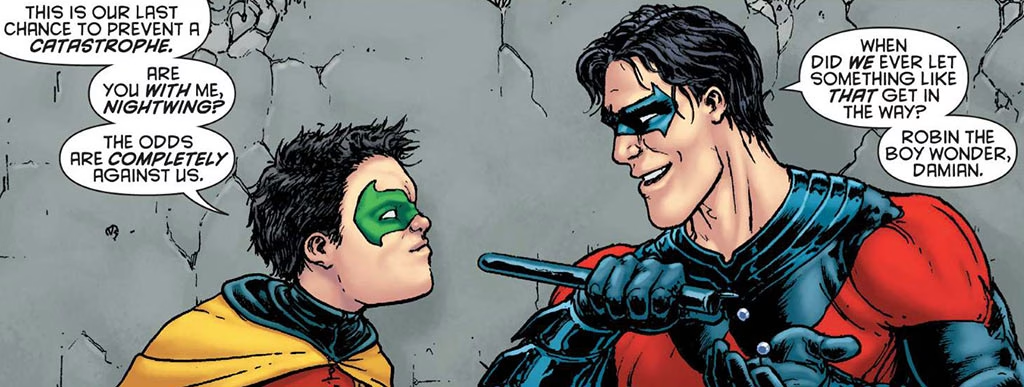
In 2011, DC rebooted its entire line. Morrison still had a story to tell and did it in the second volume of Batman Incorporated. Some story elements, like Nightwing’s status quo, are updated to fit into the “New 52” continuity, but it has only a small effect on the whole situation. You can read this without looking for what was happening elsewhere in the DC continuity.
- Batman Incorporated (Vol. 2) #0: A stylish and dynamic recap of the story so far.
- Batman Incorporated (Vol. 2) #1: Batman and Robin go after Leviathan’s allies in Gotham.
- Batman Incorporated (Vol. 2) #2: The origin story of Talia al Ghul.
- Batman Incorporated (Vol. 2) #3: Matched Malone is back and tries to infiltrate Leviathan.
- Batman Incorporated (Vol. 2) #4: Damian joins Batman’s team as Redbird to fight an army of assassins.
- Batman Incorporated (Vol. 2) #5: A vision of Damian’s future.
- Batman Incorporated (Vol. 2) #6: It’s a trap!
- Batman Incorporated (Vol. 2) #7: Amid the chaos, Damian makes a decision.
- Batman Incorporated (Vol. 2) #8: Family feud.
- Batman Incorporated (Vol. 2) #9: The burial.
- Batman Incorporated (Vol. 2) #10: Looking for Jason.
- Batman Incorporated (Vol. 2) #12: The epic battle.
- Batman Incorporated (Vol. 2) #13: The final confrontation.
📋At that point, the story has ended. Two issues are missing because they were not written by Grant Morrison, but by Chris Burnham. They tell the adventures of heroes of Batman Incorporated.
- Batman Incorporated (Vol. 2) #11: Jiro Osamu, Batman of Japan, and Crazy Shy Lolita Canary face an overpowered biker gang.
- Batman Incorporated Special #1: More tales of Jiro & Canary; Squire; Raven Red; Night Runner, Dark Ranger, and Gaucho; and Batcow!

After Grant Morrison’s run: What to Read Next?
This is it. Grant Morrison ended by wrapping everything cleanly. At that point, Scott Snyder had taken charge of the main Batman series and was driving the story in different directions. DC Comics clearly had already closed the Morrison saga and moved on.
As a result, I can’t direct you to more Batman by Morrison (except maybe the recent Batman/Deadpool comics, but it’s anecdotal).
📂 DC Casebook: The Morrison Files
- The Overview: The Architecture of the Epic
- The Lore: Inside the Black Casebook
- The Roadmap: The Complete Reading Order
- The Verdict: Final Review & Analysis