The Batman Case Files: Scott Snyder’s Batman: The Black Mirror (Review)
If you revisit Batman’s adventures as the Modern Age was about to end, you realise the New 52 reboot wasn’t planned too far in advance. Even in late 2010, mere months before the end of the era, many storylines were being set in motion to take the characters in new, intriguing directions.
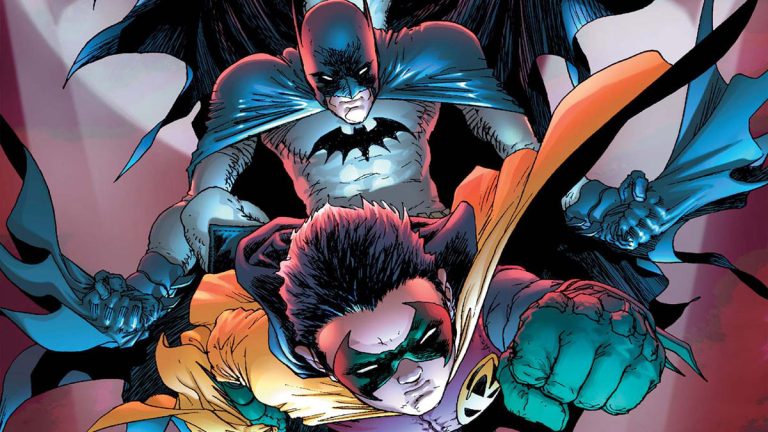
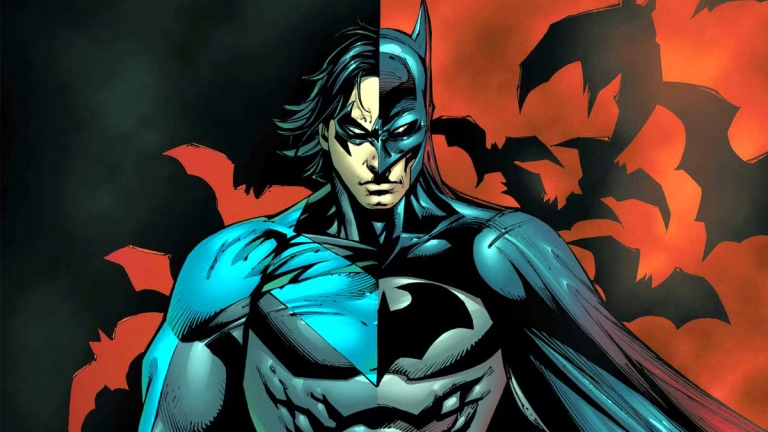
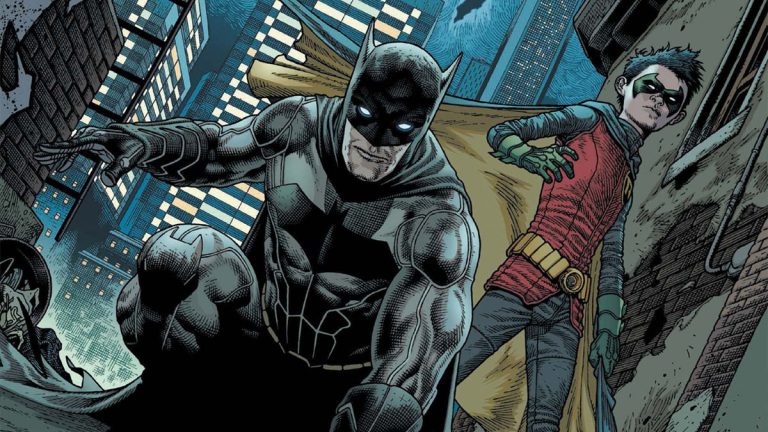
It was a time when Bruce Wayne was doing some globe-trotting, recruiting more Batmen throughout the world to fight an impending menace as well as helping local vigilantes stop criminals. At home, in Gotham City, Dick Grayson was Batman, patrolling familiar rooftops alongside his Robin, Damian Wayne.
It was then that writer Scott Snyder made his DC Comics debut on Detective Comics, working with artists Jock and Francesco Francavilla. Now simply known as “The Black Mirror”, his 11-issue run showed he had what it takes to go further, and this led him to become Batman’s lead writer during The New 52. So, let’s take a look at his early work in the Dark Knight universe.
- Collecting the Black Mirror in 2026
- When to read Batman: The Black Mirror?
- The Premise: What is the Black Mirror about?
- My Black Mirror Review
- What To Read After The Black Mirror?
📚 Collecting the Black Mirror in 2026
It certainly helps that Snyder became a household name, but with just 11 Detective Comics issues, The Black Mirror has been easy to collect, and DC Comics keeps it easily available in all kinds of formats.
All the collected editions of Batman: The Black Mirror collect issues #871 to #881 of Detective Comics
- The Paperback Edition
- The Deluxe Edition (hardcover)
- Batman Noir: Black Mirror (black and white, hardcover)
- Absolute Batman: The Black Mirror (2027 Edition, oversized, hardcover)
- The Digital Edition: Kindle | DC Universe Infinite

🕒 When to read Batman: The Black Mirror?
It works pretty well as a standalone book. You just need to know that it’s Dick Grayson under the cowl. That said, more things were going on in Gotham at the time, and if you want to see where I put this book in my (still incomplete) Batman Reading Order, go check it out. It really set at the tail end of the Modern Age.
For context, here are some facts that could help:
- The story takes place in parallel to Grant Morrison’s Batman Incorporated (Vol. 1). It’s when Bruce Wayne was back from having been sent into the past during Final Crisis. He let Dick and Damian take charge of Gotham while he was all around the world. Officially, Bruce Wayne is now known for financing Batman through Batman Incorporated.
- Barbara Gordon was known as Oracle at the time, the genius hacker helping the Bat-Family and other superheroes, but due to a complicated situation, she had to make the world think Oracle was dead (it’s in Gail Simone’s Birds of Prey Vol. 2: The Death of Oracle). Now, she has her new base of operations where some of the scenes in The Black Mirror take place.
- James Gordon Jr. is the son of Gotham City police commissioner James Gordon and his first wife, Barbara Eileen Gordon. He first appeared as a child in Batman: Year One and was only present in stories set during that period, until Scott Snyder reintroduced him as an adult in The Black Mirror.
🔍 The Premise: What is the Black Mirror? The Three Interlocking Cases
While the run is known as “The Black Mirror”, the whole 11 issues really cover three stories that form a whole.
Case 1: “The Black Mirror” (Detective Comics #871–873)
Crimes committed using equipment belonging to Gotham’s notorious criminals lead Dick on the trail of a corrupt cop who is just one link in a conspiracy involving Gotham’s rich and powerful.
Case 2: “Hungry City” (Detective Comics #876–878)
The body of a massive killer whale is found in the lobby of a high-profile Gotham bank. The corpse of a missing woman was found inside the whale’s stomach, leading Dick to Sonia Zucco, the daughter of Tony Zucco, the mobster who murdered Dick’s parents.
Case 3: The James Gordon Jr. Story (Detective Comics #874-881)
Commissioner Jim Gordon’s long-estranged son, James Gordon Jr., returns to Gotham claiming to be rehabilitated via experimental anti-psychotic medication. While his father wants to believe him, his sister, Barbara, can’t.
✍🏻 My Black Mirror Review
Reading Scott Snyder’s first Batman stories today, fifteen years after they were first published, is quite interesting. It seems that everything that would end up defining his work in the Dark Knight’s universe was already here on the page.
First, it starts with a story about the rich and depraved of Gotham City. Snyder’s next notable work was Batman: Gates of Gotham, a five-issue miniseries focusing on those who made Gotham City the thriving metropolis it has become and the rot that led its dark side to grow. If you combine the two, you have the outline of what would become the author’s defining work on the character: The Court of Owls. It’s not on the same level, but you see the ADN of it. But what’s also on display here is how Snyder set the stage for some true horror visuals.
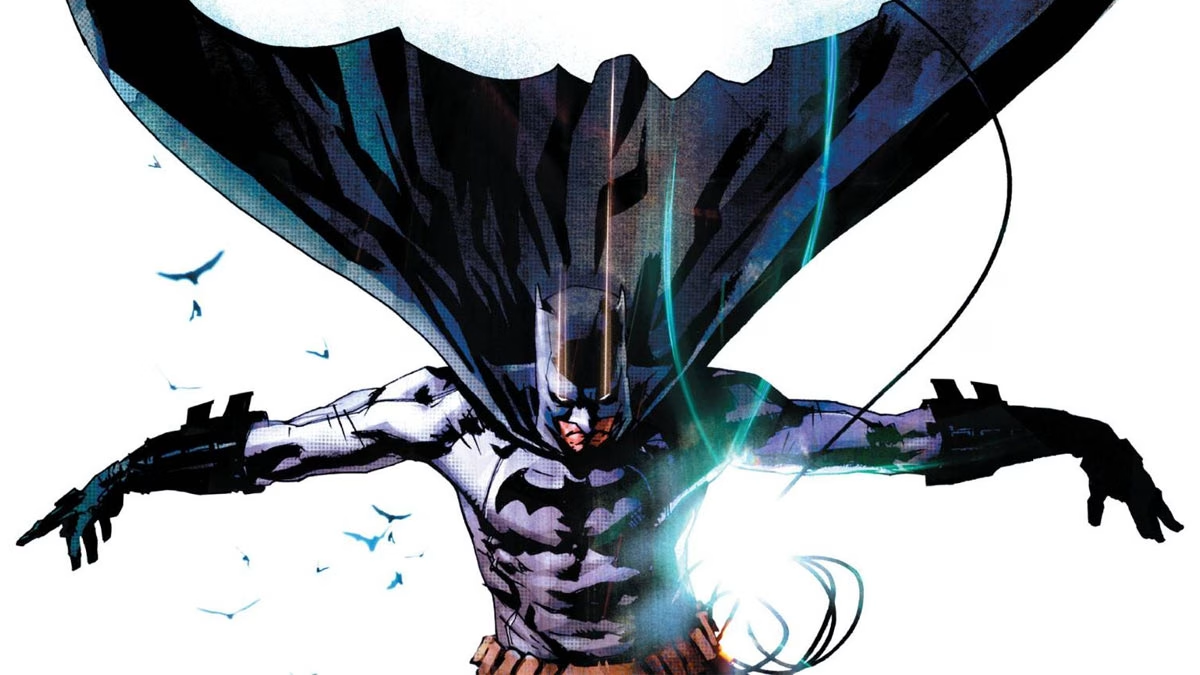
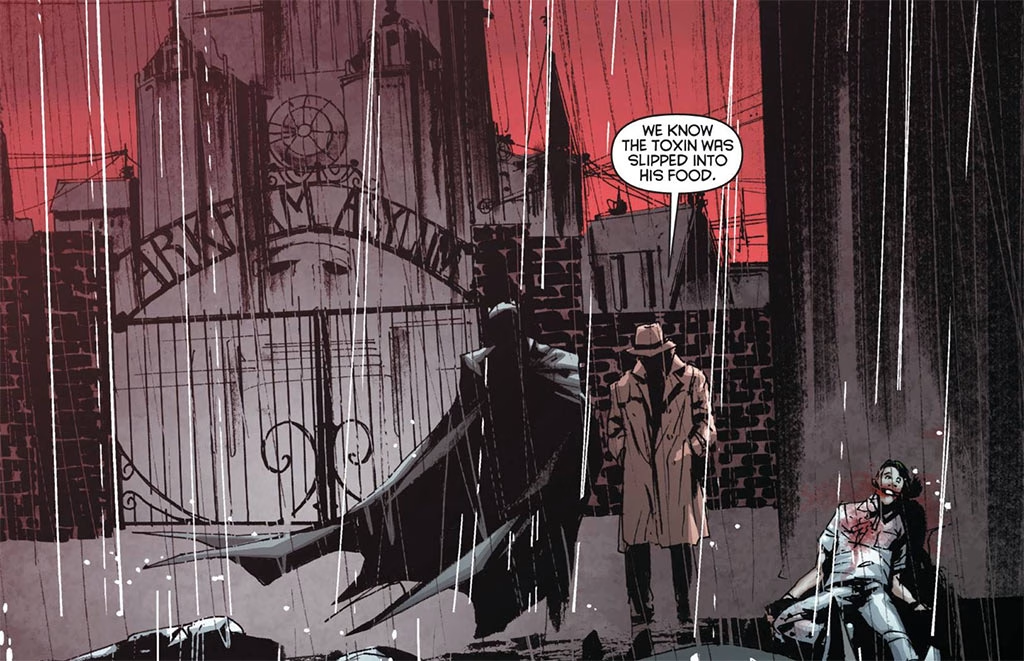
There are two artists on the book, Jock and Francesco Francavilla. While I prefer Francavilla’s work overall, his style is more in my wheelhouse, with its warm pulp-noir atmosphere filled with heavy shadows, deep oranges, blacks, and purples, Jock’s sharp and kinetic style is fitting the needs of the story. It makes the stakes feel in constant flux, sliding toward the horror.
Snyder didn’t write a Batman story, but a Dick Grayson as Batman story. It uses the character’s defining style to explore his doubts and his past. Something the “Hungy City” story pushed further by finding a way to bring back his parents’ murderer. I never count how many times Batman’s writer went back to Joe Chill, the Waynes’ killer, but it feels par for the course to dig into Tony Zucco. It’s done by following an interesting angle, through his daughter trying to deal with her father’s past coming back to torment her at the same time when Dick is trying to find his way as Batman, out of Bruce’s shadow. The plot here feels a bit rushed, with more space for action than character work, but it’s a good way to counterbalance the James Gordon Jr. storyline.
At first introduced as a B-story, Commissioner Gordon’s son’s comeback ends up becoming the strongest element of the run. Junior announced that he may be a psychopath, but he is taking pills to fix that. Barbara doesn’t want to hear about it, but his father wants to believe that his son is not a monster. To do that, he ignores all the signs in front of him. James Jr. is another kind of monster, one that doesn’t wear a costume. He is cold-blooded, and the way he slips into the background of Gotham while Batman is fighting more colourful rogues creates an intriguing contrast with those villains who drop a whale in a bank. The lack of subtlety in one is what makes the gradual build-up of the other so effective. The combination of superhero action and horror with a more procedural thriller narrative creates a solid story about legacy and the changing relationship between Gothamites and the city’s super-villains. In The Black Mirror, they are fetishised. James Gordon Jr., however, is their antithesis and uses them to hide his own criminal nature. They are part of Gotham and have already left a generational mark on the city.
The Black Mirror is a short but compelling run that has become even more interesting over the years, as Scott Snyder has made a significant contribution to the Batman mythos. This book clearly and effectively establishes the foundation for his work.
👉 What To Read After The Black Mirror?
The best book to jump into right after The Black Mirror is Snyder’s follow-up, Batman: Gates of Gotham. The story begins when a mysterious new villain calling himself the Architect launches a bombing campaign targeting historic bridges and landmarks across Gotham City. With the help of Damian Wayne (Robin), Tim Drake (Red Robin), and Cassandra Cain (Black Bat), Batman tracks down the bomber. It’s a more Bat-Family-oriented book.
And after that came The New 52 relaunch. Scott Snyder started writing his celebrated run on the main Batman series, with artist Greg Capullo. There will one day be a big article about this run… soon! (I hope).