Grant Morrison

  • A Complete Batman Post-Crisis Reading Order a.k.a. The Modern Age (Work in Progress)

    Welcome to the world of the Dark Knight. Undeniably one of DC Comics’ most popular characters, Batman has a long and editorially complex history. With a blog like DC Casebook, it’s hard not to go through the biggest case of all: the ultimate Batman Reading Order. And by Ultimate, I mean a Bat-Family Reading Order. While most of the similar works are focused on Batman alone, because sane people are making them, I have the crazy ambition to cover the whole extended family. Which makes this project even more complicated.

    It will take time. I’m talking about years. But I will eventually compile my own version of a complete reading guide for Batman. For now, it’s very much a Work in Progress! So, let’s begin with the Batman Post-Crisis era, also known as the Modern Age.

    Read More “A Complete Batman Post-Crisis Reading Order a.k.a. The Modern Age (Work in Progress)”
  • The Complete Grant Morrison Batman Reading Order

    Grant Morrison’s seven-year epic run on Batman does not follow the usual structure. It’s not just a few years on the main Batman comic book series. It’s a three-act saga, each being told in a separate series. And despite some small and bigger events, it feels like a self-contained narrative, for the most part.

    As I already wrote an overview of the full run, I won’t spend time introducing the story and characters again. Let’s note, though, that it’s not required reading, but The Black Casebook is a good way to familiarize yourself with stories Morrison referenced and updated during his run.

    And now, here is the ultimate contextual reading order for Grant Morrison’s Batman comics.

    Read More “The Complete Grant Morrison Batman Reading Order”
  • Is Grant Morrison’s Epic Batman Run Still Worth the hype? A 2026 Retrospective Review

    In 2006, when Grant Morrison took over the flagship Batman title, he decided that all of the character’s publication history was, in fact, canon. The most outlandish tales were probably just the result of his view of real events distorted by all the drugs, commotions, and otherworldly experiences his crime-fighting adventure subjected him to.

    That’s the idea behind the selected stories in the Black Casebook. He took concepts, and sometimes just names, out of those old comics and went on creating a unified narrative to explore Batman as an idea. But Morrison being Morrison, the run went epic, cosmic, and at times quite confusing.

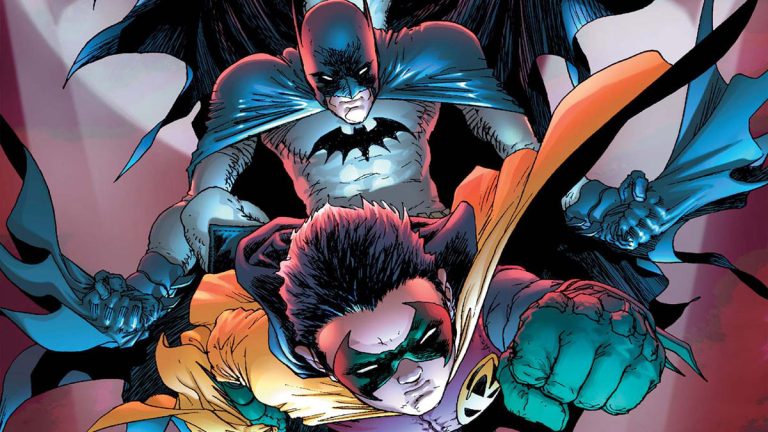
    Two decades later, those stories have become highly influential, and it makes sense to revisit this era that introduced Damian Wayne, made the Batman of Zur-En-Arrh into a psychological construct, redefined the bats as a symbol integral to Gotham and the Waynes’ history, and took the brand global!

    Returning to Grant Morrison’s Batman run helped me to organise my reading order, but I also wanted to share my thoughts on it in a retrospective review. Let’s begin.

    Read More “Is Grant Morrison’s Epic Batman Run Still Worth the hype? A 2026 Retrospective Review”
  • The Batman Case Files: Introduction to Grant Morrison’s Masterpiece Run (2006-2013)

    Grant Morrison’s seven-year run on Batman is widely considered one of the most ambitious long-form epics in the history of modern comic books. Running across multiple titles from 2006 to 2013, the story functions as a massive three-act saga that breaks down Bruce Wayne before rebuilding him on a global scale.

    As it is a big read, this may not be the most inviting entry point for new readers. But it’s one influential run that continues to impress and, at times, leave a little confusion. It’s a dense and coherent narrative driven by big ideas, fueled by deep cuts into obscure DC lore.

    This article presents Grant Morrison’s run, outlining the key ideas, plot points, and characters. It serves as a roadmap providing context for my detailed reading order and retrospective review. So, let’s start exploring this rich case file!

    Of course, Morrison was not alone. During his run, he worked with artists Andy Kubert, J.H. Williams III, John Van Fleet, Tony Daniel, Ryan Benjamin, Lee Garbett, Frank Quitely, Philip Tan, Cameron Stewart, A,dy Clarke, Frazer Irving, Scott Kolins, Chris Sprouse, Ryan Sook, Yanick Paquette, George Jeanty, David Finch, Scott Clark, and Chris Burnham.

    Read More “The Batman Case Files: Introduction to Grant Morrison’s Masterpiece Run (2006-2013)”
  • |

    Batman R.I.P. Reading Order: The Batman of Zur-En-Arrh Rises

    Following the world-spanning quest of The Resurrection of Ra’s al Ghul, Batman faced a threat in Gotham that didn’t target his body or his family, but his very sanity. Batman R.I.P. is the downfall of Batman. It is the moment where every reference in the Black Casebook (the aliens, the hallucinations, the bizarre transformations) is revealed to be part of a singular, sinister conspiracy.

    The “Black Glove,” a secret society of the world’s wealthiest and most depraved individuals led by the mysterious Doctor Hurt, wages a war of “total weaponized trauma” against Bruce Wayne. Their goal? Not to kill Batman, but to prove that he can be broken into something pathetic, insane, and common.

    Read More “Batman R.I.P. Reading Order: The Batman of Zur-En-Arrh Rises”
  • The Black Casebook: Deconstructing the Silver Age Ghosts of Grant Morrison’s Batman

    To a reader who is not all too familiar with Batman comics, Grant Morrison’s Batman run can, at times, feel like a fever dream. Why is there a “Bat-Mite”? Who are the “International Heroes”? The answer lies in The Black Casebook, a meta-fictional journal where Bruce Wayne recorded every encounter that defied logic, physics, or sanity.

    When I first read this run, my knowledge of Batman was limited to recent publications. I lacked a broader understanding of what the character went through. Even some recurring characters were not known to me. I caught up quickly, as the stories Morrison wrote don’t require you to be a Dark Knight scholar to be understood, but the more you know, the more you can appreciate what the author did.

    So, in this DC Casebook investigation, we strip away the modern shadows to reveal the 1950s and 60s “Golden & Silver Age” stories that Morrison transformed into psychological pieces to explore the mind of the Bat.

    Read More “The Black Casebook: Deconstructing the Silver Age Ghosts of Grant Morrison’s Batman”