The Batman Case Files: Introduction to Grant Morrison’s Masterpiece Run (2006-2013)

Disclaimer: As an Amazon Associate, we earn from qualifying purchases (Affiliate Disclosure). Thanks!

Grant Morrison’s seven-year run on Batman is widely considered one of the most ambitious long-form epics in the history of modern comic books. Running across multiple titles from 2006 to 2013, the story functions as a massive three-act saga that breaks down Bruce Wayne before rebuilding him on a global scale.

As it is a big read, this may not be the most inviting entry point for new readers. But it’s one influential run that continues to impress and, at times, leave a little confusion. It’s a dense and coherent narrative driven by big ideas, fueled by deep cuts into obscure DC lore.

This article presents Grant Morrison’s run, outlining the key ideas, plot points, and characters. It serves as a roadmap providing context for my detailed reading order and retrospective review. So, let’s start exploring this rich case file!

Of course, Morrison was not alone. During his run, he worked with artists Andy Kubert, J.H. Williams III, John Van Fleet, Tony Daniel, Ryan Benjamin, Lee Garbett, Frank Quitely, Philip Tan, Cameron Stewart, A,dy Clarke, Frazer Irving, Scott Kolins, Chris Sprouse, Ryan Sook, Yanick Paquette, George Jeanty, David Finch, Scott Clark, and Chris Burnham.

  1. The Historical Context
  2. The Adversaries
  3. Legacy and Impact

1. The Historical Context: The End of the Modern Age Batman

Grant Morrison’s run on Batman is the backbone of the last chapter of the Post-Crisis era, aka the Modern Age of DC Comics. In the overall chronology, it is set some time after the launch of the “One Year Later” initiative (following the Batman: Face the Face storyline).

At that point, Batman, Robin, and Nightwing had spent a year away from Gotham City and had recently returned to clean up the streets of the usual criminals. It was done, so what’s going on with Bruce Wayne? He starts seeing socialite Jezebel Jet while Batman learns he has a son!

🔎Morrison’s run is not limited to the main Batman series. Here is how it goes:

  • Part 1: Batman #655-658, #663-683.
  • Part 2: Batman & Robin #1-16, Batman #700-702, and Batman: The Return of Bruce Wayne #1-6.
  • Part 3: Batman Incorporated (Series 1) #1-8, Batman Incorporated (Series 2) #0-13 [set during the New 52 era], and a few one-shots.

This is the quick overview. Visit my Complete Grant Morrison Batman Reading Order for a really detailed roadmap of this run.
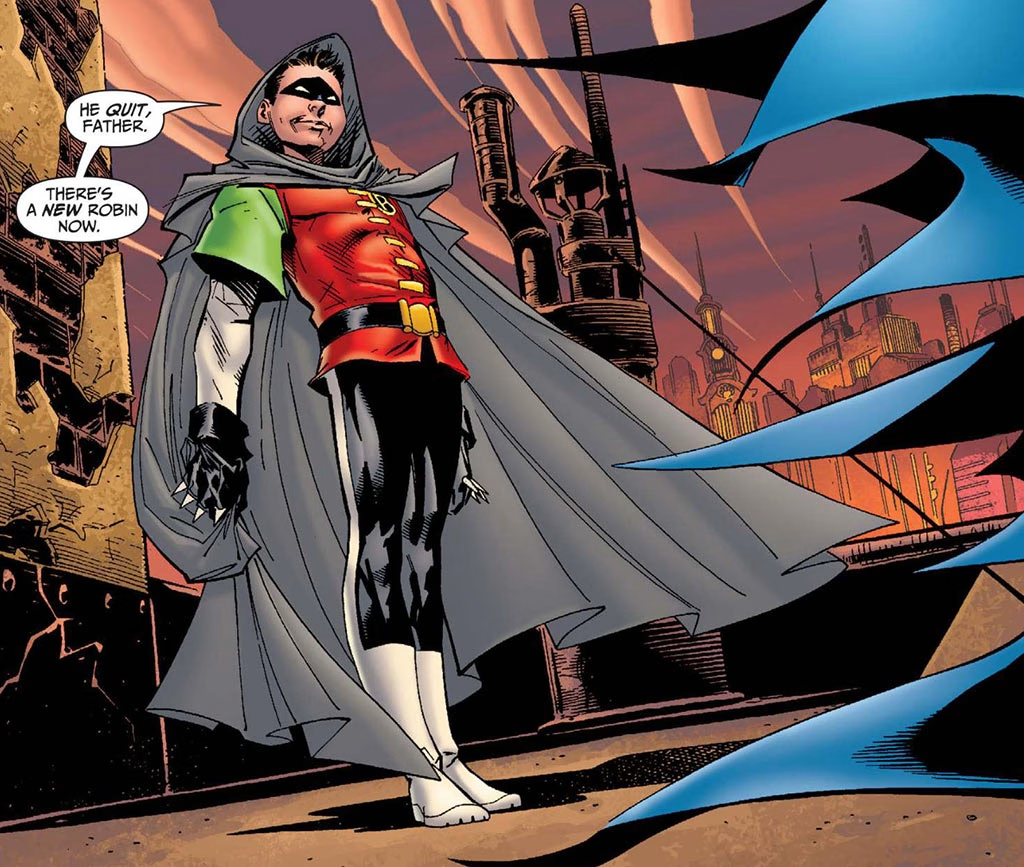
Batman #657

📂 Key Stories of the Run:

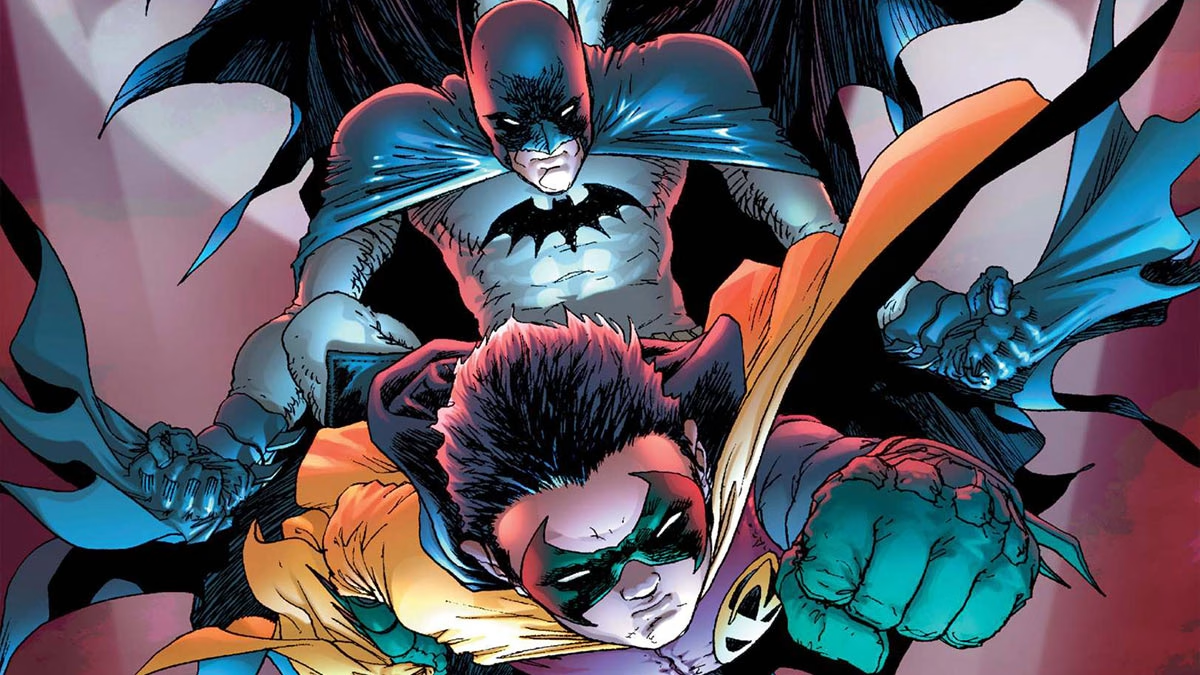
  • The New Robin: The Introduction of Damian Wayne is certainly the biggest new addition to the Batman mythos during this run, as the character became a notable player in the DC Comics Universe. His introduction was not an easy one, and he had to earn the right to wear the costume, but it stuck.
  • The Black Glove: A mysterious group is unexpectedly targeting Bruce Wayne/Batman, stripping him of who he is. A psychological game from which emerges the Batman of Zur-En-Arrh.
  • The Death of Batman: The core idea of Morrison’s run is the deconstruction of Bruce Wayne/Batman. His “death” became a turning point, showing what could happen if he somehow disappears, revisiting some elements of the Knightfall saga, but rooting the story in a larger narrative exploring what differentiates the man from the myth.
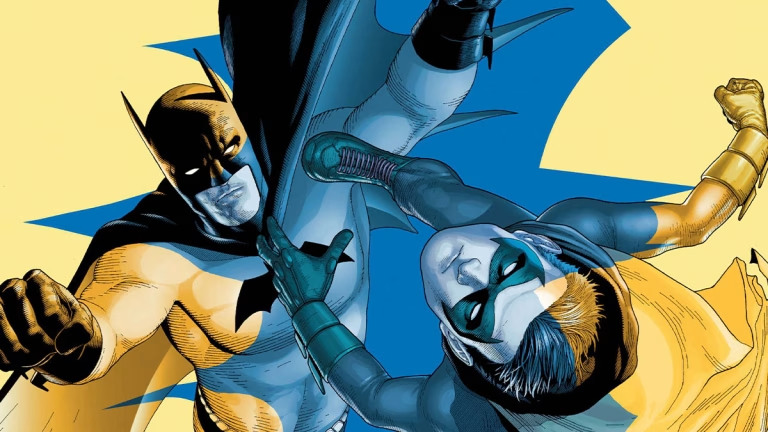
  • The New Dynamic Duo: The idea of Batman’s replacement is still something writers like to explore from time to time. Morrison went all the way. To make it work, Dick Grayson took on Damian as his new Robin, thus maintaining the dynamic of the duo but with somewhat inverted personalities.
  • The Return of Bruce Wayne: Batman never went away, only Bruce Wayne did. He had to come back, and this became a time-traveling adventure through the horror of Gotham’s past. It’s all about the bats and the Waynes.
  • Batman went worldwide: Bruce Wayne saw the future, and now he wants to prevent bad things from happening. His idea: Batman Incorporated. Jumping from one country to the next, he recruits “local” Batmen to help fight crimes, but also expose the Leviathan conspiracy.

2. The Adversaries: Beyond the Usual Rogues

A seven-year epic requires a new kind of antagonist. Morrison moved away from Gotham’s traditional rogues to introduce highly organised and ambitious enemies. Rather than robbing Gotham’s banks or poisoning its reservoir, the villains of this era are waging an existential war against Batman himself, attacking his sanity, his family and his global legacy.

The only recurring classic villain to play a key role in this run is the Joker, and even he left his traditional criminal persona to adopt more symbolic identities characterised by his relationship with his eternal enemy, Batman.
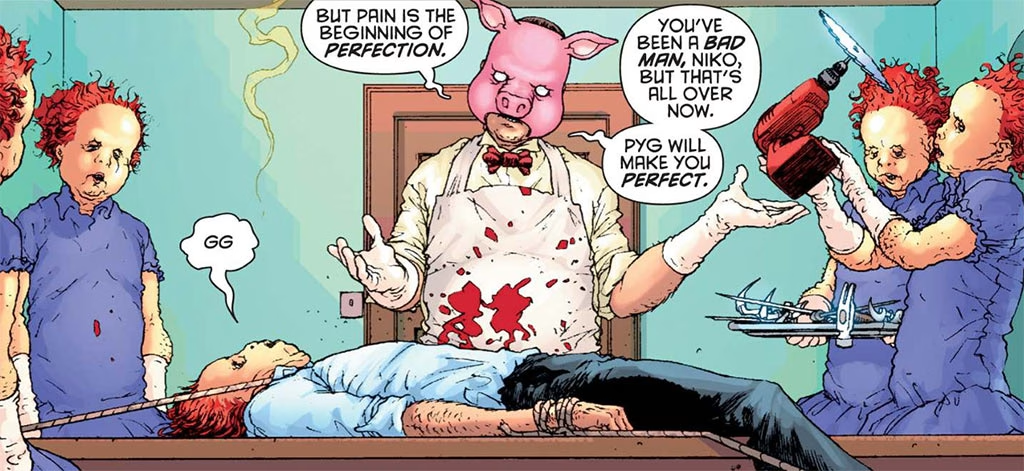
Batman & Robin #1

The Primary Threat Files:

  • The Black Glove: The psychological threat of the run’s first third is an elite secret society of the world’s most depraved multi-millionaires guided by Dr. Simon Hurt and helped by The Club of Villains. Hurt doesn’t want to kill Batman, he wants to bet on his total moral ruin.
  • Professor Pyg: Connected to the evil Doctor Dedalus, Pyg is a gifted and completely insane scientist who’s obsessed with making things “perfect”. He is one iconic villain.
  • El Penitente: Powerful Mexican drug lord who wants to take Gotham over, El Penitente is not who he seems to be, or even who he pretended to be. He is a maniac from another time who lost his mind and now creates chaos and deals with violence to put his hands on the Wayne fortune.
  • Leviathan: Building on the Black Glove‘s plan, Leviathan is a terrorist group built to attack Batman where it hurts. But instead of taking away his identity, it’s about taking away his world.

3. Legacy and Impact

Grant Morrison’s seven-year run concluded the Modern Age, but even as the New 52 era left behind many key elements of the DC Universe, those stories had introduced changes that could not be put aside.

The Evolution of the Bat-Family Hierarchy: Previously, the Bat-Family was a more loosely knit group of sidekicks whom Bruce kept at arm’s length. Introducing Damian Wayne changed the whole dynamic of the family, notably within the ranks of the Robins. The Batman Incorporated arc cemented the extended family and solidified its core concept.

The Re-Validation of the Silver Age: The campy, sci-fi-heavy stories of the 1950s and 60s were treated as an embarrassing history that DC editors desperately tried to sweep under the rug. Morrison’s run changed that by recontextualizing them as intense psychological trauma and corporate isolation experiments.

A Global Definition of Justice: Through Batman Incorporated and the fight against Leviathan, Morrison redefined Batman as an idea too big for one city to contain. This concept of a global franchise comprising localised heroes shifted the scale of Batman’s operations, presenting him as the ultimate global counter-terrorism CEO.


📂 DC Casebook: The Morrison Files

More Files from the Casebook

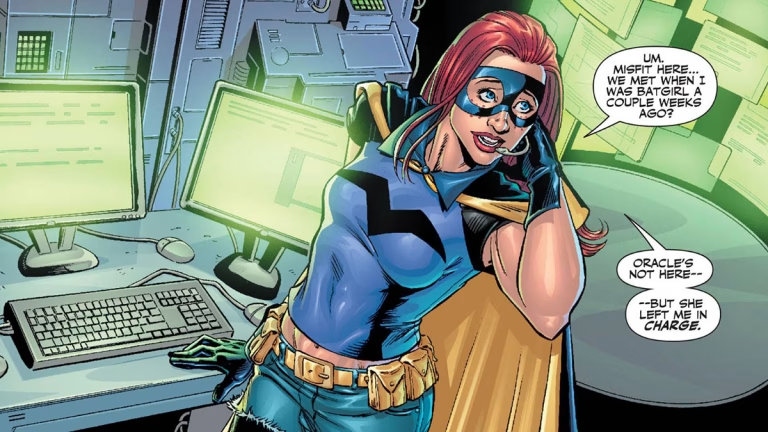
  • Unsolved Cases: Whatever Happened to Misfit (Charlotte Gage-Radcliffe)?

    Disclaimer: As an Amazon Associate, we earn from qualifying purchases (Affiliate Disclosure). Thanks!

    After briefly crossing her path while reading Batman: Battle for the Cowl and Final Crisis, I was reminded of Misfit (aka Charlotte Gage-Radcliffe). I checked when she last appeared in the pages of a comic. It turns out she did make a cameo in Cheetah and Cheshire Rob the Justice League #4 by Greg Rucka and Nicola Scott (who created the Misfit costume originally), published last November (2025, for reference). That was the first appearance in over a decade! And I barely consider that relevant.

    In the late 2000s, Oracle’s inner circle was expanding, and no new recruit had more breakout potential than Charlotte Gage-Radcliffe. Dressed in a homemade, stitched-together Batgirl costume and shouting her trademark battle cry (“Dark Vengeance!“), Misfit brought a chaotic, endearing energy to Metropolis and Gotham.

    She had the powers, the tragic backstory, and Gail Simone writing her. So, what happened to Misfit?

    Read More “Unsolved Cases: Whatever Happened to Misfit (Charlotte Gage-Radcliffe)?”
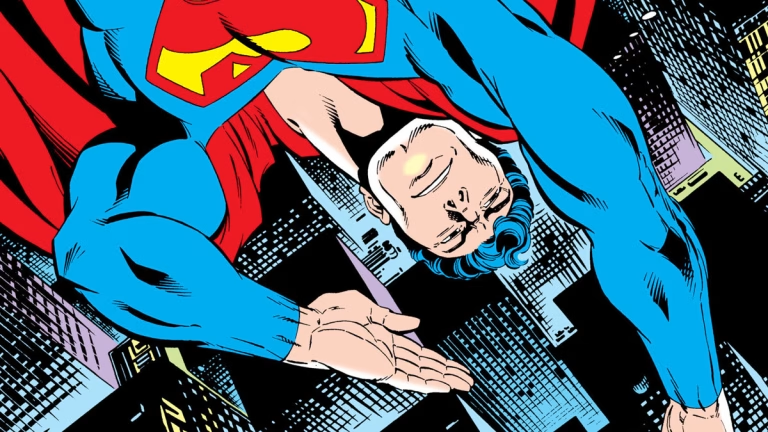
  • Is John Byrne’s Superman Still Good? A 2026 Retrospective Review

    Disclaimer: As an Amazon Associate, we earn from qualifying purchases (Affiliate Disclosure). Thanks!

    In 1986, John Byrne undertook the challenging project of reimagining Superman as a relatable contemporary figure. This involved making some controversial decisions. He abandoned the optimism of the Silver Age in favour of a more psychologically grounded interpretation, shaped by the cultural logic of the 1980s. It was criticized by some for being Superman for adults. Four decades later, does it still resonate, or was it purely a product of its time?

    While later interpretations have emphasized Superman as a near-mythical ‘space god’, Byrne’s work is the most notable ‘human-first’ reimagining of the character. It established the modern Lex Luthor and a proactive, credible Lois Lane, but it also led to a Superman who violated his own moral code in a conclusion that remains controversial. Whether regarded as a necessary modernization or a fundamental misreading of the character, Byrne’s influence continues to shape virtually every screen adaptation of Superman.

    Although I have read DC Comics for decades, I was never particularly interested in Superman. To broaden my understanding of the character, I approached this landmark series from a contemporary perspective. So, in this review, we’re looking past the nostalgia.

    Read More “Is John Byrne’s Superman Still Good? A 2026 Retrospective Review”
  • The Complete Grant Morrison Batman Reading Order

    Disclaimer: As an Amazon Associate, we earn from qualifying purchases (Affiliate Disclosure). Thanks!

    Grant Morrison’s seven-year epic run on Batman does not follow the usual structure. It’s not just a few years on the main Batman comic book series. It’s a three-act saga, each being told in a separate series. And despite some small and bigger events, it feels like a self-contained narrative, for the most part.

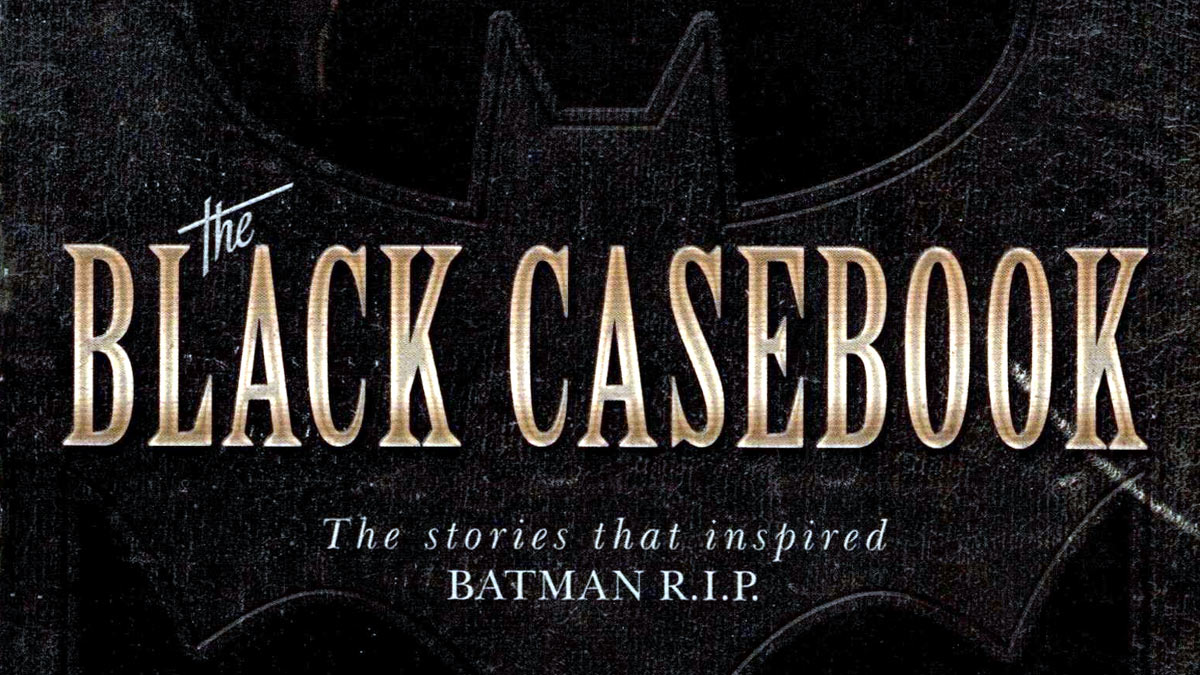
    As I already wrote an overview of the full run, I won’t spend time introducing the story and characters again. Let’s note, though, that it’s not required reading, but The Black Casebook is a good way to familiarize yourself with stories Morrison referenced and updated during his run.

    And now, here is the ultimate contextual reading order for Grant Morrison’s Batman comics.

    Read More “The Complete Grant Morrison Batman Reading Order”
  • The Black Casebook: Deconstructing the Silver Age Ghosts of Grant Morrison’s Batman

    Disclaimer: As an Amazon Associate, we earn from qualifying purchases (Affiliate Disclosure). Thanks!

    To a reader who is not all too familiar with Batman comics, Grant Morrison’s Batman run can, at times, feel like a fever dream. Why is there a “Bat-Mite”? Who are the “International Heroes”? The answer lies in The Black Casebook, a meta-fictional journal where Bruce Wayne recorded every encounter that defied logic, physics, or sanity.

    When I first read this run, my knowledge of Batman was limited to recent publications. I lacked a broader understanding of what the character went through. Even some recurring characters were not known to me. I caught up quickly, as the stories Morrison wrote don’t require you to be a Dark Knight scholar to be understood, but the more you know, the more you can appreciate what the author did.

    So, in this DC Casebook investigation, we strip away the modern shadows to reveal the 1950s and 60s “Golden & Silver Age” stories that Morrison transformed into psychological pieces to explore the mind of the Bat.

    Read More “The Black Casebook: Deconstructing the Silver Age Ghosts of Grant Morrison’s Batman”
  • Flashpoint Reading Order: The End of The Post-Crisis era

    Disclaimer: As an Amazon Associate, we earn from qualifying purchases (Affiliate Disclosure). Thanks!

    As the massive crossover event Crisis on Infinite Earths did in 1985-1986, Flashpoint put an end to another major era of the DC Universe continuity in 2011: The Modern Age. The kind of events comic book companies always teased, but rarely delivered, the ones that really changed everything.

    Written by Geoff Johns and illustrated by Andy Kubert, Flashpoint centers on Barry Allen, the freshly returned Silver Age Flash, who wakes up in a world he doesn’t recognize. In this fractured reality, the Justice League was never formed, Superman is a prisoner of the state, and a genocidal war between Atlantis and Themyscira has brought humanity to the brink of annihilation.

    It’s not just another event to file in the DC Casebook, it’s the one that closed the book on the Post-Crisis era (1986-2011). Published as a five-issue limited series in 2011, it paved the way for the line-wide reboot known as the New 52.

    Read More “Flashpoint Reading Order: The End of The Post-Crisis era”
  • |

    Batman R.I.P. Reading Order: The Batman of Zur-En-Arrh Rises

    Disclaimer: As an Amazon Associate, we earn from qualifying purchases (Affiliate Disclosure). Thanks!

    Following the world-spanning quest of The Resurrection of Ra’s al Ghul, Batman faced a threat in Gotham that didn’t target his body or his family, but his very sanity. Batman R.I.P. is the downfall of Batman. It is the moment where every reference in the Black Casebook (the aliens, the hallucinations, the bizarre transformations) is revealed to be part of a singular, sinister conspiracy.

    The “Black Glove,” a secret society of the world’s wealthiest and most depraved individuals led by the mysterious Doctor Hurt, wages a war of “total weaponized trauma” against Bruce Wayne. Their goal? Not to kill Batman, but to prove that he can be broken into something pathetic, insane, and common.

    Read More “Batman R.I.P. Reading Order: The Batman of Zur-En-Arrh Rises”

Leave a Reply

Your email address will not be published. Required fields are marked *